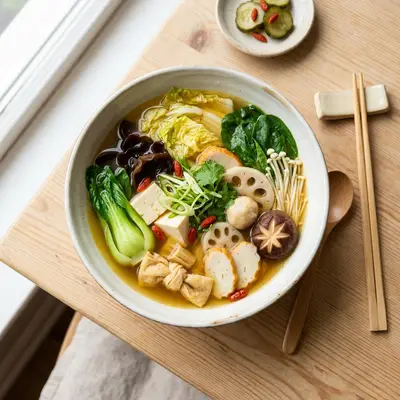
How to Choose Toppings for Malatang — Everything You Need to Get the Most Out of Your Bowl
目次
- Introduction: Your Topping Choices Make or Break the Bowl
- Vegetables: The Healthy Foundation of Your Bowl
- Mushrooms: The Umami Boosters You Can't Skip
- Meat and Seafood: Adding Protein and Staying Power
- Tofu and Soy Products: Creaminess and Nutrition in One
- Choosing Your Noodle: It's Not Just Glass Noodles
- Recommended Topping Combinations by Goal
- Key Takeaways for Choosing Toppings
Introduction: Your Topping Choices Make or Break the Bowl
The greatest appeal of malatang (málà soup — numbing-spicy Sichuan-style hot pot in a single bowl) is, without a doubt, the freedom to build exactly the bowl you want. At most specialty shops, a glass case displays dozens of toppings laid out in rows; you grab what you like with tongs and craft your own one-of-a-kind serving. But that very freedom can be overwhelming — plenty of people find themselves thinking, "I have no idea what to choose…"
The truth is, the toppings you pick have a huge impact on the flavor, nutritional balance, and overall satisfaction of your malatang. Load up on nothing but vegetables and you may finish feeling unsatisfied; go too heavy on meat and processed fish products and the calories spike fast. This article breaks down malatang toppings by category and shares practical tips for building the best possible bowl.
Vegetables: The Healthy Foundation of Your Bowl
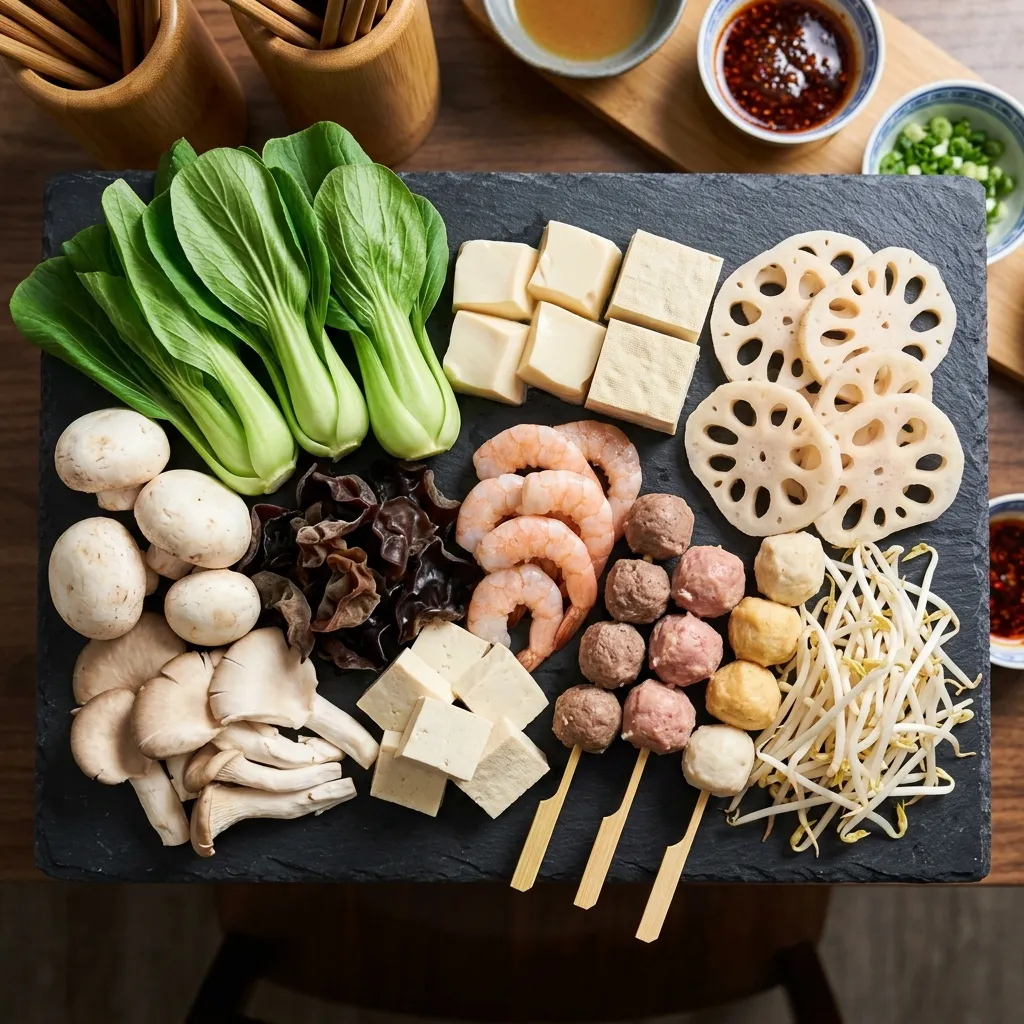
The first category to get right when choosing malatang toppings is vegetables. They're low in calories, rich in dietary fiber and vitamins, and form the nutritious backbone that keeps the bowl light and balanced.
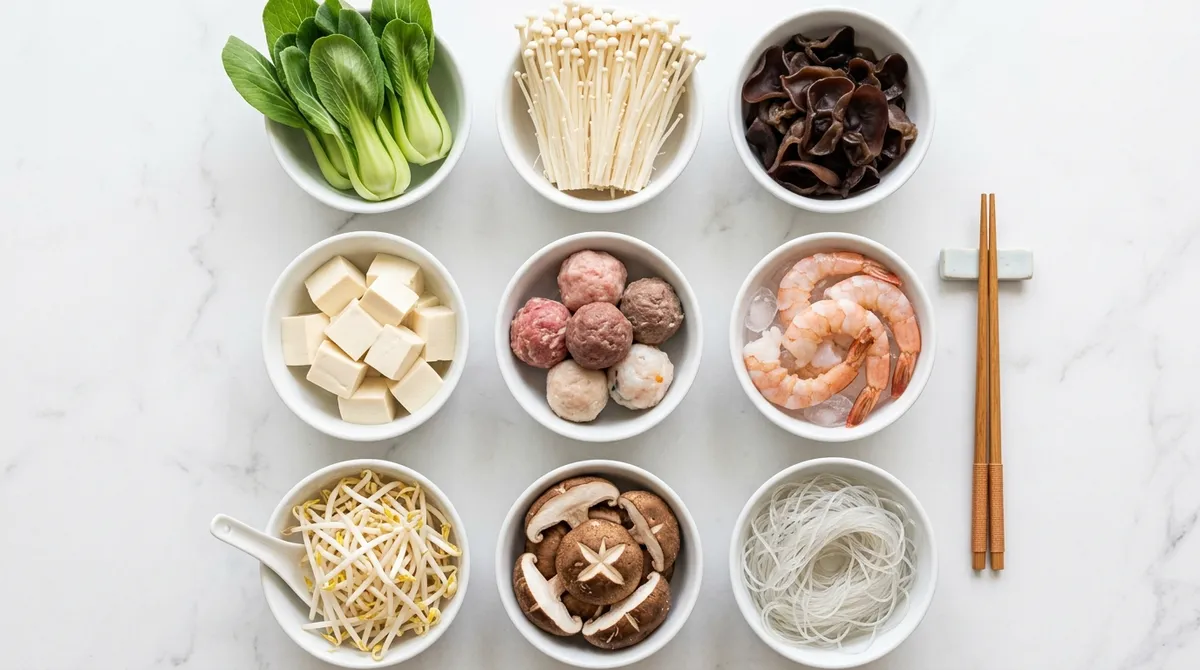
Classics include bok choy, napa cabbage, tatsoi, and bean sprouts. Bok choy and tatsoi pair beautifully with the broth — the longer they simmer, the more tender they become and the more flavor they absorb. Napa cabbage brings a natural sweetness that softens the heat of the spicy broth. Bean sprouts add a satisfying crunch and help bulk up the bowl without adding many calories.
The key is to balance leafy greens with firmer, crunchier vegetables. Leafy greens alone can turn mushy and leave you wanting more texture, so mixing in one or two firmer options — lotus root, baby corn — keeps every bite interesting all the way to the end.
Mushrooms: The Umami Boosters You Can't Skip
No malatang is complete without mushrooms. Mushrooms are naturally rich in guanylic acid, the same type of savory compound found in dashi, which adds depth and body to the broth.
Enoki mushrooms have a delightfully springy texture and soak up the broth like a sponge — a near-perfect match for malatang. Wood ear mushrooms bring an irresistible crunch along with a solid dose of iron and vitamin D. Shiitake and maitake (hen-of-the-woods) deliver especially intense umami that elevates the entire bowl.
Because mushrooms are low in calories and high in dietary fiber, you can pile them in without any guilt — even if you're watching your diet. Combining two or three varieties gives you a pleasant contrast of textures.
Meat and Seafood: Adding Protein and Staying Power
If vegetables and mushrooms alone leave you wanting more, meat and seafood are the answer — they add protein and make the bowl genuinely filling.
Meatballs are a perennial malatang favorite. They absorb the broth and turn deliciously juicy, delivering a satisfying bite every time. Thinly sliced pork or beef is equally wonderful once it's bathed in that rich, spiced broth. For a leaner option, chicken breast or tenderloin keeps fat low while still providing plenty of protein.
On the seafood side, shrimp and squid are top picks. Their springy texture stands out beautifully in the soup, and they supply nutrients like taurine. One caveat: processed fish products such as fish tofu and chikuwa (fish cake rolls) taste great but can be surprisingly high in calories and sodium, so use them sparingly.
As a general rule, keep meat and seafood to about 20–30% of your total toppings and fill the rest with vegetables and mushrooms for a well-rounded bowl.
▶ Detailed nutritional data for mushrooms is available in the Topping Encyclopedia (Mushrooms).
Tofu and Soy Products: Creaminess and Nutrition in One
Tofu, yuba (tofu skin), and atsuage (thick fried tofu) are supporting players that give malatang a mellow, creamy quality. Packed with plant-based protein and highly satisfying, they also soften the impact of the spicy broth with every bite.
In particular, frozen tofu (kori-dofu) is a standout ingredient: its sponge-like structure soaks up broth so thoroughly that each bite releases a burst of savory flavor. Yuba has a silky, smooth texture that blends seamlessly with the soup and adds a touch of elegance.
For anyone watching their weight, soy products are invaluable allies. Low in carbohydrates yet rich in high-quality protein and calcium, they're filling enough to keep hunger at bay — well worth adding to every bowl.
Choosing Your Noodle: It's Not Just Glass Noodles
The noodle at the base of your malatang offers more variety than you might expect.
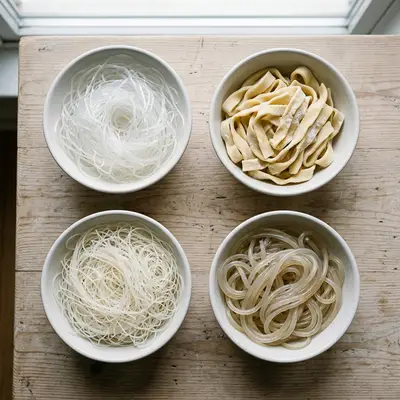
Glass noodles (medium-thick style) are the classic malatang choice. Smooth and chewy, they absorb the broth while letting the toppings take center stage. They're starch-based with virtually no fat — around 78 kcal per 100 g, making them relatively low in calories.
For an even lighter bowl, swap in konjac noodles or seaweed noodles. Both cut calories significantly, so you can enjoy noodles worry-free even on a diet. On the other end, if you want a heartier meal, Chinese-style wheat noodles add real substance and turn the bowl into something more substantial.
The type of broth also influences which noodle pairs best. Thick glass noodles are the standard with málà broth, but wheat noodles work especially well with tomato or tan-tan (sesame-peanut) broth.
Recommended Topping Combinations by Goal
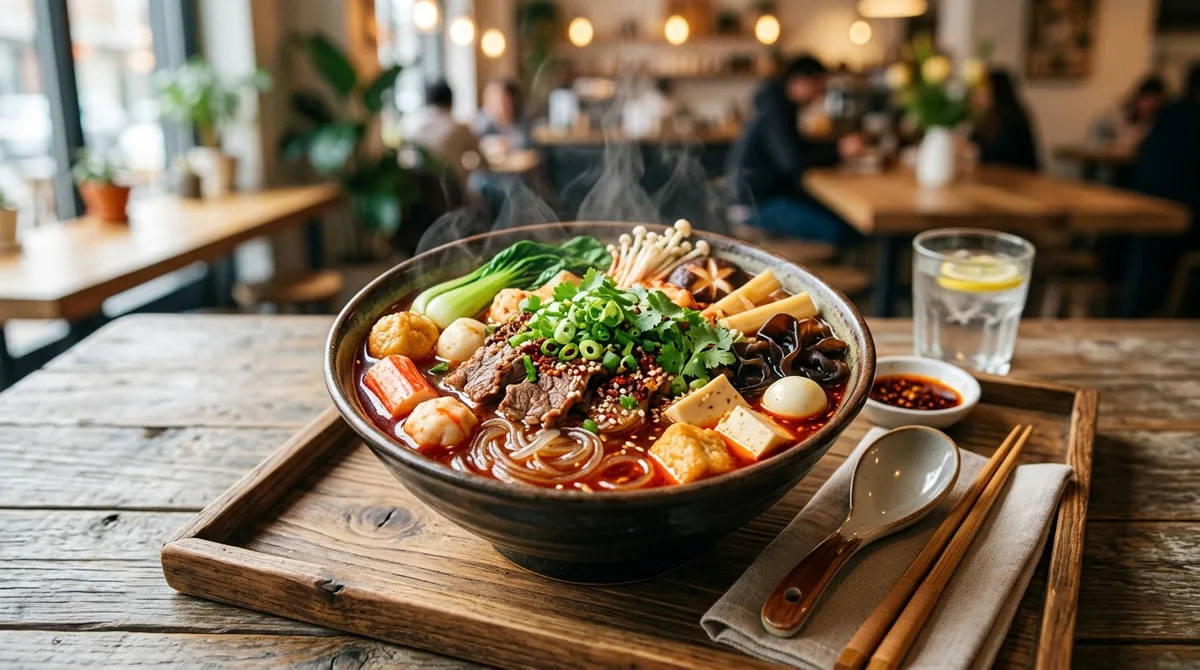
Here are some curated topping sets to match different goals.
- For health-conscious eaters
Bok choy + enoki mushrooms + wood ear mushrooms + tofu + konjac noodles. Centered on vegetables and mushrooms for low calories and high fiber. Tofu covers protein, konjac noodles cut carbs. A guilt-free combination you can enjoy without compromise.
- For a hearty, filling meal
Napa cabbage + shiitake mushrooms + meatballs + thinly sliced pork belly + atsuage + medium-thick glass noodles. Meat and soy products load it with protein, and the glass noodles make sure you leave the table satisfied.
- For first-timers
Napa cabbage + bean sprouts + enoki mushrooms + meatballs + tofu + medium-thick glass noodles. A reassuring set built from mild, crowd-pleasing basics. Start here to get a feel for malatang, then add one or two new toppings each visit.
- For a beauty-focused bowl
Tatsoi + wood ear mushrooms + maitake + shrimp + yuba + seaweed noodles. Built around ingredients associated with iron, vitamin D, and collagen, this combination is low in calories and high in nutrients.
▶ Calorie and nutrition data for individual toppings are listed in the Topping Encyclopedia. Definitely worth a look if you're watching your diet.
▶ If spicy food isn't your thing, check out "How to Order Malatang Without the Heat" as well.
Key Takeaways for Choosing Toppings
Here's a quick summary of the most important points to keep in mind when building your malatang bowl.
- Keep vegetables and mushrooms as the base, with meat at roughly 20–30% for a balanced bowl
- Mixing toppings with different textures keeps every bite interesting from start to finish (leafy + crunchy + chewy, for example)
- Including at least one soy product adds creaminess and protein, taking the bowl up a notch
- Control calories through your noodle choice (konjac noodles for lighter eating, glass noodles or wheat noodles when you want more substance)
- Processed fish products and fried items taste great but are higher in sodium and calories — limit yourself to one or two types
Malatang is a dish where the experience of building your own bowl is half the fun. You might feel a little lost the first time, but after a few visits you'll find your personal "perfect set." Use this guide as a starting point and go discover the malatang that's uniquely yours.
Find malatang near you
Search authentic malatang spots by area or nearest station →
Related articles
How Many Noodle Types Does Malatang Have? A Complete Guide to Glass Noodles, Dao Xiao Mian, Rice Vermicelli, and More
![Convenience Store Malatang Showdown: A Complete Comparison of 7-Eleven, FamilyMart, and Lawson Products [2026 Edition]](/cms-img/assets/23787e9ca72e4b26ae0b5ff85eead0ec/311296ac79f949b3b9fb9a88b94570e9/malatang-convini.png?fm=webp&w=400&q=70)
Convenience Store Malatang Showdown: A Complete Comparison of 7-Eleven, FamilyMart, and Lawson Products [2026 Edition]
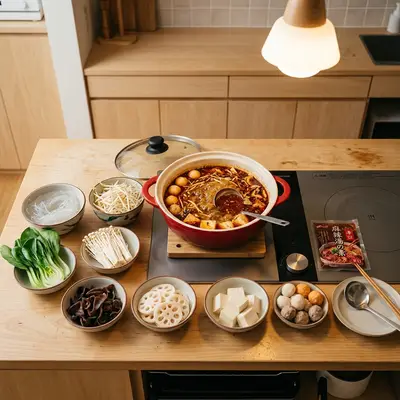
Easy Homemade Malatang: A Complete Recipe Guide + How to Use the Chiipao Home Kit