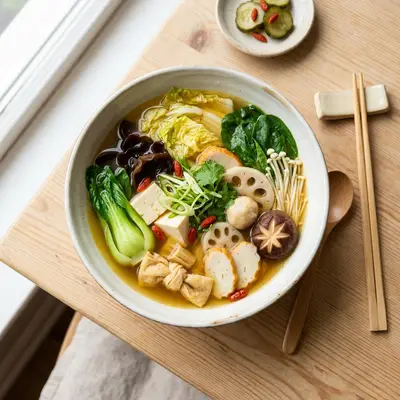
Easy Homemade Malatang: A Complete Recipe Guide + How to Use the Chiipao Home Kit
目次
Introduction: Making Authentic Malatang at Home
"I love eating malatang at the restaurant, but I can't go every day..." — if that sounds like you, we have great news. Right now, it's easier than ever to make authentic malatang at home.
In particular, using the "Ouchi de Chiipao" (At-Home Chiipao) kit from Chiipao Malatang (Qibao Malatang) — one of Japan's most renowned malatang chains — you can recreate the flavor of those queue-out-the-door restaurants in your own kitchen with nothing more than a frying pan and water. Add your own choice of toppings and you get the same "fully customized malatang" experience as dining in.
This article covers everything: the basic method using the "Ouchi de Chiipao" kit, tips for choosing toppings, and creative variations to try.
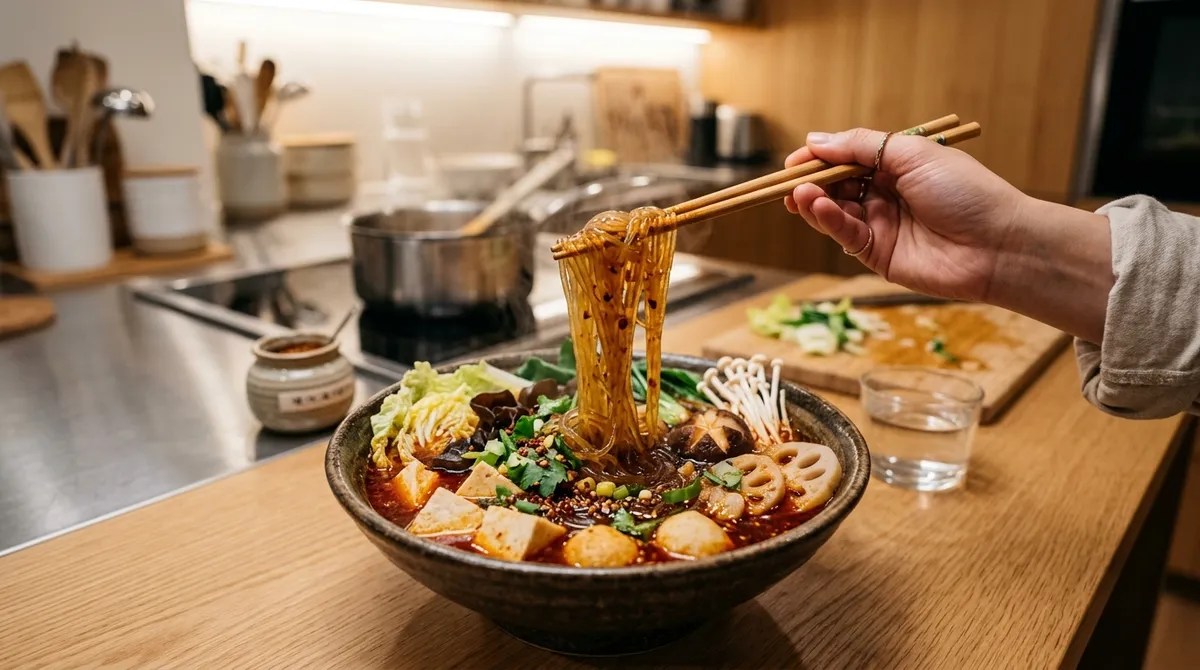
What Is the "Ouchi de Chiipao" Kit?
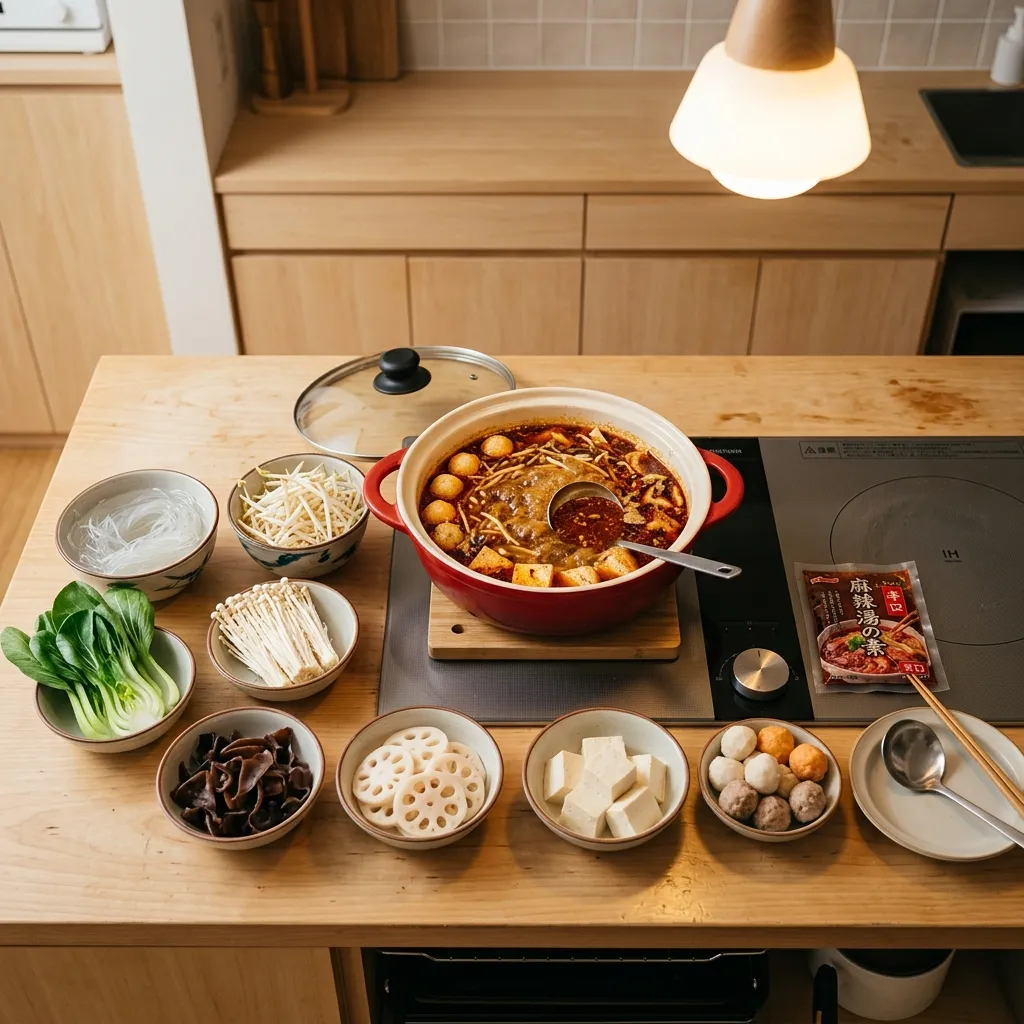
"Ouchi de Chiipao" is a home malatang kit developed by the malatang specialty chain Chiipao Malatang (Qibao Malatang).
The kit includes:
- Glass noodles (one serving)
- Chiipao salt tare (the soup base)
- Chiipao jiang (a concentrated house paste that captures the restaurant's signature flavor)
- Chili powder (for adjusting heat level)
That's all it takes to reproduce the restaurant's complex spice profile at home. The kit uses the same medicinal-herb spice blend as the shops, delivering the numbing tingle of Sichuan pepper (huājiāo), the heat of dried chili, and a deep, layered flavor built from dozens of aromatics.
The standard kit produces a soup equivalent to the restaurant's "medium spicy (level 2)". If you prefer it milder, use half the chili powder; if you like it fiery, go full amount — the heat is completely in your hands.
Basic Method (approx. 15 minutes)
The process is simpler than you might expect.
What you need:
- 1 serving of "Ouchi de Chiipao"
- 400–450 ml water
- One frying pan or pot
- Toppings of your choice
Steps:
① Prep the toppings
Cut vegetables and mushrooms into bite-sized pieces. Slice denser ingredients (root vegetables, etc.) thin so they cook through. Press excess water from tofu to keep it from falling apart.
② Bring water to a boil in the pan
Add 400–450 ml of water to the pan and bring to a boil over high heat. For a richer result, swap the water for unsalted chicken bouillon or kombu dashi — it makes a noticeable difference.
③ Add the harder-to-cook ingredients first
Once boiling, add root vegetables and mushrooms — anything that needs more time — and simmer for 2–3 minutes.
④ Stir in the salt tare and chiipao jiang
Dissolve the included Chiipao salt tare and Chiipao jiang into the soup. At this point the unmistakable aroma of Chiipao Malatang fills the kitchen.
⑤ Add the glass noodles and remaining toppings
Add the glass noodles, leafy greens, tofu, and any other quick-cooking ingredients. Simmer for another 3–4 minutes.
⑥ Season with chili powder and serve!
Finish by adding chili powder to taste. Full amount = medium spicy (level 2); half = mildly spicy; none at all = no heat, just the savory herbal broth.
Recommended Toppings and How to Choose Them
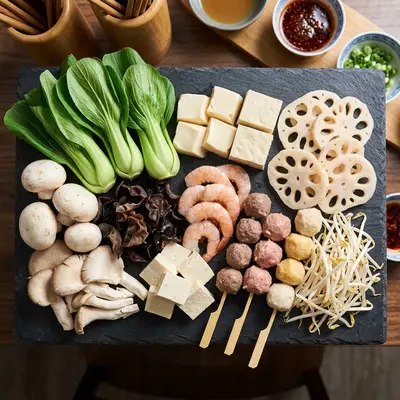
The "Ouchi de Chiipao" kit provides soup and glass noodles, so you supply the toppings yourself. This is honestly the best part of making malatang at home. You can put together a seriously authentic bowl using nothing but ingredients from a regular supermarket.
Classic Vegetables
Bok choy, napa cabbage, bean sprouts, and tatsoi are malatang staples. Napa cabbage in particular becomes sweeter as it cooks and mellows the broth beautifully. Bean sprouts add a satisfying crunch that works as a great textural contrast.
▶ For a deeper dive into topping selection, check out our guide: "How to Choose Malatang Toppings."
Mushrooms
Enoki, wood ear (kikurage), and shiitake are essential for building umami depth. The guanylic acid in mushrooms adds richness to the broth, and each variety contributes a different texture. Using two or three types together is ideal.
▶ Nutritional data for mushrooms is available in the Topping Encyclopedia (Mushrooms).
Protein
Tofu, thick-fried tofu (atsuage), meatballs, thinly sliced pork, and shrimp are all great options. Frozen meatballs or seafood mix from the supermarket make it easy to add protein without extra prep. Tofu also acts as a "cooling pocket" in the spicy broth, giving your palate a break between bites.
Sample Shopping List (1 serving)
- Napa cabbage, 2–3 leaves
- Enoki mushrooms, 1/2 pack
- Dried wood ear mushrooms, a small handful
- Silken tofu, 1/2 block
- Frozen meatballs, 3–4 pieces
- Bean sprouts, a small handful
That's enough for a fully satisfying bowl. Everything is available at any supermarket, so you can pick it up on your way home from work without any fuss.
▶ Calorie and nutrition info for each topping is listed in the Topping Encyclopedia — worth a look if you're watching your diet.
Tips and Variations for an Even Better Bowl
Once you've got the basics down, it's time to experiment and find your personal signature style.
Adding More Depth to the Broth
- Use chicken stock instead of water: Adding a small amount of store-bought chicken stock powder transforms the depth of the broth dramatically.
- Add garlic and ginger: Sliced garlic or grated ginger added at the start of simmering boosts both aroma and umami, bringing the result closer to restaurant quality.
- Finish with sesame oil: A small drizzle of sesame oil at the end adds fragrance and makes the bowl irresistible.
Customizing the Heat
- Add extra Sichuan pepper (huājiāo): A few whole peppercorns from the supermarket spice aisle intensify the numbing tingle and bring it closer to the real deal.
- Finish with chili oil: This adds a different, oil-based heat that gives the flavor more dimension. Crispy chili oil (taberu rayu) works beautifully too.
- Enjoy it with zero heat: Leave out the chili powder entirely and you get a mild, herbal medicinal-spice soup — perfect for sharing with kids.
What to Do with Leftover Broth
- Egg drop soup: Pour beaten egg into the remaining broth and stir gently for a silky egg drop soup with a malatang spice kick.
- Zosui (rice porridge): Add leftover rice to the broth and simmer until absorbed. The grains soak up every layer of spice and umami — absolutely delicious.
- Dipping noodle style: Make the broth a bit more concentrated and dip freshly cooked Chinese noodles into it for a tsukemen-style experience.
Scratch Recipe Using Spices
No "Ouchi de Chiipao" kit? No problem — you can make an authentic malatang using spices available at any supermarket.
Ingredients (broth for 1 serving):
- Water, 500 ml
- Chicken stock powder, 2 tsp
- Doubanjiang (spicy bean paste), 1 tbsp
- Sichuan pepper (whole or ground), 1 tsp
- Dried red chilies, 2–3
- Garlic, 1 clove (minced)
- Ginger, 1 knob (thinly sliced)
- Soy sauce, 1 tbsp
- Sake (or Shaoxing wine), 1 tbsp
- Sesame oil, 1 tsp
Steps:
① Heat sesame oil in a pan over low heat. Add garlic, ginger, dried chilies, and Sichuan pepper and sauté gently until fragrant (be careful not to burn them).
② Add the doubanjiang and stir for another 30 seconds, then pour in the water, chicken stock powder, soy sauce, and sake. Bring to a boil.
③ Add harder ingredients first and simmer, then finish with glass noodles and leafy greens and cook for 3–4 more minutes.
Adjust the amount of spices to dial in your preferred heat and numbing intensity. Adding star anise or a cinnamon stick brings the medicinal-herb depth even closer to the authentic Chinese original.
Conclusion: Bring Malatang Into Your Everyday Life
Malatang doesn't have to be a restaurant-only experience. With the "Ouchi de Chiipao" kit you can have an authentic bowl in 15 minutes, and even the from-scratch version takes no more than 30.
Best of all, the real advantage of cooking at home is having complete control over every topping and spice level. Browsing the mushroom and vegetable aisles at the supermarket, planning your perfect combination — that's part of the joy of making malatang.
Use the recipes in this article to try your first homemade malatang. Once you've made it, you'll be amazed at how quick, easy, and wallet-friendly it is. May the flavor of your favorite malatang restaurant find its way into your kitchen.
▶ Not sure which toppings to pick? Check calories and nutrition in the Topping Encyclopedia!
▶ Worried about the spice? See our guide: "How to Enjoy Malatang Without the Heat."

Find malatang near you
Search authentic malatang spots by area or nearest station →
Related articles
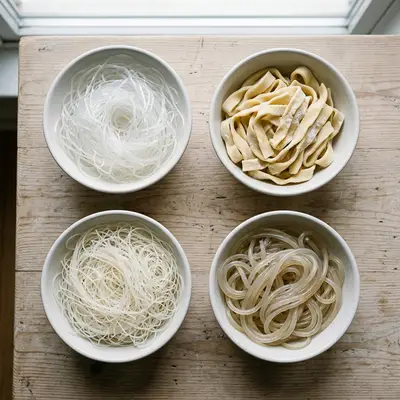
How Many Noodle Types Does Malatang Have? A Complete Guide to Glass Noodles, Dao Xiao Mian, Rice Vermicelli, and More
![Convenience Store Malatang Showdown: A Complete Comparison of 7-Eleven, FamilyMart, and Lawson Products [2026 Edition]](/cms-img/assets/23787e9ca72e4b26ae0b5ff85eead0ec/311296ac79f949b3b9fb9a88b94570e9/malatang-convini.png?fm=webp&w=400&q=70)
Convenience Store Malatang Showdown: A Complete Comparison of 7-Eleven, FamilyMart, and Lawson Products [2026 Edition]
How to Choose Toppings for Malatang — Everything You Need to Get the Most Out of Your Bowl