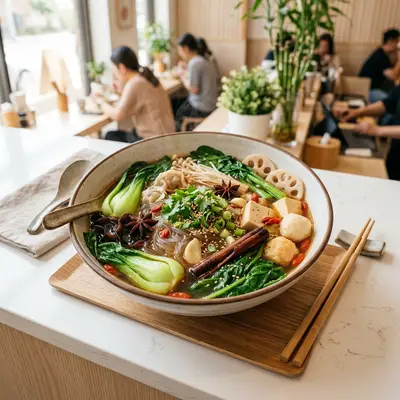
Why Is Malatang So Popular Right Now? A Clear Explanation of Why It's Caught On — Especially Among Women
目次
- Introduction: What Kind of Dish Is Malatang, and Why Did It Take Off?
- Reason 1: A Perfect Fit for Health-Conscious Eaters — Packed with Vegetables, Low on Guilt
- Reason 2: Total Topping Freedom — The Joy of Choosing and Customizing
- Reason 3: Perfectly Fine Solo — The Ease of Making Hot Chinese Food an Everyday Thing
- Conclusion: How Far Will the Malatang Boom Spread?
Introduction: What Kind of Dish Is Malatang, and Why Did It Take Off?
"Malatang" (麻辣湯 or 麻辣燙) is a spicy, medicinal-herb soup dish originating in China's Sichuan Province that has become a sensation for its addictively numbing, tingling heat. The name breaks down like this: "má" (麻) refers to the numbing spice of Sichuan pepper (huājiāo), while "là" (辣) means the sharp burn of chili peppers — and it is this one-of-a-kind combination of the two that gives malatang its signature flavor. At first glance it looks a lot like hot pot, but the format is quite different. Hot pot is a communal dish shared by a group around a large bubbling pot, whereas malatang is a one-person, self-customized bowl. You pick your own ingredients from an array of options laid out in the shop, specify your broth and spice level, and the kitchen turns it all into a personal bowl of spicy, savory soup — an entirely new kind of eating experience that feels something like a spiced-up soup salad. Hot pot tends to be a dinner-with-friends affair, whereas malatang stands apart because you can enjoy it easily for lunch or as a solo meal.
Malatang sparked a major boom in Japan starting around 2024, ignited largely by social media and press coverage. Celebrities including actress Satomi Ishihara, Risa Naka, former AKB48 member Yuki Kashiwagi, and members of Korean idol groups posted enthusiastic malatang content on Instagram and TikTok, sending interest skyrocketing and setting off the trend around mid-2024. Korean social media had already been building malatang momentum since around 2019, which also played a role. Then came a decisive TV moment: in September 2024, the variety program "Matsuko's Unknown World" dedicated a segment to malatang, introducing its appeal to a broad audience. This combination of viral social-media spread and mainstream media exposure sent awareness soaring, and the dish exploded in popularity — especially among younger Gen-Z consumers.
Today there are said to be at least 50 or more malatang specialty shops in Tokyo alone, and the momentum has spread well beyond the capital — new locations are opening rapidly in major cities including Osaka and Fukuoka, making malatang accessible across Japan. For example, Chipao Malatang (七宝麻辣湯), one of the pioneering malatang specialty chains, was founded in 2007 but has accelerated its nationwide expansion on the back of the boom, with over 40 locations across Japan as of October 2025. Yang Guo Fu Malatang (楊國福麻辣湯), the internationally renowned chain originating in northeast China, has been actively expanding throughout Japan since landing in Ikebukuro in 2018, with stores now stretching from central Tokyo to Shimokitazawa, Yokohama Chinatown, Kobe, and beyond. Alongside these chains, independent shops run by Chinese chefs committed to authentic flavors have been appearing everywhere — and long lines on weekends have been widely reported. In fact, one popular spot in Kichijoji, Tokyo sees queues at lunchtime and reportedly lines of people even during the mid-afternoon lull. Notably, 80 to 90 percent of customers at many shops are young women in their teens and twenties, with some well-known locations drawing dozens of people lined up before opening. So why exactly has malatang captured women's hearts so completely? Let's explore that through three key reasons.
Reason 1: A Perfect Fit for Health-Conscious Eaters — Packed with Vegetables, Low on Guilt
One of the biggest draws of malatang is the image of being healthy and beauty-friendly. The broth typically incorporates over 30 kinds of medicinal spices and herbs — including jujube and goji berries — that are said to warm the body from the inside out. The standard noodle base is glass noodles (harusame) made from potato or mung bean starch, which are gluten-free and lower in calories compared to wheat noodles. On top of that, the capsaicin from the generous amount of chili in the broth is believed to boost fat burning, so it's no surprise that many people come away thinking "just eating this fires up my metabolism."
On social media, word spread that malatang is low-calorie and healthy, and influencers enthusiastically amplified those benefits, fueling the boom. Comments like "glass noodles mean less guilt" and "it's a healthy way to load up on vegetables" are typical of the positive reviews circulating online. Because a single bowl of malatang can be packed with a colorful variety of vegetables and mushrooms, it has earned a loyal following among health-conscious eaters as a soup that lets you get lots of vegetables in one sitting. In Japan today, younger generations are increasingly interested in getting their vegetables and protein — as seen in the popularity of convenience-store soups marketed as containing "one serving of vegetables" — and malatang fits right into that mindset as a bowl that feels vegetable-rich and good for you.
Many specialty shops also let you choose your noodle type, which is another draw. Beyond standard glass noodles, some shops offer low-carb alternatives like konjac noodles or seaweed noodles, which are appreciated by people who want to enjoy noodles even while watching their diet. At Chipao Malatang, for instance, you can upgrade to seaweed or konjac noodles for an extra 150 yen, and you can even go noodle-free and add multigrain rice instead. This range of options gives people the reassurance of knowing they can cut carbs to suit their preferences.
That said, it is worth noting that finishing every last drop of the broth can mean a high sodium intake, and glass noodles are starchy enough that overindulging adds up in carbs. Experts caution against assuming malatang is inherently healthy without a second thought. But because you control what goes in — the ingredients, the quantities, the spice level — malatang can be a low-guilt dining-out option when enjoyed in moderation. Many users say exactly that: "since it's mostly vegetables, I can eat it without feeling bad," and this has been a major factor in winning over health-conscious women.
Reason 2: Total Topping Freedom — The Joy of Choosing and Customizing
Another key pleasure of malatang is, without a doubt, being able to customize it exactly how you like.
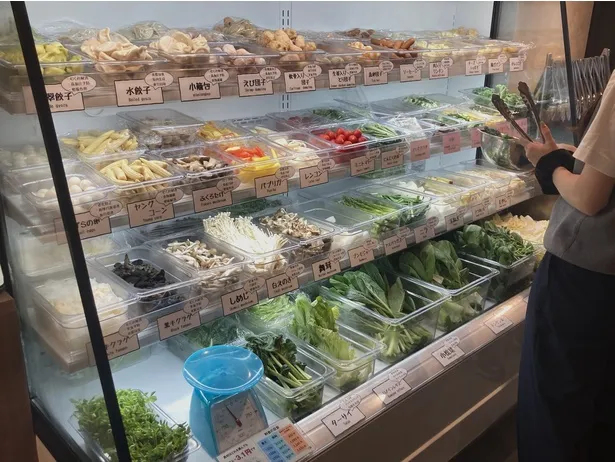
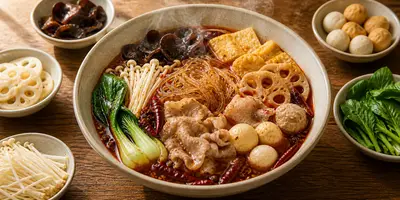
Most malatang shops use a self-serve buffet-style format where you pick your own ingredients from a counter of choices. Inside refrigerated cases you'll find leafy greens, bean sprouts, wood ear mushrooms, cilantro, and other vegetables; enoki and shimeji mushrooms; fish cakes and processed proteins; meats; seafood like shrimp and squid; dumplings and wonton; quail eggs; and more — all told, 50 to 60 kinds of toppings lined up in a row. You fill a bowl with whatever you want, then a staff member weighs it and rings it up; you then specify your preferred broth (the options vary by shop — spicy málà broth, mild white bone broth, tom yum style, etc.) and your spice level, and the kitchen takes it from there. Pricing is by weight, and in central urban areas the going rate is roughly 3.5 to 4 yen per gram. Choosing 300–400 grams of ingredients alone comes to around ¥1,200–¥1,600, and with broth and other charges a single bowl typically runs ¥1,000–¥1,800 in total. That is not cheap for a one-bowl lunch, but it is also fair to call it an experiential meal with the price of choosing built in. Many repeat customers say something like: "I went all out on toppings today, but the satisfaction was totally worth it."
This joy of choosing is a big part of why malatang resonates especially with younger diners. The format — picking your own ingredients and ordering them cooked to spec — is unusual in Japanese dining and feels refreshingly novel. It is a bit like the self-serve tempura counters found at Sanuki udon shops in Kagawa Prefecture, except here you are customizing the entire bowl, broth and all. Because the combinations are endless — "I'm extra hungry today so I'll throw in some boiled dumplings" or "this time I'll try an ingredient I've never had before" — you never get bored, no matter how often you visit. Some shops even post cards next to each ingredient listing benefits like "beauty benefit: ○○" or "digestive effect: ○○," which makes browsing the options even more fun. This sense of excitement at building your very own bowl has captured the hearts of food-savvy young diners.
On top of that, malatang has serious visual impact. A crimson broth heaped with ingredients photographs beautifully, and plenty of people post their bowls to social media with the hashtag #malatang. A bowl brimming with colorful vegetables and mushrooms radiates both healthiness and abundance, earning a reputation for being "photogenic and delicious." Most people who try malatang for the first time take a photo and post it, and that sharing power has been one of the forces driving the trend.
Reason 3: Perfectly Fine Solo — The Ease of Making Hot Chinese Food an Everyday Thing
The third factor is how easily you can enjoy malatang on your own, without any fuss. Traditionally in Japan, "hot pot" (nabe or hot pot) has meant gathering a group around a communal pot — an appealing idea but one with a high barrier: "I'm interested, but I can't just go on my own." Malatang, in contrast, is essentially a solo-friendly spin on hot pot, casual enough for a quick solo lunch at the counter. It has been noted that dining out alone — even for women — has become completely normal in Japan recently, and that shift has reinforced malatang's popularity. Thanks to the relaxed, approachable shop layouts and ordering systems at most malatang spots, even people who think "I love spicy food but solo Chinese dining feels like too much" can walk in without hesitation.
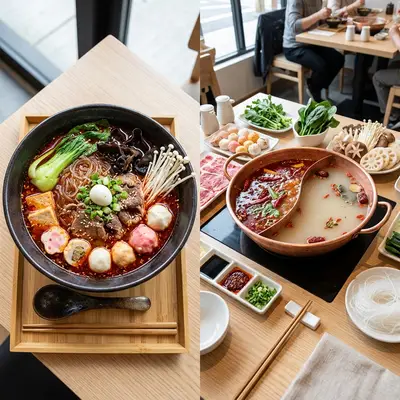
Most malatang specialty shops are designed with a bright, clean, café-like aesthetic. Enen (縁苑), which opened in Kinshicho, Tokyo in 2021, for example, had a café-style interior that felt welcoming to women dining alone and men dining solo alike. Many shops are primarily counter-seating with smaller tables, making it easy for solo diners to sit down and eat quickly. The sentiment that a place is "easy to walk into alone, regardless of gender" is consistent across both chains and independent shops — and the sight of young women waiting in line alone is an everyday occurrence at the door. The way malatang has lowered the barrier to "solo Chinese dining" is one of the key reasons it has been embraced so widely, especially by women.
This solo-friendly ease also translates into versatility of use. Malatang slips naturally into all kinds of situations: a quick bowl for lunch, a light one on the way home from work to take the edge off hunger — it is easy to incorporate into daily eating. Traditional Chinese dishes like mapo tofu or gyoza tend to come in hearty set-meal formats, and spicy hot pot feels like a special outing. Malatang, by contrast, occupies a niche as a spicy but healthy noodle dish, and more and more people are eating it the way they would eat ramen — as a regular weekday meal. Some customers say that "once you try it, you get hooked and find yourself going back several times a week," and it is this addictive quality that keeps building a base of loyal repeat visitors.
Conclusion: How Far Will the Malatang Boom Spread?
Malatang — a lightly spiced, herbal broth loaded with your choice of ingredients — is a new kind of food experience that fits the modern appetite perfectly: healthy, customizable, and totally solo-friendly. Beyond the flavor itself, its photogenic look and the event-like quality of building your own bowl have turned it into a youth phenomenon on par with the tapioca and maritozzo crazes of years past. The pace at which new shops are opening is remarkable, with major chains reportedly launching new locations nearly every month since 2025. Food manufacturers have noticed: malatang-flavored instant noodles and soup products have been appearing one after another, and the market is buzzing. It has started to look like malatang may transcend a passing trend and establish itself as a permanent menu staple.
That said, for anyone who finds spicy food daunting, the numbing heat of malatang may seem like a high bar. But take heart — many shops these days let you order at zero spice (0 spice level), so you can dial it in to your comfort zone. Some shops offer a mild, non-spicy white bone broth malatang, or a gentle sesame dan dan-style version, so even at a low spice setting you can savor the deep, complex umami of the spice blend. If you have been curious, do not be afraid — head to a malatang specialty shop and try building a bowl that is perfectly yours. The fact that so many people have found themselves completely hooked will probably start to make a lot of sense once you do.

Find malatang near you
Search authentic malatang spots by area or nearest station →
Related articles
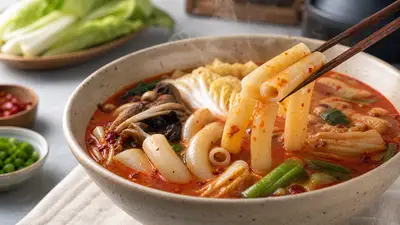
What Is Bunmoja? Meaning of 粉耗子, How It Differs from Glass Noodles, and Where to Buy It
What Is Malatang (麻辣湯)? Meaning, How to Read It, and How to Eat It — A Complete Guide
Malatang Spelling Guide: "麻辣湯" or "麻辣担"? Plus How It Differs from Hot Pot