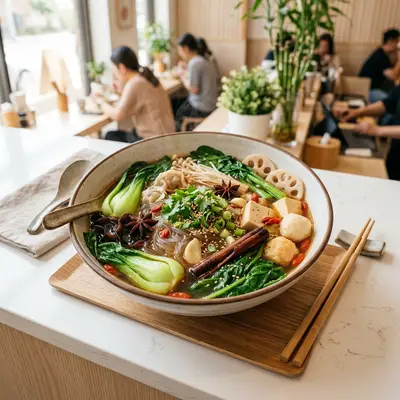
What Is Malatang (麻辣湯)? Meaning, How to Read It, and How to Eat It — A Complete Guide
目次
What Is Malatang (麻辣湯)? The Short Answer
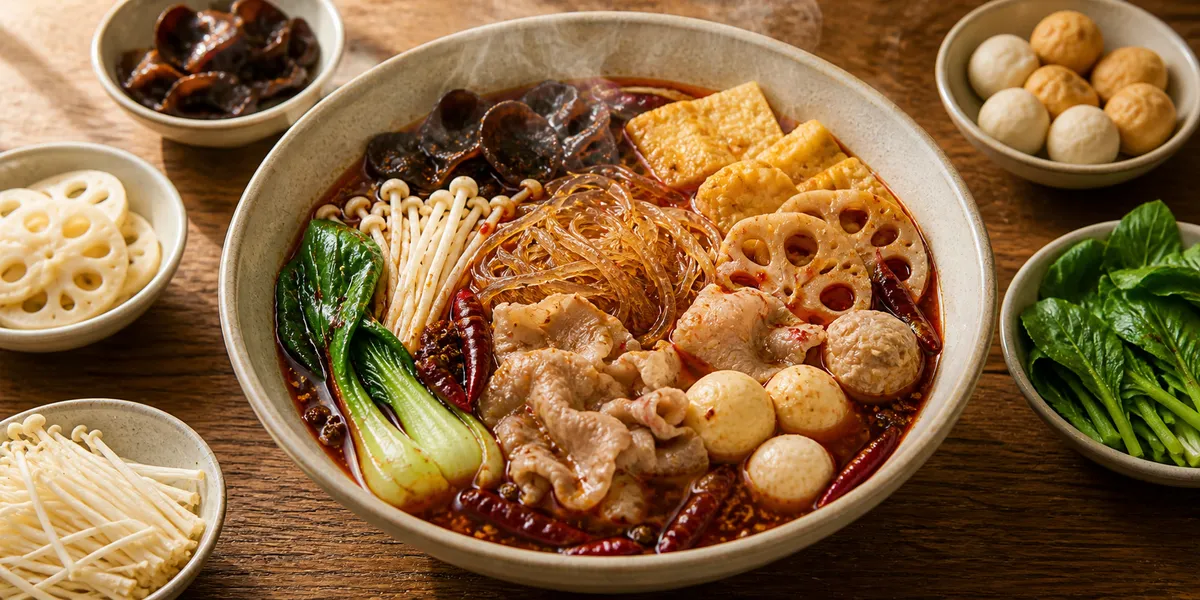
Malatang (麻辣湯) is a Chinese dish in which you simmer your choice of ingredients and noodles in a broth seasoned with the numbing heat of Sichuan pepper (huājiāo) and the fiery heat of chili peppers.
Its defining feature is the ability to pick your own ingredients from a display case and adjust the spice level yourself. Because you can mix and match vegetables, mushrooms, meat, fish cakes, glass noodles, and more, every bowl is uniquely yours — tailored to your mood and appetite that day. In Japan, specialist malatang restaurants began multiplying rapidly around 2023, and the dish has since become a wildly popular food with lines out the door.
How to say it: In Japan it is read "māratān" (マーラータン), based on the Chinese pronunciation of the characters 麻辣湯. The on-yomi Japanese reading "marayu" is not used. It is sometimes shortened to "maratan" (マラタン).
The Meaning of "麻辣湯" — Breaking Down Each Character
All three characters of "麻辣湯" capture exactly what this dish is.
Character | Reading | Meaning | Key ingredient |
|---|---|---|---|
麻 | Má | Numbing heat | Sichuan pepper (huājiāo — a relative of Japanese sanshō) |
辣 | Là | Fiery heat | Chili peppers, chili oil |
湯 | Tāng | Soup / broth | Chicken bone broth, herbal medicinal bases, etc. |
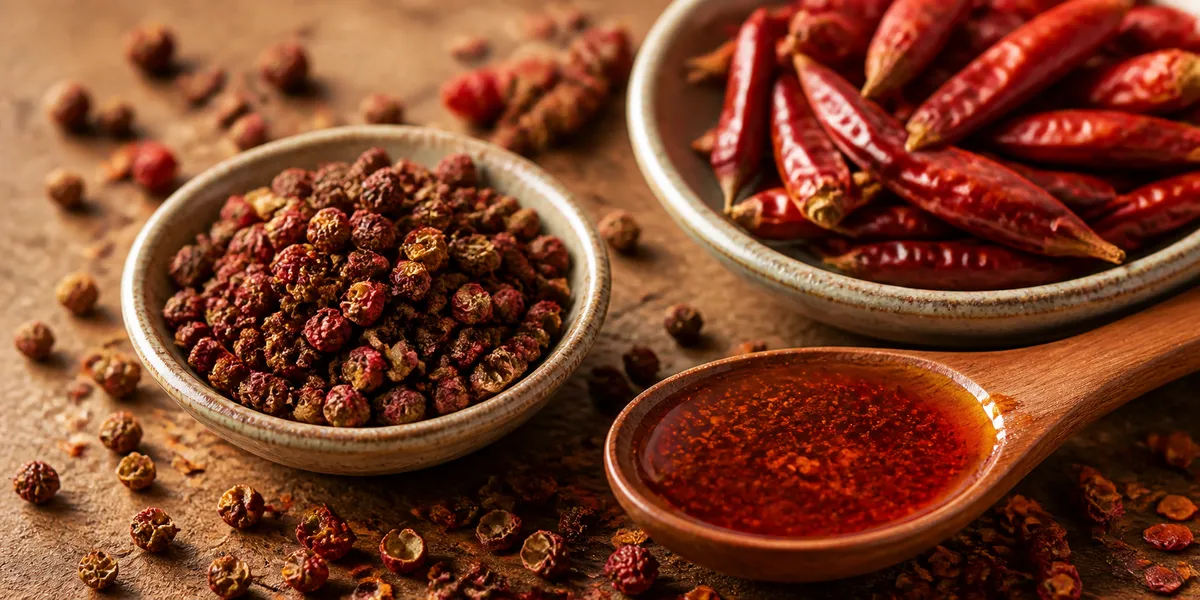
In other words, "麻辣湯" literally means "numbing, spicy soup." It is the málà (麻辣) flavor profile — a hallmark of Sichuan cuisine — served as a warming soup dish. Many restaurants let you adjust the numbing heat and the spicy heat independently, which is why even people who are not big fans of spice can find a comfortable bowl.
Origins and History of Malatang
The roots of malatang are said to lie in the confluence of the málà flavor tradition of Sichuan province and the street-food culture of northeastern China. Originally a humble street food, it was served by skewering ingredients on sticks and dipping them into a large pot of spicy simmering broth.
The dish later evolved into its modern single-serving bowl format and spread across China as a national fast food. Massive chains with thousands — even tens of thousands — of locations emerged, including Yangguofu Malatang and Zhang Liang Malatangtang. Malatang began arriving in Japan in earnest around 2020, and its photogenic presentation and high customizability quickly turned it into a boom.
For a deeper look at why malatang became so popular, see Why Is Malatang Trending? The Reasons Behind Its Popularity.
How to Order and Eat Malatang
If it is your first time, the ordering process can feel a little daunting — but it is actually straightforward. Most restaurants follow these four steps.
- Choose your ingredients — Pick vegetables, mushrooms, meat, fish cakes, glass noodles, and anything else that appeals to you from the display case and place them in your tray
- Weigh your selection — At restaurants that use a by-weight (量り売り) system, your ingredients are weighed on a scale and priced per gram. Some restaurants offer a set-price system with a fixed number of items instead
- Choose your broth and spice level — Select a broth type (málà, white bone broth, tomato, herbal medicinal, etc.) and specify your preferred spice level
- Pick up your bowl — Your ingredients are simmered for you and your bowl is ready. Add toppings or table condiments to finish it off just how you like it
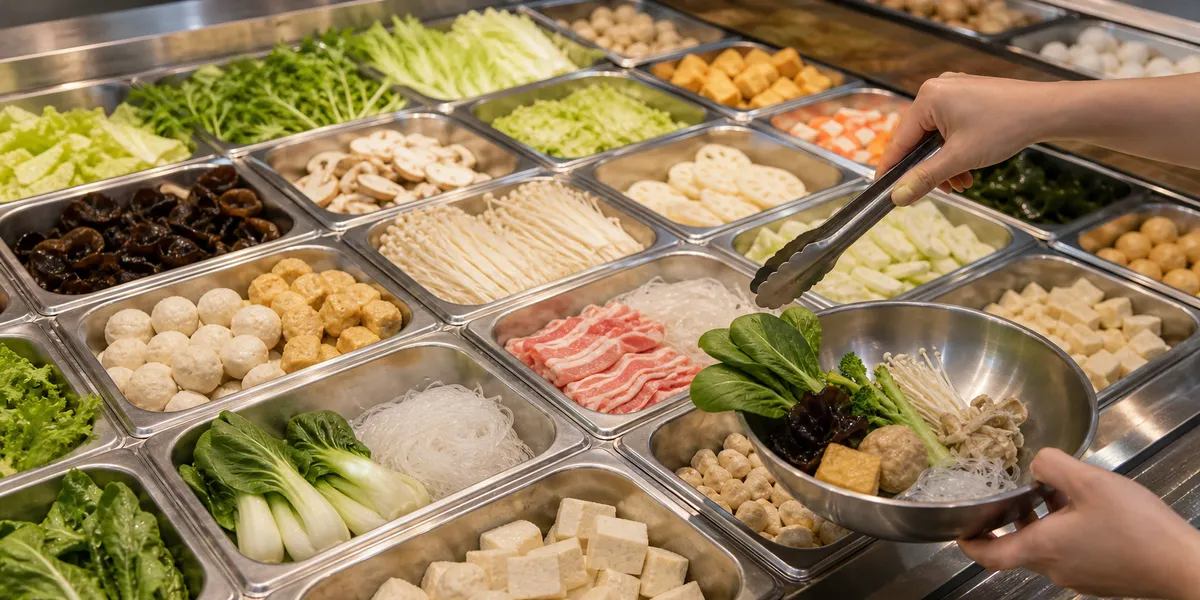
First-timer tip: Start with a low spice level (0–1) and go for leafy greens, mushrooms, and glass noodles — a combination that is hard to go wrong with. As you get used to it, try adding meat, fish cakes, and more heat to develop your own signature bowl. That discovery process is the real joy of malatang.
We have dedicated articles that go deeper on ingredients, noodles, and spice choices.
- Types of ingredients and how to choose them → Malatang Ingredient Guide
- Differences between noodle types (glass noodles, dao xiao mian, etc.) → How Many Types of Noodles Does Malatang Have?
- For people who cannot handle spice → How to Order Malatang Without the Heat
How Malatang Differs from Similar Dishes
Malatang is often confused with hot pot and dandan noodles — but they are different dishes.
Dish | Broth | How it is eaten | How it differs from malatang |
|---|---|---|---|
Malatang | Málà base (your choice) | Choose your own ingredients, served as a single portion | Individual customization + noodles included |
Hot pot (火鍋) | Shared pot at the table | A group cooks ingredients together in a communal pot | A communal dining experience; noodles are not mandatory |
Dandan noodles (担々麺) | Sesame + chili oil | Eaten as a fixed noodle dish | Broth and noodles are fixed; no ingredient selection |
Mala xiang guo (麻辣香鍋) | Sauce-based stir-fry (no broth) | Ingredients are stir-fried and tossed in sauce | No soup — it is not a "湯" (broth) dish |
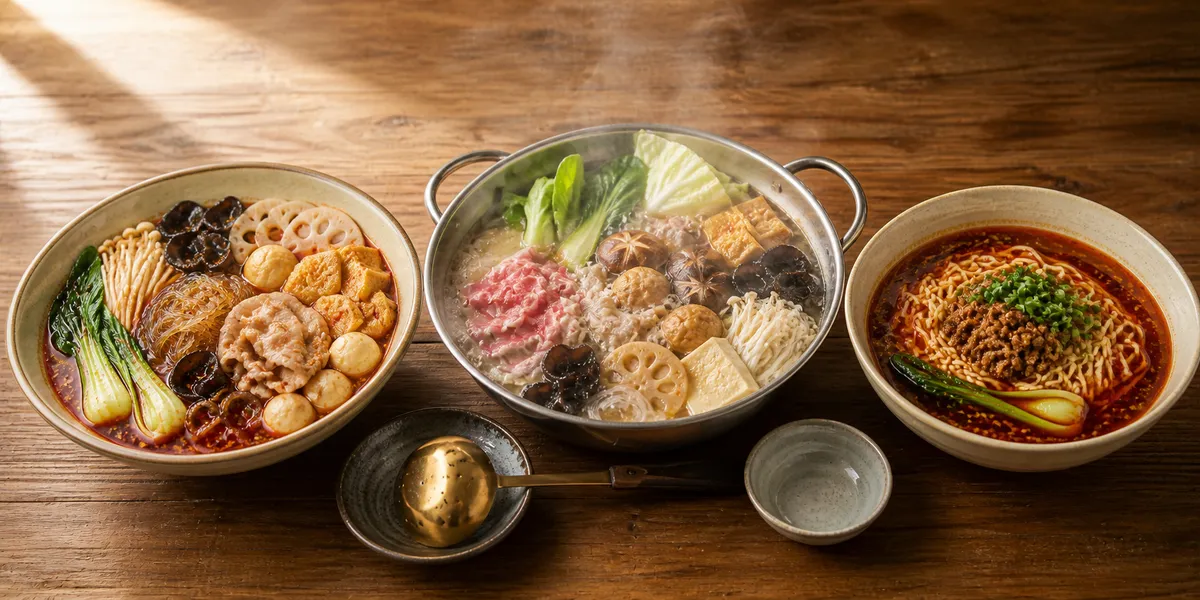
For a thorough breakdown of how malatang differs from hot pot and a look at spelling variations (麻辣湯 vs. マーラータン vs. マラタン), see Malatang vs. Hot Pot: Differences and Correct Spellings.
Calories and Health Considerations
A lot of people wonder "Does all that spice mean lots of calories?" or "Is this actually bad for you?" The answer is that a bowl of malatang can come in anywhere from around 200 kcal to over 800 kcal depending entirely on what you put in it. Load up on leafy greens, mushrooms, and tofu for a light and nutritious bowl; pile in fried items, fatty meat, and a mountain of glass noodles and the calorie count climbs fast.
- Calorie estimates and a quick-reference table by ingredient → How Many Calories Does Malatang Have?
- Herbal medicinal broth options and health-conscious ingredient picks → Is Malatang Good for You? The Best Ingredients for Your Health
Where Can You Eat Malatang?
Specialist malatang restaurants are rapidly expanding across Japan's cities. You can find dedicated spots in most major urban centers, including Ikebukuro, Shinjuku, Yokohama, Osaka, Nagoya, Sendai, and Sapporo.
- Find a malatang restaurant near you → Search All Malatang Restaurants in Japan
- Looking for mild options only → Restaurants with Low-Spice Malatang
- Looking for herbal medicinal broth → Restaurants Serving Medicinal Herbal Broth Malatang
If you want to try making it at home, check out our Complete Recipe for Authentic Malatang at Home.
Frequently Asked Questions
Q. How do you pronounce malatang?
In Japan it is read "māratān" (マーラータン), based on the Chinese pronunciation of 麻辣湯. Some people shorten it to "maratan" (マラタン).
Q. Are 麻辣湯 and マーラータン the same thing?
Yes, they are the same dish. 麻辣湯 is the Chinese character spelling; マーラータン is the katakana phonetic spelling used in Japanese. Different script, same food.
Q. Can I eat malatang if I don't like spicy food?
Absolutely. Many restaurants let you choose a spice level of 0 (plain white broth), and some can even eliminate the Sichuan pepper numbing sensation entirely. See How to Order Malatang Without the Heat for tips.
Q. How many calories are in a bowl?
Roughly 200–800 kcal depending on what you put in. For details, see the Malatang Calorie Quick-Reference Table.
Q. Can I make it at home?
Yes — if you have Sichuan pepper, doubanjiang (spicy bean paste), and star anise, you can recreate it at home. The Complete Recipe for Authentic Malatang at Home walks you through every step.
Summary
- Malatang (麻辣湯) is a Chinese dish where you choose your own ingredients and noodles to simmer in a broth defined by the numbing heat of Sichuan pepper and the fiery heat of chili
- The three characters spell out the dish itself: 麻 = numbing, 辣 = spicy, 湯 = soup
- You select ingredients from a display case and order by weight or by set; broth type and spice level are also your choice
- It is distinct from hot pot and dandan noodles; calorie content varies widely based on what you put in
- Specialist malatang restaurants are rapidly multiplying across Japan's major cities
If you are ready to give it a try, start by searching for a malatang restaurant near you.
Chain guides

Yang Guofu Malatang
Everything you need to know about Yang Guofu Malatang in Japan: how the by-weight ordering system works, spice levels, soup options (malatang, beef bone, tomato), noodle and topping choices, and recommended combos for different tastes and dietary goals.

Zhang Liang Malatang
Zhāng Liàng Málàtàng
A guide to Zhang Liang Malatang's current menu, how to check prices, spice options, and ordering. Based on its official LINE account, it covers malatang, tomato, mushroom, mala ban, Sichuan-style mala hot pot, Golden hot-and-sour, and tom yum–style soup.
Find malatang near you
Search authentic malatang spots by area or nearest station →
Related articles
What Is Bunmoja? Meaning of 粉耗子, How It Differs from Glass Noodles, and Where to Buy It
Malatang Spelling Guide: "麻辣湯" or "麻辣担"? Plus How It Differs from Hot Pot
Why Is Malatang So Popular Right Now? A Clear Explanation of Why It's Caught On — Especially Among Women