What Is Bunmoja? Meaning of 粉耗子, How It Differs from Glass Noodles, and Where to Buy It
目次
- What Is Bunmoja? The Short Answer
- What Bunmoja Really Is — A Chinese-Born Glass Noodle Called 粉耗子
- How Bunmoja Differs from Ordinary Glass Noodles and Dao Xiao Mian
- Why Bunmoja's Texture Made It Go Viral
- How Bunmoja Is Used in Malatang
- Where to Buy Bunmoja
- Bunmoja Calories and Nutrition
- How to Cook and Enjoy Bunmoja at Home
- Frequently Asked Questions (FAQ)
- Summary
What Is Bunmoja? The Short Answer
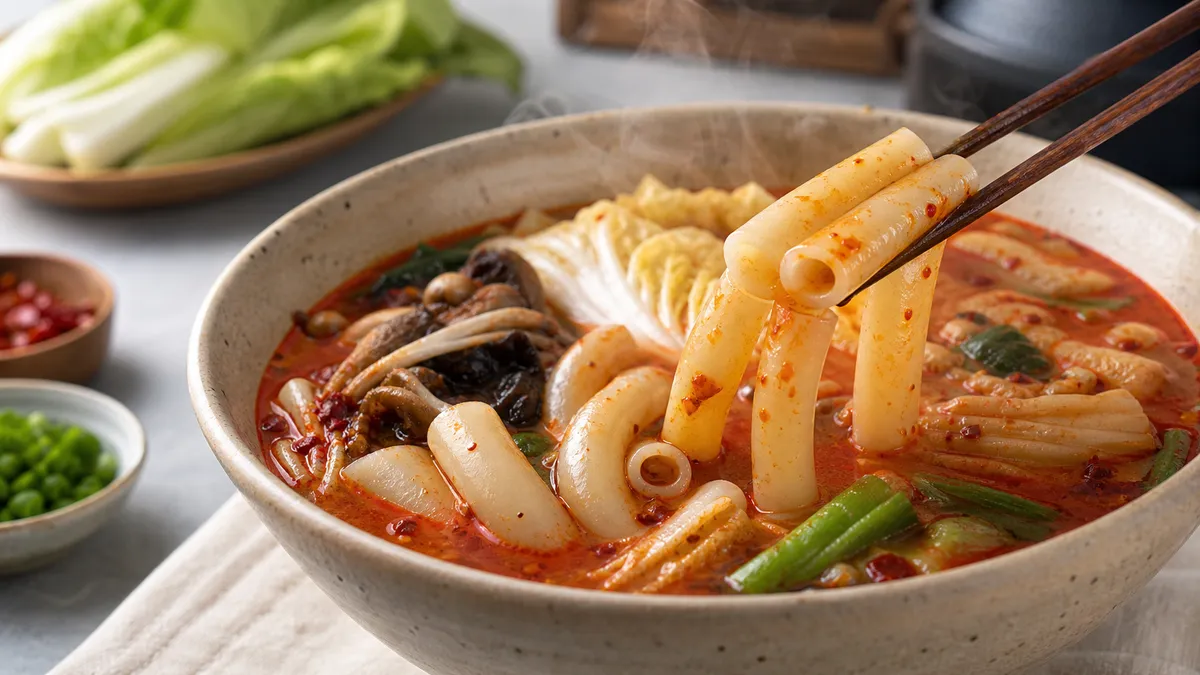
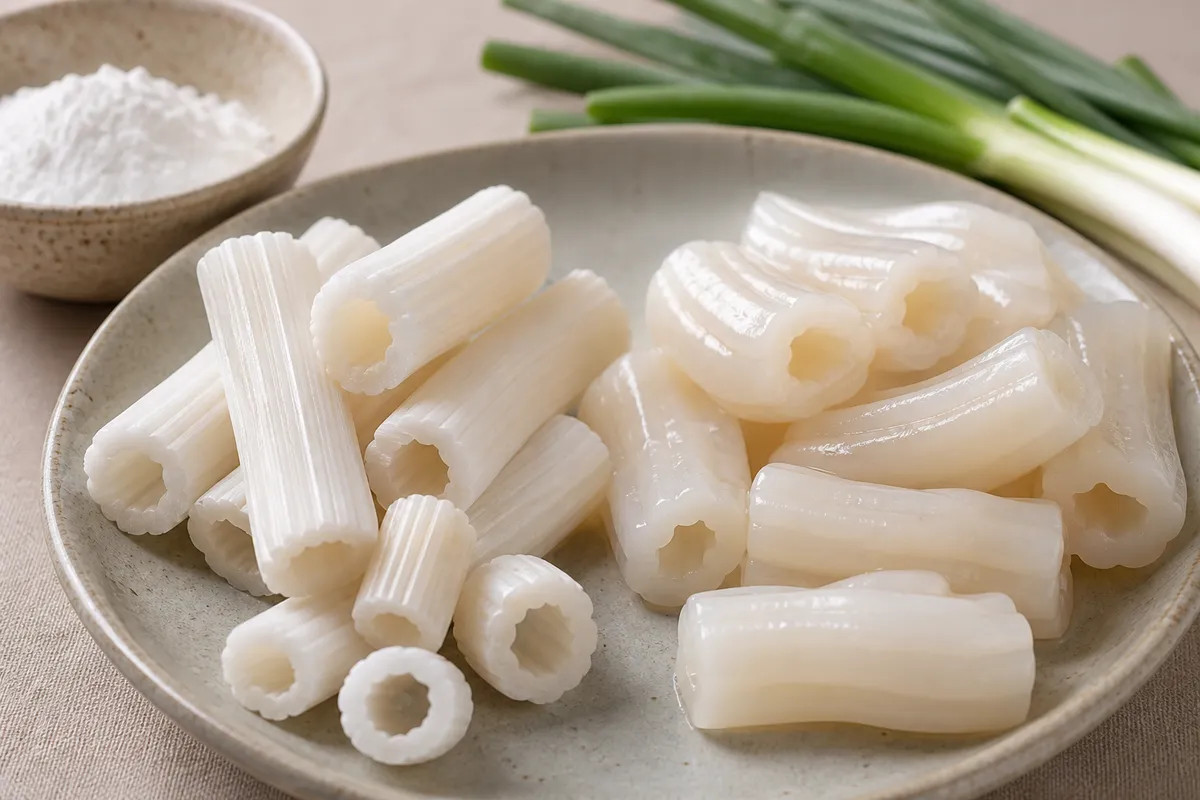
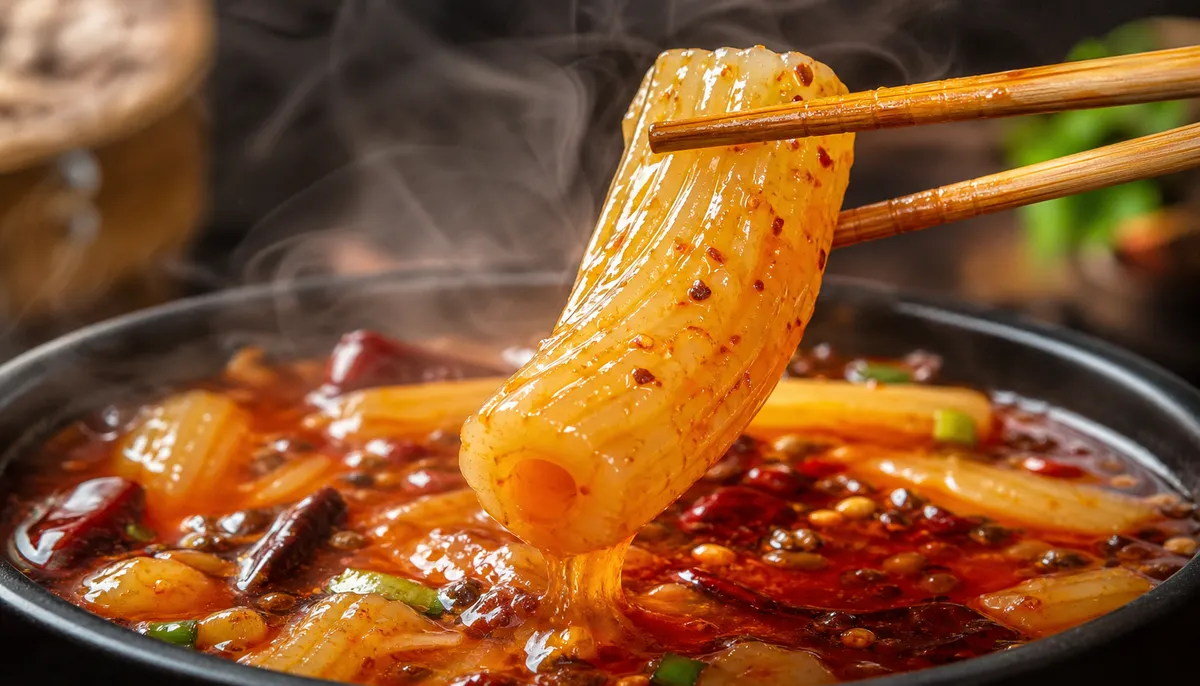
Bunmoja (粉耗子) is a "thick glass noodle" made from potato starch. Unlike ordinary glass noodles, which are thin and thread-like, bunmoja is short and thick, with a semi-transparent, glossy appearance. Its greatest appeal is a uniquely chewy, springy texture. It holds its shape even after soaking in broth, so every bite stays satisfying to the very end.
Originally from northeastern China, it became a massive hit in South Korea through mukbang videos and social media. In Japan, it quickly gained popularity as a standout malatang topping, and it has since become a sought-after limited-time ingredient that draws lines at popular shops.
💡 How to read it: Pronounced "Bun-mo-ja." Written in Chinese characters as 粉耗子 (Fěn Hàozi), and in Korean as 분모자 (Bunmoja). Because it spread to Japan via Korea, the Korean-based pronunciation "Bunmoja" has become the standard Japanese term.
What Bunmoja Really Is — A Chinese-Born Glass Noodle Called 粉耗子
Breaking down the Chinese characters in 粉耗子 reveals what this ingredient is all about.
Writing | Reading | Meaning |
|---|---|---|
粉耗子 | Fěn Hàozi (Chinese) | A thick noodle-like food made from starch (粉) |
분모자 | Bunmoja (Korean) | The name as it spread in South Korea |
ブンモジャ | Bunmoja (Japanese common name) | The Korean pronunciation adopted directly into Japanese |
The main ingredient is potato starch (some products use sweet potato starch or cornstarch). This is similar to the base ingredients of ordinary glass noodles — mung bean or potato — making bunmoja essentially a "chunkier cousin of glass noodles." Many pieces have a hollow center with a flower-like or ridged cross-section, a shape that helps them absorb broth beautifully and creates that smooth, slippery mouthfeel.
For a deeper look at the ingredients and nutritional differences between glass noodle varieties, see What Are Glass Noodles Made Of? Mung Bean, Potato, and Sweet Potato Compared.
How Bunmoja Differs from Ordinary Glass Noodles and Dao Xiao Mian
Comparing bunmoja side by side with other noodles commonly found in malatang makes its place on the menu clear.
Type | Ingredient | Thickness & Shape | Texture |
|---|---|---|---|
Bunmoja (粉耗子) | Potato starch | Short and thick, semi-transparent, hollow | Chewy and springy; holds shape well |
Ordinary glass noodles | Mung bean, potato, etc. | Thin, long threads | Slippery, light |
Dao xiao mian (knife-cut noodles) | Wheat flour | Wide, irregular cuts | Chewy but with a wheaty, substantial bite |
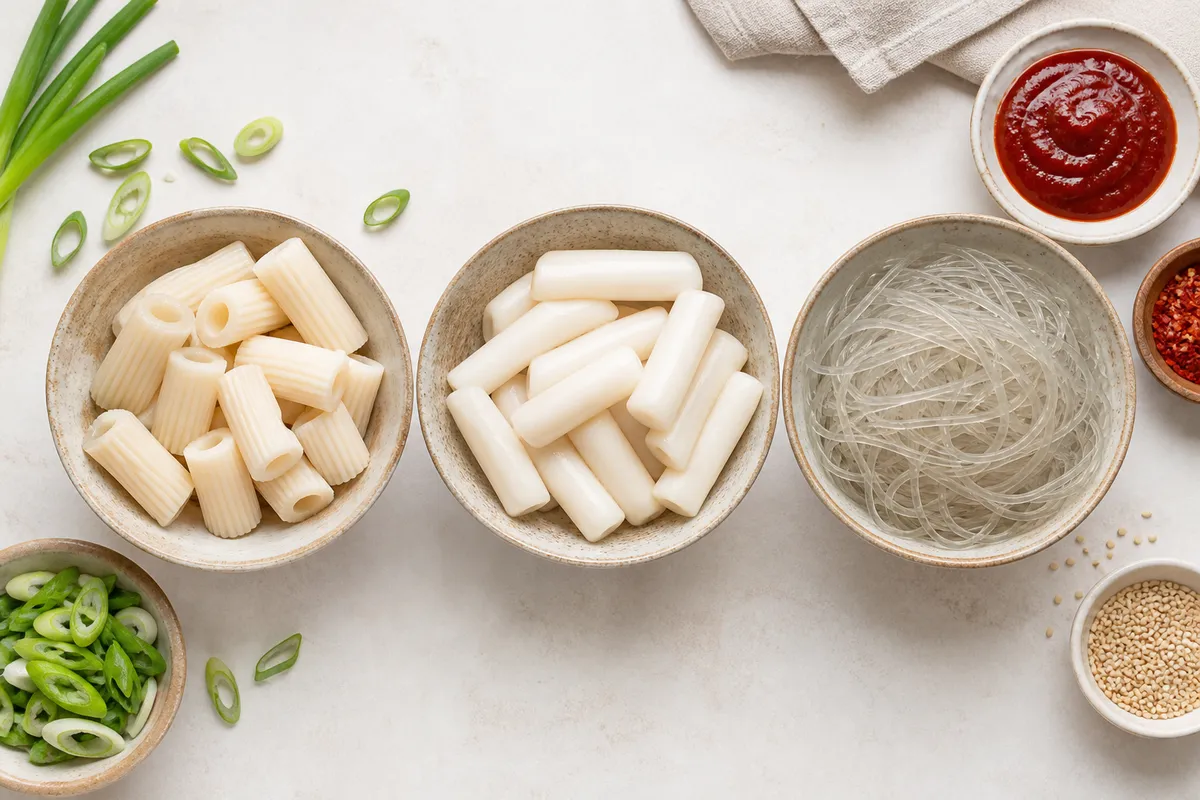
Even within the glass noodle family, thin glass noodles are light and slippery, while bunmoja is thick, springy, and deeply satisfying. Because it doesn't turn soft and soggy even after a long soak in broth, you can take your time eating and it still tastes great at the very end. For a full guide to choosing noodles in malatang, see How Many Types of Noodles Are There in Malatang? Features and How to Choose.
Why Bunmoja's Texture Made It Go Viral
The number-one reason bunmoja became such a sensation is simply its addictive texture. The distinctive chewiness from potato starch sits somewhere between mochi rice cake and glass noodles — it pushes back when you bite into it, and that quality made it a perfect match for ASMR eating videos on social media.
On top of that, bunmoja itself is nearly flavorless. That neutrality lets it soak up every bit of the numbing, spicy málà broth, making it equally at home as the star of the bowl or a supporting player. For younger generations especially, the combination of photogenic appeal, novel texture, and spicy-delicious flavor ticked every box — and bunmoja climbed to the top as the most talked-about malatang topping.
How Bunmoja Is Used in Malatang
The natural home for bunmoja is malatang. Because malatang lets you pick your own ingredients from a display case, bunmoja simply goes on your tray and gets simmered in the broth. It takes a little longer to cook through than thinner noodles, but that extra time means the flavor soaks deep inside.
Popular chains such as Qibao Malatang have introduced bunmoja as a limited-time topping that draws lines out the door. Ordering malatang with bunmoja has become the go-to way to enjoy the dish.
- Want to learn about malatang itself? → What Is Malatang? Meaning, Pronunciation, and How to Eat It — A Complete Guide
- Curious about other toppings? → How to Choose Malatang Toppings
Where to Buy Bunmoja
For anyone who wants to enjoy it at home, here is a rundown of where to find bunmoja. It comes in both dried and frozen/chilled forms.
Where to buy | Availability | Notes |
|---|---|---|
Gyomu Super (Business Supermarket) | Yes (seasonal) | Good value. Check the malatang section or Chinese ingredients aisle. |
KALDI Coffee Farm | Yes (seasonal) | Often stocked alongside malatang soup bases. |
Shin-Okubo & Chinese grocery stores | Yes | Korean and Chinese specialty stores are reliable sources. |
Online retailers (Rakuten, Amazon, etc.) | Yes | Great for buying in bulk (e.g., 500 g packs). Most reliable option. |
In-store stock can vary by season and location, so if you want to be sure you can get it, ordering online is the safest bet. Dried bunmoja needs to be rehydrated first; frozen or chilled bunmoja can go straight into the pot.
Bunmoja Calories and Nutrition
Since potato starch is the main ingredient, most of the nutrition in bunmoja is carbohydrates. It contains almost no protein or fat, with roughly 330–350 kcal per 100 g of dried product as a rough guide. In practice, however, the noodles expand significantly when rehydrated, so a single serving (rehydrated) is not especially high in calories.
That said, don't assume that thick glass noodles are automatically healthy. Starch is sugar, and loading up on bunmoja in your malatang will add up in carbs. Pairing it with leafy vegetables, mushrooms, and tofu is the smart way to keep the bowl balanced.
- Estimated calories per bowl of malatang → How Many Calories Are in Malatang? Per-Bowl Estimates and a Topping-by-Topping Chart
- Glass noodle diet perspective → Do Glass Noodle Diets Really Work? How to Eat Them Without Gaining Weight
How to Cook and Enjoy Bunmoja at Home
Bunmoja is a versatile ingredient that works far beyond malatang. Here are some recommended ways to use it at home.
- Homemade malatang: A store-bought malatang soup base + your favorite toppings + bunmoja. The classic, foolproof combination.
- Hot pot finish: Add it at the end of a hot pot as the final starch course — it stays chewy and holds up without going soggy.
- Chinese-style cream stew or stir-fry: Its neutral flavor makes it surprisingly adaptable to non-spicy sauces as well.
For dried bunmoja, soak it according to the package instructions and cook it a little longer than the stated time, since the pieces are thick. If you want to make a proper malatang broth from scratch, check out Authentic Homemade Malatang Recipe — Recreate Restaurant Flavor in 15 Minutes and simply swap in bunmoja for the noodles.
Frequently Asked Questions (FAQ)
Q. Is bunmoja the same thing as glass noodles?
A. They are related but different. Both are starch-based, but bunmoja is thick, short, and chewy — the texture is completely unlike the thin, slippery strands of ordinary glass noodles.
Q. How do you read and write bunmoja?
A. Pronounced "Bun-mo-ja," written in Chinese characters as 粉耗子 (Fěn Hàozi). The Japanese name comes from the Korean pronunciation of 분모자 (Bunmoja).
Q. Where can I buy it?
A. You can find it at Gyomu Super, KALDI, Chinese grocery stores in Shin-Okubo, and online retailers. For guaranteed availability, ordering online is the most reliable option.
Q. Is it high in calories?
A. The main ingredient is potato starch, so it's primarily carbohydrates. Dried bunmoja is about 330–350 kcal per 100 g, but rehydrated noodles weigh much more, so a single serving is not that high in calories. Watch out for large portions, though.
Q. Can I use it in dishes other than malatang?
A. Yes. It works well as the final starch in hot pot, in Chinese-style cream stew, and in stir-fries. Because it has almost no flavor of its own, it pairs easily with all kinds of seasonings.
Summary
- Bunmoja (粉耗子) is a "thick glass noodle" made from potato starch, prized for its chewy, springy texture.
- Originally from northeastern China → went viral on social media in South Korea → became hugely popular as a malatang topping in Japan.
- Compared to ordinary glass noodles, it is thicker, holds its shape better, and is far more filling.
- Available at Gyomu Super, KALDI, Shin-Okubo stores, and online. Easy to enjoy at home in malatang or hot pot.
- Mainly starch = mainly carbohydrates. Pair with vegetables and mushrooms for a well-balanced bowl.
If you want to taste the real thing first, search for a malatang restaurant near you and try a bowl with bunmoja. 🌶 To understand the difference from glass noodles at the ingredient level, see Glass Noodle Ingredients and Nutrition; to learn about malatang itself, see What Is Malatang?; and to make it at home, check out Authentic Homemade Malatang Recipe.

Find malatang near you
Search authentic malatang spots by area or nearest station →
Related articles
What Is Malatang (麻辣湯)? Meaning, How to Read It, and How to Eat It — A Complete Guide
Malatang Spelling Guide: "麻辣湯" or "麻辣担"? Plus How It Differs from Hot Pot
Why Is Malatang So Popular Right Now? A Clear Explanation of Why It's Caught On — Especially Among Women