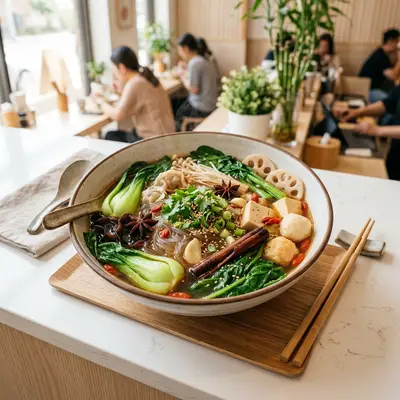
Malatang Spelling Guide: "麻辣湯" or "麻辣担"? Plus How It Differs from Hot Pot
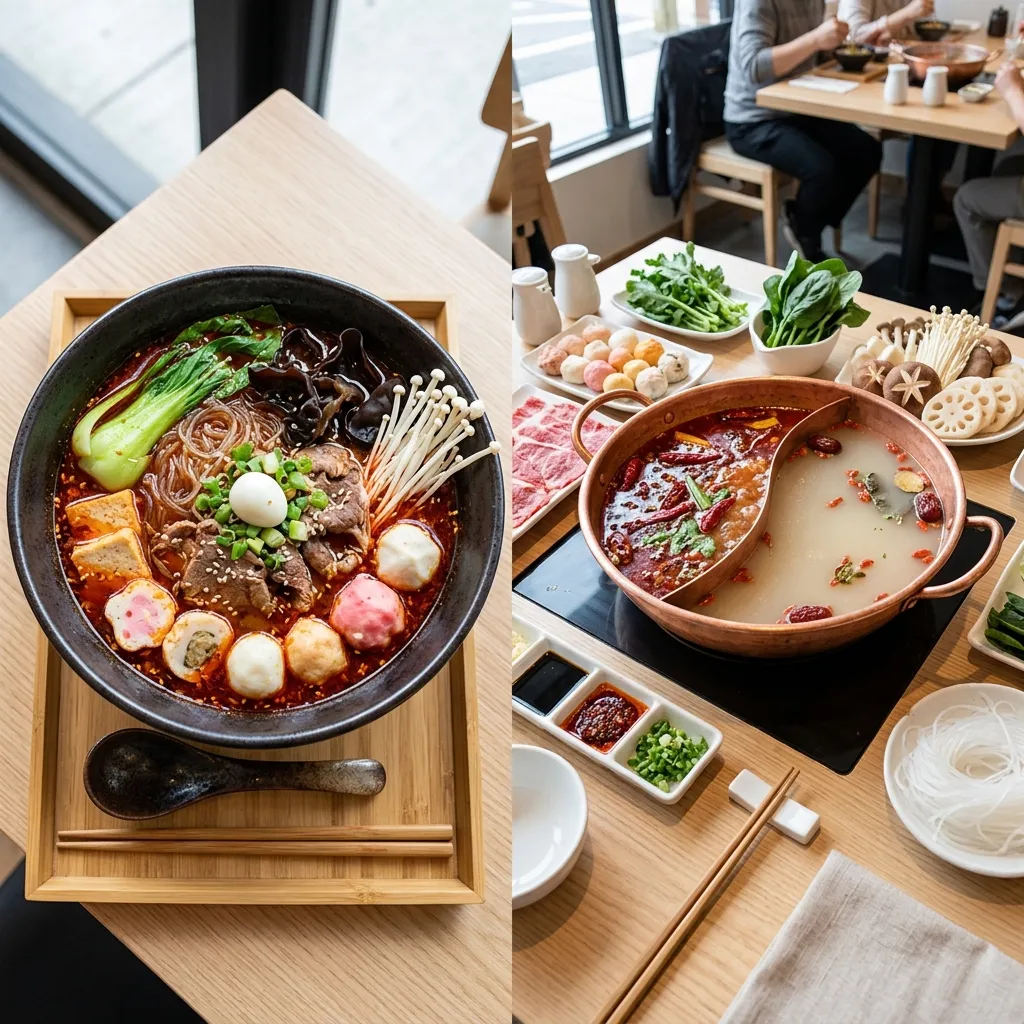
If you type "malatang" (マーラータン) on an iPhone's default keyboard, you may notice it suggests "麻辣担" — but wait, wasn't malatang written as "麻辣湯"? Here's the answer straight away.
Conclusion: The standard and recommended spelling in Japanese is 「麻辣湯(マーラータン)」.
"麻辣担" is a misspelling. The original Chinese characters are Simplified: 麻辣烫, Traditional: 麻辣燙. In Japan, the character "湯" (soup) is widely used by restaurants and media to convey the dish's character.
目次
What Is Malatang (麻辣湯)?
麻 (má) = the numbing tingle of Sichuan pepper, 辣 (là) = the heat of chili, 湯 (tāng) = soup.
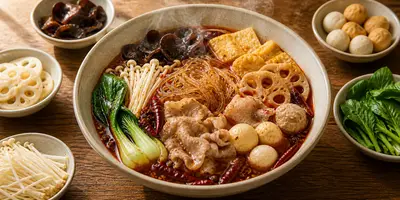
You pick your own ingredients — vegetables, meat, seafood, fish cakes, mushrooms, and more — and they are quickly simmered in a spicy, aromatic broth, served as a single-portion soup dish. In Japan, styles featuring glass noodles (fěnsī) or wide flat noodles (fěnpí) in place of regular noodles are especially popular.
"麻辣湯" or "麻辣担" — Which Is Correct?
- Correct: 麻辣湯 (malatang)
→ "湯" means soup, making clear sense as a Japanese dish name. It is widely established across media and restaurants.
- Incorrect: 麻辣担
→ "担" comes from dandan noodles (担担麺) and has no connection to malatang. Confusions like "麻辣担" or "麻辣坦" are simply wrong.
If in doubt, just go with マーラータン (麻辣湯) — that's all you need.
The Original Chinese: What Are 麻辣烫 / 麻辣燙?
The dish's name in China is 麻辣烫 (Simplified) / 麻辣燙 (Traditional), where 烫/燙 (tàng) means "to scald" or "to blanch in boiling water."
Rooted in street-food culture, the word evokes the image of skewers and ingredients being quickly passed through a vat of boiling broth.
In Japan, "湯" (soup) is commonly used as a phonetic substitute to convey the dish's nature, and 麻辣湯 = malatang has become the widely accepted form.
Malatang vs. Hot Pot: A Simple Comparison
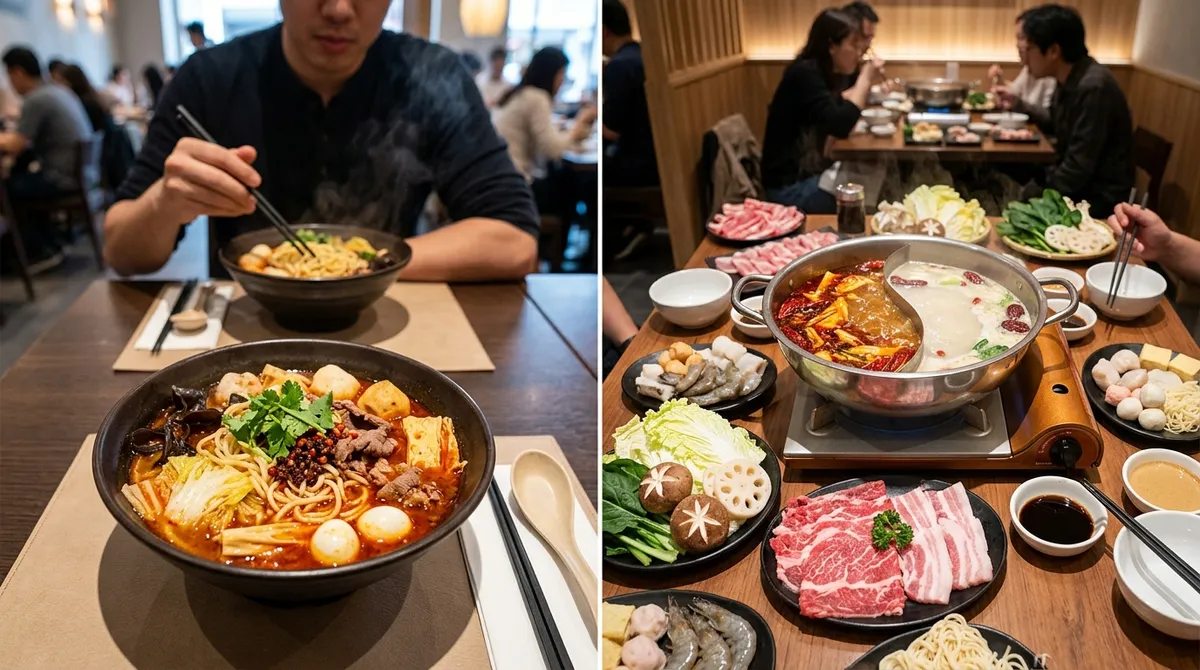
Category | Malatang (麻辣湯) | Hot Pot (火鍋/火锅) |
|---|---|---|
How you eat | Individual portion — staff cook it and serve in a bowl | Shared — a pot at the table for everyone |
Broth | A soup dish — you eat the broth along with the ingredients | Cook ingredients in the broth; eat with dipping sauce |
Ordering | Choose ingredients + specify spice level, numbing level, and noodles | Choose broth base (hóng tāng / bái tāng, etc.) + ingredients |
Cooking time | Quick (briefly simmered) | Slow — cooked at the table as you go |
Best for | A quick solo meal | Group dining or a party |
In short: malatang = a customizable spiced soup, just for you; hot pot = a two-toned communal pot everyone gathers around.
Related Dish: Málà Xiānguō (麻辣香鍋)
Málà xiānguō is a dry, sauceless dish. Spices and ingredients are stir-fried together, producing a bold, rich flavor that pairs well with rice or beer.
Malatang (麻辣湯), by contrast, is all about savoring the soup.
Tips for Ordering: Spice, Numbing, and Noodles
- Heat (辣): Options typically range from bù là (none) / wēi là (mild) / zhōng là (medium) / dà là (hot).
- Numbing (麻): Adjusted by the amount of Sichuan pepper. Some shops let you specify "shǎo má" (less) or "duō má" (more).
- Noodles: You may be able to choose from thin glass noodles / wide flat fěnpí / wheat noodles / rice noodles (mǐxiàn).
- Ingredient balance: Build a base of vegetables, mushrooms, and tofu, then add 1–2 types of meat or seafood for a bowl that is satisfying without feeling too heavy.
- Finishing touches: Fine-tune at the table with ground Sichuan pepper, chili oil, or black vinegar. A splash of black vinegar rounds out and tightens the flavors.
Frequently Asked Questions
Q1. What is the correct spelling?
A. In Japanese, 「麻辣湯(マーラータン)」 is standard. The original Chinese is 麻辣烫/麻辣燙. "麻辣担" is a mistake.
Q2. How is malatang different from hot pot?
A. Malatang is a single-serving spiced soup; hot pot is a tabletop pot everyone cooks from together. The ordering style, eating experience, and occasions differ entirely.
Q3. How does it differ from málà xiānguō?
A. Málà xiānguō is a stir-fried, dry dish; malatang is a simmered, broth-based soup. The presence or absence of broth is the defining difference.
Q4. Can I tone down the spice and numbing?
A. Absolutely. Specify bù là / wēi là and shǎo má when ordering. Adding black vinegar also mellows the heat.
Q5. Are noodles other than glass noodles good too?
A. Yes! Wide fěnpí or rice noodles add a different texture and take the bowl to the next level. Definitely worth trying if the shop offers options.
▶ For a deep dive into malatang ingredients, see our Ingredient Selection Guide.
▶ Check the calorie and nutrition breakdown for each topping in the Topping Encyclopedia.
Summary
- The recommended Japanese spelling is 「麻辣湯(マーラータン)」.
- "麻辣担" is a misspelling — easy to mix up, so watch out.
- The original Chinese, 麻辣烫/麻辣燙, literally means "to blanch in boiling water."
- Malatang and hot pot are eaten in completely different ways. Malatang is perfect for a quick solo meal; hot pot is the choice when you want to gather around the pot with a group.
Find malatang near you
Search authentic malatang spots by area or nearest station →
Related articles
What Is Bunmoja? Meaning of 粉耗子, How It Differs from Glass Noodles, and Where to Buy It
What Is Malatang (麻辣湯)? Meaning, How to Read It, and How to Eat It — A Complete Guide
Why Is Malatang So Popular Right Now? A Clear Explanation of Why It's Caught On — Especially Among Women