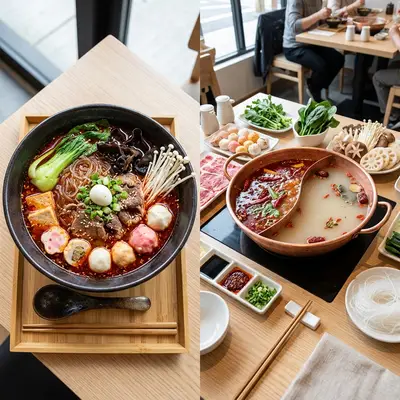
The Best Malatang at Gyomu Super | Top 3 Products & Authentic Recipe for 2026
目次
- Can You Make Malatang at Gyomu Super? The Answer as of May 2026
- May 2026 Edition: Malatang Products Available at Gyomu Super
- ① Malatang Soup Base: Taste Review — Mild and Milky
- ② How to Use Málà Téngjiāo Xiāngjiàng — The Green Sichuan Pepper All-Rounder
- ③ Dongbei Dalaapi: Recreating Authentic Chewy Noodle Texture at Home
- Full Malatang Recipe Using Only Gyomu Super Ingredients (Serves 2, ~¥500)
- Pros and Cons of Gyomu Super Malatang
- FAQ: Common Questions About Gyomu Super Malatang
- Summary: Three Items from Gyomu Super, One Perfect Bowl
- Related Articles
Can You Make Malatang at Gyomu Super? The Answer as of May 2026
If you landed on this page by searching "Gyomu Super malatang," chances are you're wondering one of the following:
- Which products do I combine to get that authentic flavor?
- Kaldi is too expensive, the restaurant near me closed—can I make it at home for less?
- I saw the malatang trend on TikTok / Instagram and want to jump in without breaking the bank.
The short answer: as of May 2026, Gyomu Super carries three standout items—the Malatang Soup Base, the Málà Téngjiāo Xiāngjiàng (numbing-spicy green Sichuan pepper sauce), and Dongbei Dalaapi (wide flat noodles)—and by adding a few pantry extras like frozen bok choy and canned quail eggs, you can make a full bowl of authentic malatang for under 300 yen per serving.
This page covers taste reviews of all three products, a Gyomu Super–only malatang recipe, and an FAQ. If you want to master the soup from scratch, read our separate article Authentic Homemade Malatang Recipe first—it will make everything here click faster.
May 2026 Edition: Malatang Products Available at Gyomu Super
To make malatang at Gyomu Super, focus on these three items plus a handful of supporting ingredients.
Product Comparison (as of May 2026)
Product | Contents | Price (tax incl.) | Cost per serving | Key feature |
|---|---|---|---|---|
Malatang Soup Base (with noodles) | Serves 2 (1 serving × 2 packets) | ¥267 | ¥133.5 | Glass noodles + liquid soup packet set |
Málà Téngjiāo Xiāngjiàng | 1 jar | ¥298 | — | All-purpose sauce with green Sichuan pepper aroma |
Dongbei Dalaapi | Wide flat noodles | — | — | Firm, chewy flat glass noodles |
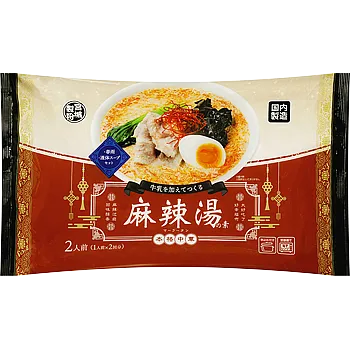
① Malatang Soup Base (with noodles) — Serves 2 for ¥267, ready in 4 minutes
The easiest entry point into Gyomu Super malatang is the Malatang Soup Base. Each box contains glass noodles + a liquid soup packet for one serving; two servings come in at ¥267 (tax included), making each bowl just ¥133.5—remarkable value.
The official preparation calls for 300 ml of milk. A 4-minute microwave at 500 W is all it takes, so it works great for weeknight dinners or quick lunches. Simmering it on the stovetop lets the flavors meld more deeply for an even richer result.
② Málà Téngjiāo Xiāngjiàng — A ¥298 all-purpose sauce
One of Gyomu Super's hidden gems is the Málà Téngjiāo Xiāngjiàng (numbing-spicy green Sichuan pepper sauce) with its distinctive blue label. For ¥298, this sauce punches well above its price point, built on green Sichuan pepper (téngjiāo) and fried garlic for a bold, fragrant depth.
Just one tablespoon stirred into malatang soup instantly brings it to specialty-restaurant quality. It also works brilliantly as a finishing touch for mapo tofu, a drizzle over cold tofu, a dipping sauce for gyoza, or a tangy dressing for chilled noodles—one jar goes a long way across seasons.
③ Dongbei Dalaapi — The chewy wide noodle that bites back
Found in the Chinese foods aisle, Dongbei Dalaapi (literally "Northeast China big pulled skin") is a wide flat glass noodle from the Dongbei region of China. It's a must for anyone who wants chewy, substantial malatang rather than the usual soft-noodle version.
Unlike regular mung bean glass noodles that turn slippery and soft, Dalaapi holds its bite from the first mouthful to the last, gripping the broth all the way through. Mix it half-and-half with regular glass noodles for a fun contrast in texture.
Other Supporting Ingredients (all available at Gyomu Super)
Gyomu Super also carries plenty of toppings that pair perfectly with malatang. If you're not sure what to add, check our Healthy Malatang Ingredients Guide for ideas.
- Atsuage (thick fried tofu) / firm tofu
- Frozen bok choy / frozen spinach
- Dried wood ear mushrooms
- Canned quail eggs
- Frozen meatballs / frozen gyoza
- Pre-cut vegetable mix
① Malatang Soup Base: Taste Review — Mild and Milky
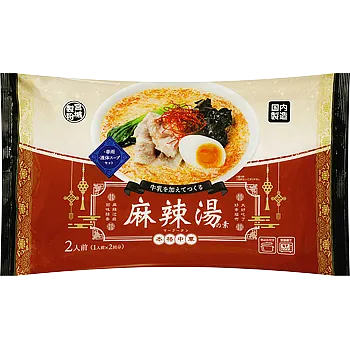
Product Specs
Item | Details |
|---|---|
Contents | Serves 2 (1 serving × 2 packets) |
Price | ¥267 (tax included) |
Per serving | ¥133.5 |
Recommended prep | 300 ml milk + microwave 500 W for 4 min |
Soup base ingredients | Sesame, doubanjiang, garlic, ginger, Sichuan pepper (huājiāo), chili oil, spices |
The Unique Milk-Based Preparation
What sets this soup base apart from others on the market is that it calls for milk instead of water. Using 300 ml of milk wraps the heat and numbing tingle in a creamy, mellow richness, making it approachable even for people who are sensitive to spice.
There are two ways to cook it:
- Microwave method: Combine noodles, liquid soup packet, and 300 ml milk in a microwave-safe bowl; heat at 500 W for 4 minutes.
- Stovetop method: Warm the milk and liquid soup packet in a small saucepan, add the noodles, and simmer for 2–3 minutes.
The microwave is faster; the stovetop gives deeper flavor. Microwave on weeknights, stovetop on weekends—easy as that.
Flavor Profile and Heat Level
The liquid soup packet contains sesame, doubanjiang, Sichuan pepper (huājiāo), and chili oil. Opening it releases a warm, toasty aroma of sesame and huājiāo. The finished bowl reads as "mild heat, subtle numbing tingle, sesame-forward"—very friendly for spice-averse eaters and kids alike.
If you want a more intense málà punch, stir in 1 tablespoon of Málà Téngjiāo Xiāngjiàng—that single move brings it right up to specialty-restaurant level. This is the single most important trick for leveling up a Gyomu Super malatang.
For a broader look at managing heat, see How to Choose Mild Malatang.
② How to Use Málà Téngjiāo Xiāngjiàng — The Green Sichuan Pepper All-Rounder
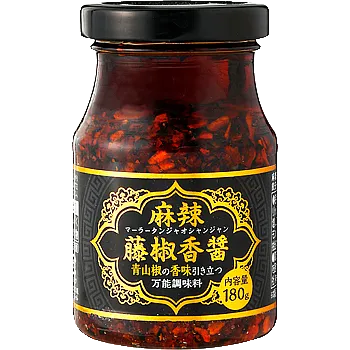
Gyomu Super's quiet star is the Málà Téngjiāo Xiāngjiàng. At ¥298 it feels like a bargain, but the ingredient list—fried garlic, téngjiāo (green Sichuan pepper) paste—reads like a proper Chinese pantry staple.
One Tablespoon That Upgrades Any Malatang
The simplest use: stir 1 tablespoon into the finished malatang soup base or any homemade broth. The fresh, zingy tingle of green Sichuan pepper adds a bright top note that transforms a simple sesame base into something multi-dimensional.
Golden Ratio When Building Broth from Scratch
If you skip the packaged soup base and build the broth from zero, here's the formula that works:
Ingredient | Amount (serves 2 / approx. 900 ml) |
|---|---|
Water | 900 ml |
Chicken stock powder | 1½ tbsp |
Málà Téngjiāo Xiāngjiàng | 1–2 tbsp |
Soy sauce | 1 tbsp |
Black vinegar | 1 tsp |
This alone puts you surprisingly close to the real thing. For an even more refined broth, see The Authentic Malatang Recipe: Golden Ratio Broth.
Other Uses
- Mapo tofu: Stir in 1 tsp at the end for a green Sichuan pepper lift.
- Cold tofu: Spoon it on directly for an instant Chinese-style appetizer.
- Gyoza dipping sauce: Mix into vinegar-soy for a bold Chinese-restaurant vibe.
- Chilled noodles: Add 1 tbsp to the dressing for a grown-up kick.
One jar justifies itself well beyond malatang season.
③ Dongbei Dalaapi: Recreating Authentic Chewy Noodle Texture at Home
The Dongbei Dalaapi you'll find in Gyomu Super's Chinese foods section is a wide, flat glass noodle rooted in northeastern Chinese (Dongbei) cuisine, traditionally used in malatang and cold dressed noodle dishes (liángbàn).
Where regular mung bean glass noodles are silky and slippery, Dalaapi is flat and firm—the more you chew, the more flavor comes through. In a malatang bowl, it grips the broth while holding its shape to the very last bite, delivering the "chewy malatang" experience you get at a proper specialty shop.
Rehydration Guide
Method | Time | Result |
|---|---|---|
Cold water soak | ~30 minutes | Firm and chewy; ideal for malatang |
Boiling | ~10 minutes (follow package) | Softer; better for cold dressed noodles |
For malatang, the gold standard is to soak in cold water for 30 minutes, then add directly to the simmering soup. Over-boiling kills the characteristic chew, so resist the urge.
Full Malatang Recipe Using Only Gyomu Super Ingredients (Serves 2, ~¥500)
Here's how to put all three products together into one bowl.
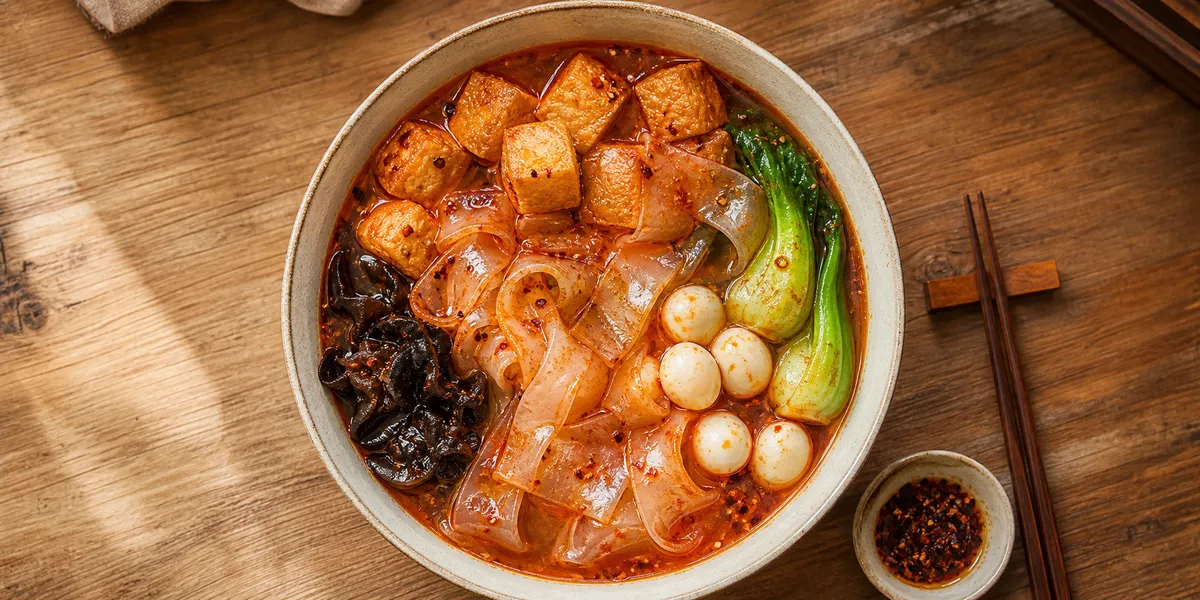
Ingredient List (serves 2 / Gyomu Super only)
- Malatang Soup Base …… 2 packets (¥267)
- Málà Téngjiāo Xiāngjiàng …… 1 tbsp (from the ¥298 jar; a few yen per use)
- Dongbei Dalaapi …… as needed (or half Dalaapi, half regular glass noodles)
- Milk …… 600 ml
- Frozen bok choy …… 1 portion
- Atsuage (thick fried tofu) …… ½ piece
- Canned quail eggs …… 4 eggs
- Dried wood ear mushrooms (rehydrated) …… 5 g
Total cost: around ¥500 (roughly ¥250 per serving). A bowl at a malatang restaurant in Japan often runs ¥1,000–¥1,500, making this Gyomu Super version exceptional value.
4-Step Method
- Rehydrate the noodles: Soak Dongbei Dalaapi in cold water for 30 minutes. (Regular glass noodles: lukewarm water, 5 minutes.)
- Make the broth: Combine 600 ml milk, both liquid soup packets, and 1 tbsp Málà Téngjiāo Xiāngjiàng in a pot; heat over medium.
- Add toppings: Add bok choy, atsuage, wood ear mushrooms, and quail eggs; simmer for 2–3 minutes.
- Serve: Divide the soaked noodles into bowls, ladle the broth and toppings over the top, and enjoy.
7 Recommended Finishing Toppings
- Cilantro (coriander)
- Chili crisp (taberu rayu)
- White sesame seeds
- Sliced green onion
- Zha cai (pickled mustard stem)
- Fried garlic
- Extra drizzle of Málà Téngjiāo Xiāngjiàng (1 tsp)
Pros and Cons of Gyomu Super Malatang
Here's an honest breakdown rather than just the highlights.
Pros
- Unbeatable cost: ¥133.5 per serving (soup base alone)
- Milk-based broth means mild heat—kid-friendly
- Add the Xiāngjiàng and Dalaapi and you reach specialty-restaurant quality
- Everything in one store—no need to shop around
Cons
- The soup base alone feels underwhelming in heat and numbing for seasoned malatang fans → fix with Xiāngjiàng
- Dongbei Dalaapi requires 30 minutes of soaking
- Milk is required, so you need to have it on hand
If you're watching calories or nutrition, check our Malatang Calorie Reference Chart for a breakdown by ingredient.
FAQ: Common Questions About Gyomu Super Malatang
Q. Is Gyomu Super a membership store?
A. No, Gyomu Super is not a membership store. Anyone can walk in and shop freely. It's often confused with Costco, but Gyomu Super charges no annual fee or membership—it's an open-to-the-public discount supermarket.
Q. Which section of the store carries the malatang soup base?
A. Most locations stock it in the Chinese foods aisle, hot pot soup section, or dry goods aisle. Layouts vary by store, so if you can't find it, ask a staff member for the "malatang no moto" (malatang soup base) and they'll point you right to it.
Q. Can I make the soup base without milk?
A. The official recommendation is 300 ml of milk, but water or soy milk both work fine. Water gives a sharper, more pronounced spice; soy milk yields a mellow, creamy result similar to milk. A useful trick: use water for adults who want more heat, milk for kids, and a 50/50 water-soy milk blend for something in between.
Q. How should I store Málà Téngjiāo Xiāngjiàng after opening?
A. Store it in the refrigerator after opening. Check the label for the exact best-before date (note: information current as of May 2026). Because it's oil-rich, always use a clean spoon to preserve the aroma as long as possible.
Q. Is it too spicy? Can kids eat it?
A. Made with milk, the soup base becomes quite mild—comfortable for spice-averse adults and elementary school-aged kids. There is a light Sichuan pepper tingle, however, so for very young children it's best to skip the Xiāngjiàng and any additional chili oil.
Q. Can I freeze the soup base packets?
A. The soup base packets are shelf-stable at room temperature—no freezing needed. Keep them in your pantry until use. The toppings you'll grab at Gyomu Super (bok choy, meatballs, gyoza) are typically frozen, so do make sure you have enough freezer space for those.
Q. How does it compare to Kaldi or Seijo Ishii?
A. Kaldi carries its own malatang lineup—a retort pouch (150 g, around ¥289) and a 5-pack glass noodle set—and its dedicated soup bases tend to shine when it comes to depth of flavor from ingredients like Pixian doubanjiang. Gyomu Super's edge is lower cost per serving. A practical approach: use Gyomu Super as your everyday rotation and reach for Kaldi when you want something special. As for Seijo Ishii, no standalone retort malatang product was confirmed as of May 2026; the closest options are their refrigerated sour spicy noodle soup (sanratan men, around ¥538) and the Desica brand clam dashi spicy sour soup pouch, 150 g (around ¥430).
Q. What's the difference between malatang and hot pot (huǒguō)?
A. Malatang is essentially a single-serve spicy noodle soup bowl; huǒguō (hot pot) is a shared tabletop cooking experience for a group. For a fuller explanation, see Malatang vs. Hot Pot: What's the Difference?
Summary: Three Items from Gyomu Super, One Perfect Bowl
To enjoy malatang at Gyomu Super as of May 2026, pick up these three items:
- Malatang Soup Base (¥267 for 2 servings / ¥133.5 each) — the perfect entry point, mild and milky
- Málà Téngjiāo Xiāngjiàng (¥298) — green Sichuan pepper all-purpose sauce; 1 tbsp takes any bowl to the next level
- Dongbei Dalaapi (wide flat noodles) — essential for that satisfying, chewy malatang texture
Add frozen bok choy, atsuage, and quail eggs, and two servings come in around ¥500—specialty-restaurant quality at a fraction of the price. If you've been searching for "Gyomu Super malatang" and aren't sure where to start, begin with the soup base and the Xiāngjiàng: those two alone are a revelation.
For those who want to go deeper on the broth, fine-tune the heat, or check the nutrition, the related articles below have you covered.
Related Articles
- Authentic Homemade Malatang Recipe → /blog/malatang-recipe-honkaku
- Malatang Calories and How to Eat Without Gaining Weight → /blog/malatang-calorie
- How to Choose Healthy Malatang Toppings → /blog/malatang-kenko-guzai
- How to Choose Mild Malatang: A Guide → /blog/malatang-karakunai-erabikata
- Malatang vs. Hot Pot: What's the Difference? → /blog/malatang-hyouki-hinabe-chigai
Find malatang near you
Search authentic malatang spots by area or nearest station →
Related articles
![[May 2026 Update] Convenience Store Malatang Head-to-Head: A Complete Review of All 6 Products from 7-Eleven, FamilyMart, and Lawson](/cms-img/assets/23787e9ca72e4b26ae0b5ff85eead0ec/3d442e998581478488290ec9f3b7449a/malatang-konbini-hikaku-eyecatch.jpg?fm=webp&w=400&q=70)
[May 2026 Update] Convenience Store Malatang Head-to-Head: A Complete Review of All 6 Products from 7-Eleven, FamilyMart, and Lawson
![[May 2026 Update] Kaldi Malatang Compared: 5 Products Including Yang Guofu, Hot Pot Base & Shibire-Oh](/cms-img/assets/23787e9ca72e4b26ae0b5ff85eead0ec/f20de0476b3341b795fd16f927084d63/malatang-kaldi-eyecatch.png?fm=webp&w=400&q=70)
[May 2026 Update] Kaldi Malatang Compared: 5 Products Including Yang Guofu, Hot Pot Base & Shibire-Oh
![Best Malatang Instant Cup Noodles Compared: Taste, Spiciness & Value Reviewed [2026 Edition]](/cms-img/assets/23787e9ca72e4b26ae0b5ff85eead0ec/7ad2897bd8d6415dbfac337f40499f54/malatang-cup-men.png?fm=webp&w=400&q=70)
Best Malatang Instant Cup Noodles Compared: Taste, Spiciness & Value Reviewed [2026 Edition]