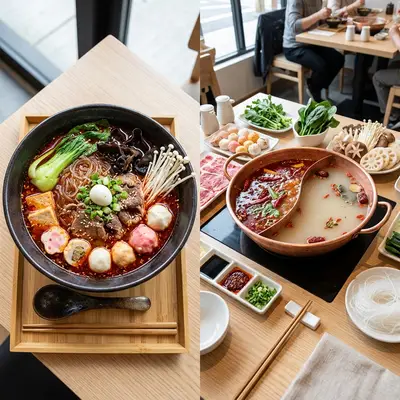
Malatang Calories: Average Per Bowl and a Quick-Reference Guide by Topping
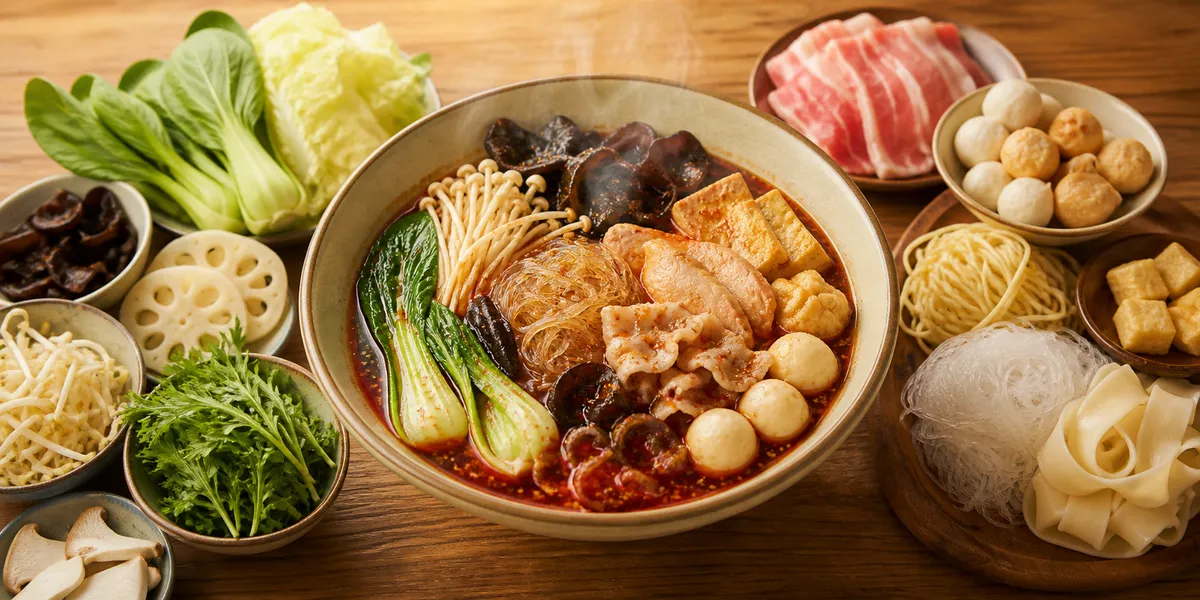
目次
- How Many Calories Are in a Bowl of Malatang?
- 3 Factors That Affect the Calorie Count of Malatang
- Calorie Quick-Reference by Topping (Per Serving)
- 5 Tips to Keep Your Malatang Low-Calorie
- Diet-Friendly Malatang Combinations
- High-Calorie vs. Low-Calorie Builds: Quick-Reference Based on Real Examples
- Does Malatang Make You Gain Weight? What to Watch Out For
- 3 Health Risks of Malatang That Doctors and Nurses Flag
- Are Glass Noodles Really Low-Calorie? Low-Carb Noodle Swaps
- Frequently Asked Questions About Malatang Calories
- Summary
- Related Articles
How Many Calories Are in a Bowl of Malatang?
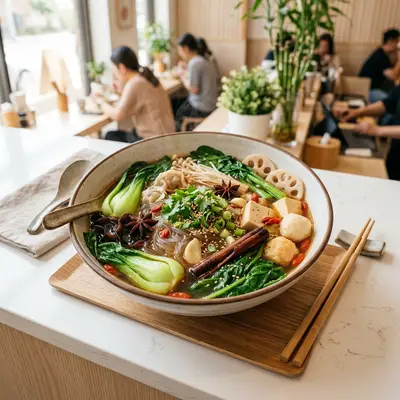
A single serving of malatang averages 500–800 kcal. Keep it vegetable-heavy and you can stay in the 400 kcal range; pile on meat and noodles and it can easily climb to 900–1,200 kcal or more.
Compared to a bowl of ramen (roughly 500–700 kcal), malatang has a key advantage: you choose every ingredient yourself, making calorie control much easier. Pick a balanced mix of vegetables and protein and you end up with a genuinely healthy meal.
3 Factors That Affect the Calorie Count of Malatang
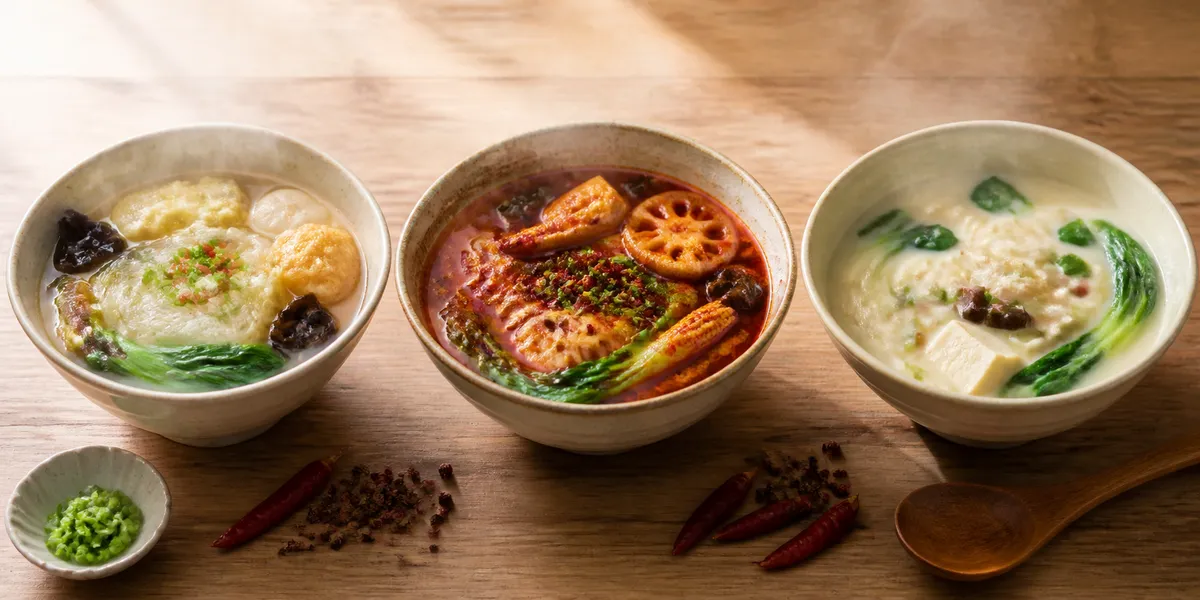
1. Broth Base (approx. 100–250 kcal)
Broth Type | Estimated Calories | Notes |
|---|---|---|
Clear broth (light) | 100–150 kcal | Chicken stock base; low calorie |
Málà broth (standard) | 150–200 kcal | Contains oil from chili and Sichuan pepper |
Milky / soy-milk málà | 200–250 kcal | Richer flavor; higher fat content |
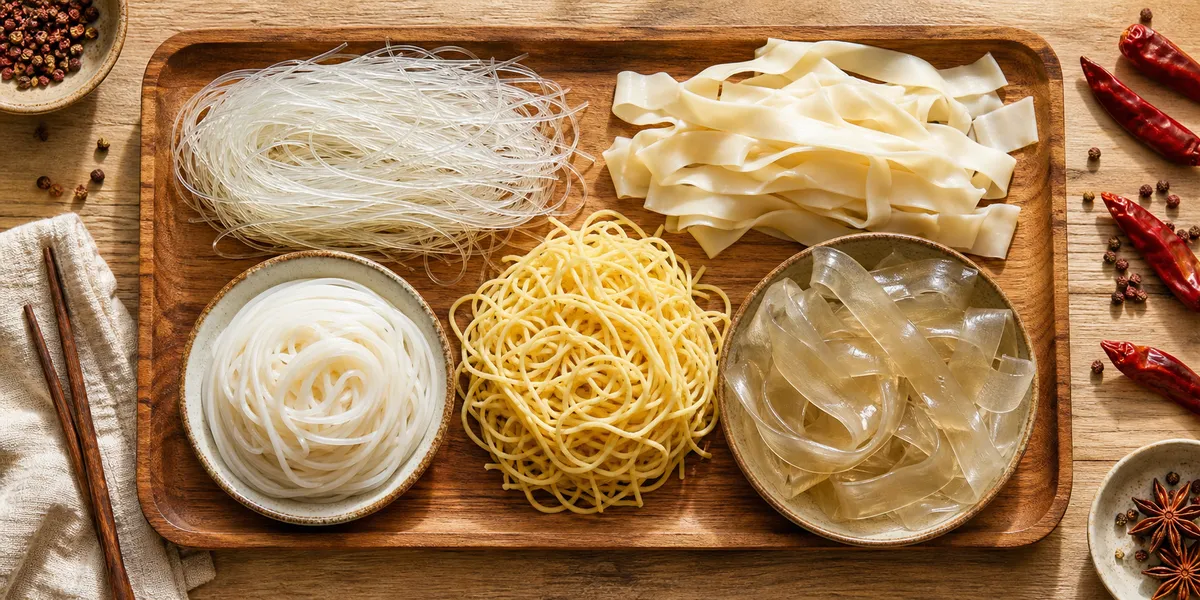
2. Noodle Type (approx. 150–400 kcal)
Noodle | Per 100 g | Per Serving (estimate) |
|---|---|---|
Glass noodles (mung bean) | approx. 350 kcal (dry) | approx. 80 kcal cooked |
Rice noodles (mǐxiàn) | approx. 350 kcal (dry) | approx. 120 kcal cooked |
Knife-cut noodles (dāo xiāo miàn) | approx. 280 kcal | approx. 330 kcal per portion |
Chinese wheat noodles | approx. 280 kcal | approx. 330 kcal per portion |
If you are watching calories, mung bean glass noodles are the lowest-calorie option.
3. Toppings (100–500+ kcal total)
Most malatang shops let you choose from 10–20 toppings. This is where the biggest calorie differences come from.
Calorie Quick-Reference by Topping (Per Serving)
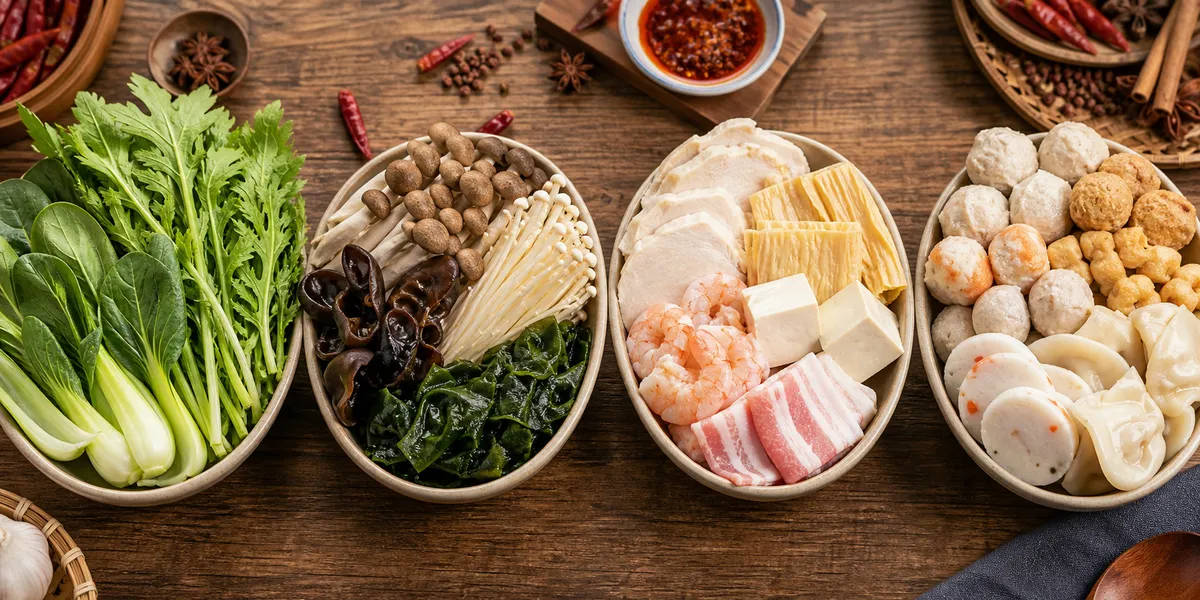
🥬 Leafy Greens & Vegetables (Low Calorie)
Topping | Calories per Serving |
|---|---|
Bok choy | approx. 10 kcal |
Crown daisy (shungiku) | approx. 15 kcal |
Japanese mustard spinach (mizuna) | approx. 10 kcal |
Napa cabbage | approx. 15 kcal |
Bean sprouts | approx. 15 kcal |
Spinach | approx. 20 kcal |
🍄 Mushrooms & Seaweed (Low Calorie)
Topping | Calories per Serving |
|---|---|
Shimeji mushrooms | approx. 15 kcal |
Enoki mushrooms | approx. 15 kcal |
Wood ear mushrooms (fresh) | approx. 15 kcal |
Wood ear mushrooms (rehydrated dried) | approx. 20 kcal |
Wakame seaweed | approx. 10 kcal |
🍗 Proteins (Medium–High Calorie)
Topping | Calories per Serving |
|---|---|
Chicken breast | approx. 110 kcal |
Chicken thigh | approx. 160 kcal |
Pork belly | approx. 250 kcal |
Beef offal (motsu) | approx. 180 kcal |
Tsukune (chicken meatball) | approx. 200 kcal |
Deep-fried tofu (atsuage) | approx. 120 kcal |
Tofu skin (yuba) | approx. 80 kcal |
🥟 Processed & Fish Paste Items (Medium Calorie)
Topping | Calories per Serving |
|---|---|
Hanpen (soft fish cake) | approx. 60 kcal |
Tsumire (fish ball) | approx. 100 kcal |
Gyoza dumpling (1 piece) | approx. 30 kcal |
Wonton (1 piece) | approx. 30 kcal |
5 Tips to Keep Your Malatang Low-Calorie
- Switch to glass noodles: saves 100–250 kcal compared to knife-cut or wheat noodles
- Choose 4–5 types of vegetables and mushrooms: adds volume while keeping calories low
- Pick chicken breast, tofu skin, or deep-fried tofu for protein: saves 100–170 kcal versus pork belly
- Limit processed fish-paste items to 1–2 types: they contain more fat and carbs than you might expect
- Choose a clear broth base: saves 50–100 kcal compared to soy-milk málà or milky broth
With this combination, you can put together a satisfying, healthy bowl of malatang at just 400–500 kcal.
Diet-Friendly Malatang Combinations
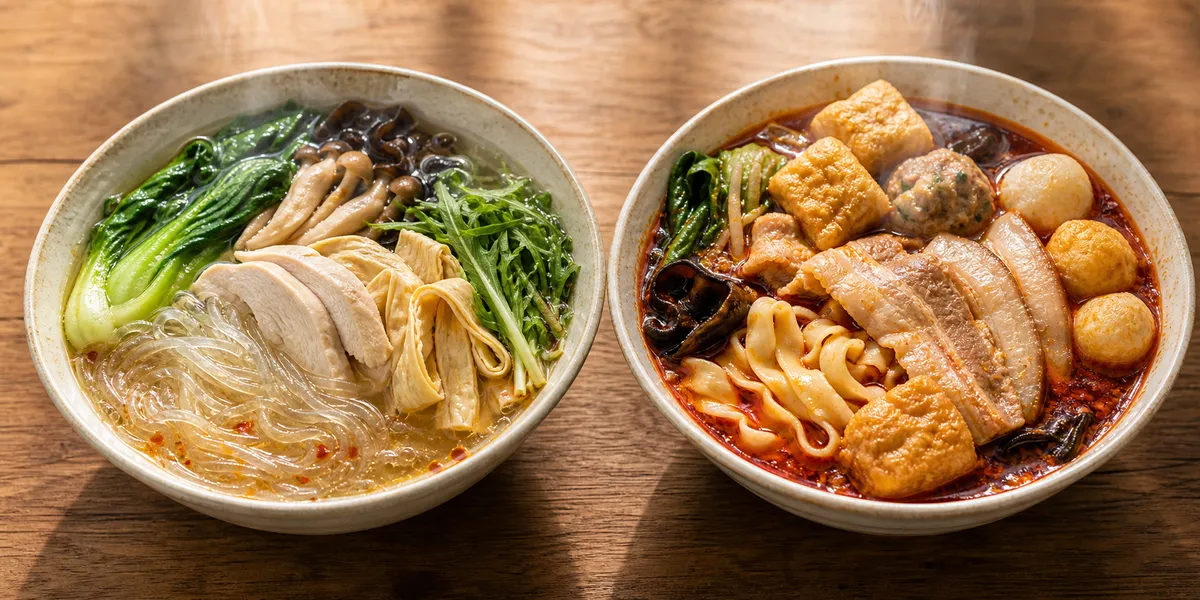
Build | Contents | Total Calories |
|---|---|---|
Healthy build | Clear broth + glass noodles + 4 vegetables + chicken breast + shimeji | approx. 380 kcal |
Balanced build | Málà broth + glass noodles + 3 vegetables + pork belly + deep-fried tofu | approx. 520 kcal |
Hearty build | Málà broth + knife-cut noodles + 2 vegetables + pork belly + fish balls | approx. 850 kcal |
High-Calorie vs. Low-Calorie Builds: Quick-Reference Based on Real Examples
The same bowl of malatang can vary by more than 2× in calories depending on your choices. The tables below summarize combinations that dieters and fitness trainers have actually recommended or warned against online.
Slimming combinations | Estimated calories | Why it works |
|---|---|---|
Dried tofu strips + bok choy + shrimp | approx. 350 kcal | Classic high-protein, low-fat combo |
Mung bean glass noodles + black wood ear + lamb | approx. 450 kcal | Delivers fiber and iron at the same time |
Enoki noodles + spinach + quail eggs | approx. 280 kcal | Low-carb and very filling |
Shirataki noodles + tomato + clams | approx. 250 kcal | Low-carb with rich umami flavor |
High-calorie combinations (watch out) | Estimated calories | Why the calories spike |
|---|---|---|
Wide starch noodles + pork belly + cheese | approx. 950 kcal | Stacking carbs and fat together |
Instant dry noodles + processed ham + sesame sauce | approx. 1,100 kcal | Processed meat + heavy sauce = calorie explosion |
Boiled dumplings + tteok (rice cake) + sausage | approx. 1,050 kcal | Triple carb overload |

女性に大人気!「麻辣湯」の痩せる組み合わせ5選 ❌太る組み合わせ ・インスタント乾麺 × スパム × ごまダレ ・板春雨 × 豚バラ肉 × チーズ ・水餃子 × トッポギ × ウインナー ・中華麺 × 厚揚げ × 牛肉 ・とうもろこし麺 × 練り物 ⭕️痩せる組み合わせ↓
Does Malatang Make You Gain Weight? What to Watch Out For

ダイアン津田さんのマネージャーが楊国福麻辣湯に1年で80回行き10キロ太ったらしいんだけど、麻辣湯に太る要素あるか?あるなら非常に困る
Depending on your choices, malatang can be either a diet food or a weight-gain trap. Three things to keep in mind:
- Spiciness stimulates appetite: resist the urge to order extra rice or additional toppings
- Oil in the broth: the Sichuan pepper oil floating on top is a significant calorie source; if you are concerned, leave the broth behind
- Salt and carbs in processed items: fish cakes (hanpen, tsumire, kamaboko) are fine in small amounts—stick to 1–2 types
3 Golden Rules for Eating Malatang Without Gaining Weight (Tried-and-True Tips)
Here are the most-shared pieces of advice from regular malatang lovers who manage to stay lean.
Rule | How to do it | Estimated benefit |
|---|---|---|
① Limit broth to 3 sips | Eat the solids and noodles; leave the oil and salt that settle at the bottom | Saves approx. 100–150 kcal and 2–3 g of sodium |
② No more than twice a week | Daily visits cause sodium and fat to accumulate; twice a week is the safe limit | Over a month, the difference can exceed 5,000 kcal |
③ Choose 4+ types of vegetables and mushrooms | Bulk up on fiber-rich toppings to feel full with fewer noodles and less meat | Reduces noodles and meat, saving approx. 200 kcal |
3 Health Risks of Malatang That Doctors and Nurses Flag
Beyond calories, there are three health pitfalls that frequent malatang eaters should know about.

流行りの『 麻辣湯 』をウキウキで食べてたら、 ドクターが「それ落とし穴に気をつけて」って言ってきて鬱 ⭕️ 体にいいこと ・花椒で血行促進 ・香辛料でめぐり整う ・腸内環境のサポート ・カプサイシンで脂肪燃焼 ・いろんな具材で栄養満点 ダイエットの味方じゃん、と思ったら... ❌ 落とし穴
① Sodium Overload: Drinking the Broth Exceeds Your Daily Limit
A single bowl of malatang contains 4–7 g of sodium. Drink the broth down to the last drop and you will blow through the daily sodium target set by Japan's Ministry of Health, Labour and Welfare (under 7.5 g for men, under 6.5 g for women) in just one meal. The direct consequences are water retention and elevated blood pressure, so the cardinal rule is to stop at three sips.
② Stomach Strain: Extremely Spicy Food on an Empty Stomach Is a Bad Idea
Capsaicin stimulates gastric acid secretion. Eating very spicy food on an empty stomach—or every single day—raises the risk of gastric mucosal inflammation, stomach pain, and acid reflux. Drink a mouthful of water or soy milk before eating, or start with the vegetables, to cushion the impact on your stomach.
③ Blood Sugar Spikes: Watch the Starch in Glass Noodles
Glass noodles are low in calories but are nearly 100% starch. Eating a large portion on an empty stomach sends blood sugar soaring, which ultimately promotes fat storage. Follow a vegetables-first approach—eat your veggies and protein before the noodles—to keep the blood sugar rise gradual.
Are Glass Noodles Really Low-Calorie? Low-Carb Noodle Swaps
Glass noodles have a healthy reputation, but at approximately 340 kcal per 100 g (dry), they are actually more calorie-dense than cooked white rice (168 kcal per 100 g). Once cooked, they come down to around 76–80 kcal per 100 g—but a large portion (300 g or more rehydrated) can turn into a carb bomb.

春雨食べてる人太ります! 白滝は最強のダイエット食材! でも正直その食べ方9割損してます。 白滝はダイエット食だから我慢するものじゃない。 ちゃんとやれば、普通にうまくて痩せる食材です。 知らないともったいないので保存してね! 白滝 vs 春雨 vs 中華麺(ここが決定的に違う) ・白滝 → Show more

3 Low-Carb Noodle Swaps to Cut Calories Fast
Swap noodle | Calories per serving | vs. glass noodles |
|---|---|---|
Shirataki noodles (200 g) | approx. 12 kcal | Saves approx. 70 kcal |
Konjac noodles (150 g) | approx. 10 kcal | Saves approx. 70 kcal |
Enoki mushroom noodles (150 g) | approx. 33 kcal | Saves approx. 50 kcal + high in dietary fiber |
At self-serve malatang shops, some regulars skip the noodles entirely and bring their own shirataki from home. For homemade malatang, blending half konjac noodles and half glass noodles preserves a satisfying texture while significantly cutting calories.
Frequently Asked Questions About Malatang Calories
Q. Why do people say malatang is fattening?
The main culprits are drinking all the broth, ordering extra-large noodle portions, and loading up on fatty meats and processed fish-paste items. Malatang itself is a customizable dish; choose wisely and it is a healthy, diet-friendly meal. Bowls that top 1,000 kcal almost always come down to eating habits, not the dish itself.
Q. How many calories are in a bowl of malatang?
The average is 500–800 kcal. A vegetable-forward bowl can stay in the 400 kcal range, while a meat- and noodle-heavy bowl can reach 900–1,200 kcal. Because you choose every ingredient yourself, a simple formula works: broth (150–200 kcal) + noodles (150–400 kcal) + toppings (100–500 kcal).
Q. Is it okay to drink all the broth?
From a diet and health perspective, limiting yourself to about 3 sips is recommended. The broth alone contributes roughly 100–150 kcal and 4–7 g of sodium per bowl. Simply not drinking the oil and salt that collect at the bottom makes a meaningful difference to both your calorie and sodium intake for the meal.
Q. How many times a week can I eat malatang?
If you are dieting, no more than twice a week is a good guideline. Eating it every day lets sodium and fat accumulate. If you stick to a healthy, vegetable-forward build, up to three times a week is generally fine.
Q. Which noodle should I choose when I am on a diet?
From lowest to highest calorie: konjac noodles < shirataki < enoki mushroom noodles < mung bean glass noodles < rice noodles < wheat noodles / knife-cut noodles. The best diet options are konjac noodles and shirataki (10–12 kcal), followed by mung bean glass noodles (approx. 80 kcal cooked).
Q. Is it okay to eat malatang late at night?
A light build—glass noodles, vegetables, chicken breast or tofu skin—can come in around 400 kcal even as a late-night meal, making it relatively safe. That said, leave the broth behind and try to finish eating at least 2 hours before going to bed for best results.
Summary
- A bowl of malatang averages 500–800 kcal
- Your topping choices let you control the calorie count anywhere from 400 to 1,200 kcal
- When dieting, the go-to combination is glass noodles + vegetables + chicken breast or tofu skin
- Because you pick every ingredient yourself, malatang is inherently easier to keep healthy than ramen
The spiciness of malatang naturally makes you feel satisfied. Choose smartly and you can enjoy it guilt-free even while on a diet.
Related Articles
- Malatang Toppings: Full List and How to Choose → /blog/malatang-guzai-erabikata
- Malatang Noodle Types and Their Characteristics → /blog/malatang-men-shurui
- How to Order Malatang Without the Heat → /blog/malatang-karakunai-erabikata
Find malatang near you
Search authentic malatang spots by area or nearest station →
Related articles
What Are Glass Noodles Made From? Mung Bean, Potato, and Sweet Potato — Differences and Nutrition Explained
Does a Glass Noodle Diet Really Help You Lose Weight? A Complete Guide to Calories, Carbs, and How to Eat Smart
Is Malatang Actually Good for You? A Guide to Healthy Ingredients and the Best Toppings to Choose