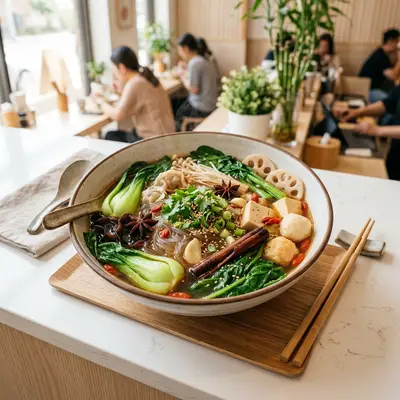
The Complete Guide to Japchae: Authentic Korean Recipe, Choosing Dangmyeon, and a Dieter's Perspective
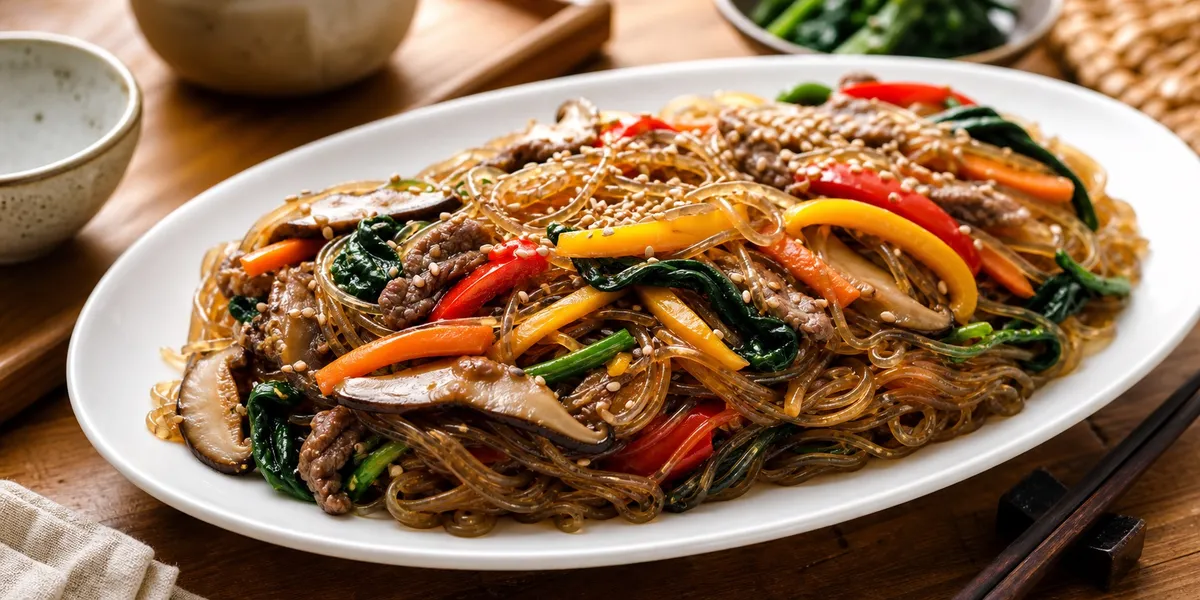
"Japchae seems so hard to make" or "Even when I stir-fry everything together in one pan, something feels off" — if that sounds familiar, you're onto something. Authentic japchae is not a stir-fry — it's a dressed dish. Once you understand the key points, you can recreate that authentic texture right at home. This article draws on primary sources including the Korea Tourism Organization, Moran Bon, and the Ministry of Agriculture, Forestry and Fisheries to cover the origins of japchae, the differences between Korean and Japanese-style versions, the golden seasoning ratio, a dieter's perspective, and a creative twist unique to a malatang media outlet: adding dangmyeon directly to your malatang pot.
目次
- What Kind of Dish Is Japchae?
- Authentic Korean Japchae vs. Japanese-Style: What's the Difference?
- Base Recipe (Authentic Golden Ratio)
- How to Choose and Rehydrate Dangmyeon (Korean Glass Noodles)
- Japchae Calories and Nutrition
- How to Make a Healthier Japchae
- Can You Make It Ahead? Refrigerating and Freezing
- Japchae ⇔ Malatang: Can You Swap the Glass Noodles?
- Japchae Ingredient Variations
- Frequently Asked Questions About Japchae
- Summary — 3 Keys to Mastering Japchae
What Kind of Dish Is Japchae?
Japchae is written in Chinese characters as "雑菜 (잡채)" — a Korean dish meaning "mixed vegetables." According to the Korea Tourism Organization, it is an essential dish for Korean celebrations and seasonal holidays, always appearing on the table during major holidays such as Lunar New Year and Chuseok.
Interestingly, the dish originally contained no glass noodles at all. According to the Korea Agro-Fisheries & Food Trade Corporation, japchae is said to have first appeared at a banquet held by Gwanghaegun, the 15th king of the Joseon Dynasty. At that time, it was simply julienned vegetables arranged on a plate, tossed with a seasoned sauce. Even in culinary records, japchae from around 1670 contains no glass noodles.
The modern version with dangmyeon (Korean glass noodles) only became established in the 20th century. The opening of Incheon Port in 1883 brought Chinese cuisine and dangmyeon to Korea, and full-scale dangmyeon production on the Korean peninsula took off in the 1910s–1920s — giving rise to the "glass noodle japchae" we know today.
For more on the ingredients and history of glass noodles (dangmyeon), see Glass Noodle Ingredients & Nutrition Overview.
Authentic Korean Japchae vs. Japanese-Style: What's the Difference?
There are clear differences between the japchae that has spread in Japan and what you find in Korea. If you want that "authentic" quality, these are the details to pay attention to.
Aspect | Authentic Korea | Japanese Style |
|---|---|---|
Role of the dish | Celebration, banquet, holiday food | Home main dish, pre-made stir-fry mix, quick weeknight meal |
Noodles | Dangmyeon (sweet potato starch) — non-negotiable | Mung bean or regular glass noodles used as substitutes |
Thickness & texture | Thick noodles, ~2 mm diameter, firm and chewy | Thinner noodles sometimes used |
Seasoning | Soy sauce + sugar + sesame oil + garlic + sesame seeds (sweet-savory, not spicy) | Yakiniku sauce for speed, gochujang added |
Cooking method | Each ingredient blanched/stir-fried separately, then tossed together | Everything stir-fried together in one pan |
Dish category | Considered a "dressed dish" (similar to namul) | Often described as "stir-fried glass noodles" |
Serving temperature | Both warm and cold OK; traditional holiday version often served cold | Almost always served warm |
Cooking researcher Kou Kentetsu has also noted: "People often mistake it for a stir-fry, but it's really a dressed dish made with various kinds of namul." When everything is stir-fried together in one pan, each ingredient tends to lose its individual texture and color — that's the real reason Japanese japchae so often feels "a bit off."
For authentic results, keep these three things in mind: use dangmyeon, cook each ingredient separately, and toss everything together at the end.
Base Recipe (Authentic Golden Ratio)
This is the authentic-leaning base recipe. After cross-referencing multiple Korean cooking researchers and major manufacturer guidelines, I settled on a base ratio of soy sauce 3 : sugar 1–1.5 : sesame oil 1–1.3. An easy-to-remember simplified version is soy sauce 2 : sugar 1 : sesame oil 1 (from Kadoya Seiyu's official recipe).
Ingredients (serves 2–3)
- Dangmyeon (Korean glass noodles), 80 g dried
- Beef (thinly sliced or chopped), 100 g
- Spinach, 1 bunch
- Carrot, 1/3
- Onion, 1/2
- Red and yellow bell pepper, 1/4 each
- Dried shiitake mushrooms, 4 (or fresh shiitake, 4)
Combined Seasoning Sauce
- Soy sauce, 3 tablespoons
- Sugar, 2 tablespoons
- Sesame oil, 2 tablespoons
- Sake (rice wine), 1 tablespoon
- Grated garlic, 1 teaspoon
- White sesame seeds, 1 tablespoon
Beef Marinade
- Soy sauce 1 tbsp / Sugar 1 tsp / Garlic 1/2 tsp / Sesame oil 1 tsp
8-Step Method (about 30 minutes)
- Rehydrate dangmyeon according to package directions, or boil for about 5–7 minutes, then rinse in cold water. Cut to a manageable length with scissors (about 10 cm).
- Massage the marinade into the beef and let it rest for 5 minutes.
- Blanch spinach in salted water, squeeze out moisture firmly, cut into 3 cm pieces, and toss with sesame oil and salt.
- Julienne the carrot, onion, and bell pepper. Stir-fry each one separately with a pinch of salt.
- Julienne the rehydrated dried shiitake mushrooms and stir-fry.
- Stir-fry the beef in a separate pan.
- Add the combined seasoning sauce to the dangmyeon and stir-fry in the pan to coat.
- In a large bowl, toss all ingredients together. Finish with a drizzle of sesame oil and a sprinkle of white sesame seeds.
Stir-frying everything separately might seem like extra work, but it's the secret to achieving authentic texture and color. Controlling the moisture and heat for each ingredient independently means the spinach stays crisp, the carrot turns just barely sweet, the onion becomes translucent — everything works perfectly in one dish.
How to Choose and Rehydrate Dangmyeon (Korean Glass Noodles)
Authentic japchae is built on dangmyeon — that's non-negotiable. According to Moran Bon's official guidance, dangmyeon is made primarily from sweet potato starch, shaped into thick noodles around 2 mm in diameter, and prized for its chewy, springy texture. It also holds its shape well in hot liquids and doesn't cloud the broth — a practical advantage in cooking.
Major Dangmyeon Brands
- Moran Bon "Han no Shokusai Glass Noodle Bulgogi": sweet potato starch
- Gyomu Super "Sweet Potato Glass Noodles 500 g": large volume, great value
- Daesang Japan "Minsok Glass Noodles": major Korean brand, traditional style
- IGM "Sweet Potato Glass Noodles": 100% sweet potato starch
- Ongane "Tsurumochi Glass Noodles": sweet potato starch
Rehydration Options
Method | Time | Texture | Best for |
|---|---|---|---|
Cold water soak | 30 min | Chewy | Dangmyeon marketed specifically for japchae |
Boiling | 5–7 min | Softer | Moran Bon's recommended method; general dangmyeon |
Hot water soak | 15 min | In between | When you're in a hurry |
If you can't find dangmyeon, regular glass noodles work as a substitute — but the texture is a different experience. Mung bean noodles are thin and light; regular glass noodles lack that satisfying chew. If you're willing to sacrifice the authentic feel for speed, it's a valid option. For a detailed comparison of three types of glass noodles, see Glass Noodle Ingredients & Nutrition Overview.
Japchae Calories and Nutrition
After surveying major recipe sites, calories per serving range from 270 to 530 kcal. For a standard home main-dish portion, 300–450 kcal is the typical range.
Source | Kcal per serving | Protein | Fat | Noodle amount |
|---|---|---|---|---|
DELISH KITCHEN | 530 kcal | 10.4 g | 28.4 g | Korean glass noodles 80 g / 2 servings |
S&B | 422 kcal | 12.3 g | 26.6 g | Glass noodles 50 g / 2 servings |
Lettuce Club | 374 kcal | — | — | Glass noodles 40 g / 2 servings |
Kadoya | 325 kcal | — | — | Glass noodles 150 g / 4 servings |
Diabetes site | 280 kcal | 10.4 g | 9.6 g | Glass noodles 30 g / 1 serving, lean beef |
Topvalu | 271 kcal | 8.7 g | 11.0 g | Mung bean glass noodles 120 g / 4 servings |
The real calorie culprit is not the glass noodles but the sesame oil, sugar, and fatty cuts of beef. One tablespoon of sesame oil is about 110 kcal; one tablespoon of sugar is about 35 kcal. Even with an authentic recipe, cutting back on oil and sugar can bring one serving under 300 kcal.
Also worth noting: dangmyeon (sweet potato starch) has a medium GI of 60 (mung bean glass noodles fall in the low GI range of 20–45). If you're watching blood sugar spikes, keep your portion modest. The full rules for a glass noodle diet are covered in The Complete Glass Noodle Diet Guide.
How to Make a Healthier Japchae
Six tips for keeping the authentic flavor while bringing each serving down to 200–250 kcal.
① Swap beef for lean beef, chicken breast, or shrimp
Beef short rib, 100 g (~370 kcal) → Chicken breast, 100 g (~105 kcal) cuts calories by two-thirds. You actually get more protein — a double win.
② Use sesame oil only as a finishing touch
For cooking, use a non-stick pan with a minimal amount of oil. Add sesame oil only at the end — 1–2 teaspoons for fragrance. The aroma is still there, but the amount is less than half.
③ Halve the sugar and supplement with mirin
1.5 tablespoons → 2 teaspoons + 1 teaspoon mirin. Keeps the sweetness while cutting roughly 20 kcal.
④ Increase the vegetable ratio
Pile on the spinach and bean sprouts, add mushrooms to boost fiber and volume. Even with less dangmyeon, you'll stay satisfied.
⑤ Reduce dangmyeon from 80 g to 60 g
After rehydrating, about 80 g per serving (roughly 20 g dry) is the guideline. Recipes that push past 500 kcal typically use 40 g or more of dried noodles per person.
⑥ Stick to cooking each ingredient separately
This is an authentic technique, but cooking each ingredient on its own also means the food absorbs less excess oil — making the dish healthier as a side effect.
Can You Make It Ahead? Refrigerating and Freezing
According to DELISH KITCHEN's official guidance, japchae keeps for 3 days refrigerated / 14 days frozen as a general rule. That said, the texture of dangmyeon changes over time.
Tips for Refrigerating
- Store in an airtight container; safe for 2–3 days in the fridge.
- To reheat, microwave or loosen in a pan with a small amount of water and sesame oil to restore the texture.
- Sprinkle white sesame seeds and chopped green onion just before eating to freshen it up.
Is Freezing Worth It?
It's possible, but the texture will noticeably degrade. The dangmyeon absorbs moisture and softens, losing its chewiness. If storage life matters most, freeze in individual portions. If taste matters most, keep it refrigerated and eat within three days.
Packing It in a Lunchbox
- Use an ice pack in warm weather.
- Cook off any excess liquid before packing.
- Make sure the meat is fully cooked through.
- Pack in the morning for a lunchtime meal; avoid packing the night before for the following afternoon.
In Korea, eating japchae cold is common at celebrations — but FoodInKorea cautions that it "spoils easily, so eating it fresh is recommended." In a Japanese home setting, keep it refrigerated and treat it accordingly.
Japchae ⇔ Malatang: Can You Swap the Glass Noodles?
The cross-genre section you'd only find on a malatang media outlet. Short answer: dangmyeon is an outstanding thick glass noodle for malatang.
Why Dangmyeon Works So Well in Malatang
According to Moran Bon's official description, dangmyeon doesn't go soggy the way wheat noodles do, and it won't cloud the broth even when simmered in a hot pot. The noodles soak up the broth and taste delicious as a result. That makes them an ideal match for a rich, intensely flavored soup like malatang (málà — numbing heat from Sichuan pepper, fiery chili spice, and a deep umami broth).
In fact, the 7-Eleven "Tsurumochi Thick Glass Noodle Malatang" became a hit product by featuring chewy thick glass noodles — in style, at least, very much in the spirit of dangmyeon (whether it's made from sweet potato starch hasn't been confirmed officially).
Dangmyeon × Malatang: A Creative Twist Recipe
- Rehydrate dangmyeon by soaking or boiling according to package directions; rinse in cold water.
- Prepare your malatang broth slightly stronger than usual (the dangmyeon will absorb a lot of flavor).
- Add the dangmyeon 2–3 minutes before serving; don't overcook.
- Pair with leafy greens, wood ear mushrooms, enoki, chicken breast or shrimp, and tofu.
- Finish with a small drizzle of sesame oil.
The capsaicin and Sichuan pepper (huājiāo) aroma of the malatang broth gets absorbed into the thick, chewy noodles, creating a unified richness — a homemade experience that comes close to what you'd get at a specialty shop. For a comparison of noodle types in malatang, see How Many Types of Noodles Does Malatang Have?, and for a full recipe, check Authentic Homemade Malatang Recipe.
Japchae Ingredient Variations
The Essentials (Three Elements You Can't Skip)
- Green: spinach, komatsuna (Japanese mustard spinach), mitsuba (Japanese parsley)
- Red / orange: carrot, bell pepper, red pepper
- White: onion, bean sprouts, green onion
Keeping the traditional "five colors" of Korean celebration cooking in mind makes the dish visually striking. Add thin strips of egg crepe (kinshi tamago) for even more color.
Protein Variations
Type | Calorie level | Best occasion |
|---|---|---|
Beef (chopped or thinly sliced) | Medium–high | Authentic, celebratory, entertaining guests |
Chicken breast | Low | Dieting, weekend meal prep |
Shrimp or squid | Low–medium | Seafood japchae, parties |
Pork kimchi | Medium | Korean home-style variation |
Tofu or atsuage (thick fried tofu) | Low | Vegetarian |
For a broad reference on ingredients, check the Topping Encyclopedia on Mala Tabetai. Among malatang ingredients, spinach, komatsuna, cilantro, chicken breast, and shrimp all work well in japchae too.
Frequently Asked Questions About Japchae
Q. I can't find dangmyeon — what can I substitute?
A. Regular glass noodles (potato + sweet potato starch blends) work as a substitute, but the chewiness will be noticeably weaker. Mung bean glass noodles are too thin for japchae. Search for "dangmyeon" or "Korean glass noodles" on Amazon, Rakuten, or at Korean grocery stores and Asian supermarkets.
Q. Is it still authentic if I use yakiniku sauce?
A. It's quick, but the flavor is quite different from the real thing. Yakiniku sauce has a complex blend of soy sauce, sugar, fruit, and rice wine that tends to be too sweet for japchae. Taking the time to use the base combination of soy sauce + sugar + sesame oil + garlic will get you much closer to the authentic taste.
Q. How much japchae should I make as a side dish at a Korean BBQ?
A. 80–100 g per person (after rehydrating). For a Korean BBQ with four people, about 100 g of dried dangmyeon as a single side dish. If it's the main attraction, calculate around 150 g per person.
Q. Is the vegetarian version still good?
A. Absolutely. The umami of shiitake mushrooms, combined with tofu or thick fried tofu and a generous amount of spinach, makes for a satisfying main dish. The fragrance of garlic and sesame oil means you won't miss the meat.
Q. Is it too spicy for kids?
A. The standard version of japchae is not spicy at all. Some variations add gochujang, but the authentic base is a sweet-savory mix of soy sauce, sugar, and sesame oil — perfectly fine for children.
Q. Can japchae work for a diet?
A. Standard recipes (around 500 kcal) are on the higher side, but the six tips in the section above can bring it down to 200–250 kcal. The key is less dangmyeon + chicken breast + less oil.
Q. What's the difference between namul and japchae?
A. Namul is "dressed vegetables"; japchae is "a dish where each ingredient is prepared namul-style and then tossed together with glass noodles at the end." As Kou Kentetsu puts it, japchae is best thought of as "a comprehensive namul with glass noodles".
Summary — 3 Keys to Mastering Japchae
It's been a long guide, but the keys to nailing the authentic flavor come down to just three things.
- Use dangmyeon (Korean glass noodles) — the chewy sweet potato starch texture is what makes it authentic
- Cook each ingredient separately, then toss everything together at the end — it's a "comprehensive namul with glass noodles," not a stir-fry
- Use sesame oil sparingly, only at the end — this maximizes the fragrance while keeping calories in check
Japchae isn't hard because it's Korean — it's a dish that rewards careful, step-by-step preparation. Put in the effort and the result will look and taste like the real thing.
If you want to dive deeper into glass noodles, visit The Complete Glass Noodle Diet Guide for portion guidance and food pairings, Glass Noodle Ingredients & Nutrition Overview for ingredients and GI values, The Complete Chinese Glass Noodle Salad Guide for a related recipe, and the Topping Encyclopedia for nutritional data on 52 ingredients.
Find malatang near you
Search authentic malatang spots by area or nearest station →
Related articles
The Complete Guide to Chinese Glass Noodle Salad | Diet-Friendly Ratios, Meal Prep, and Calorie Breakdown
Authentic Homemade Malatang Recipe | Recreate the Restaurant Flavor in 15 Minutes
Malatang Spelling Guide: "麻辣湯" or "麻辣担"? Plus How It Differs from Hot Pot