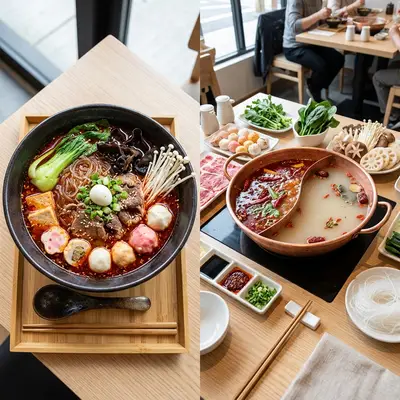
Does a Glass Noodle Diet Really Help You Lose Weight? A Complete Guide to Calories, Carbs, and How to Eat Smart
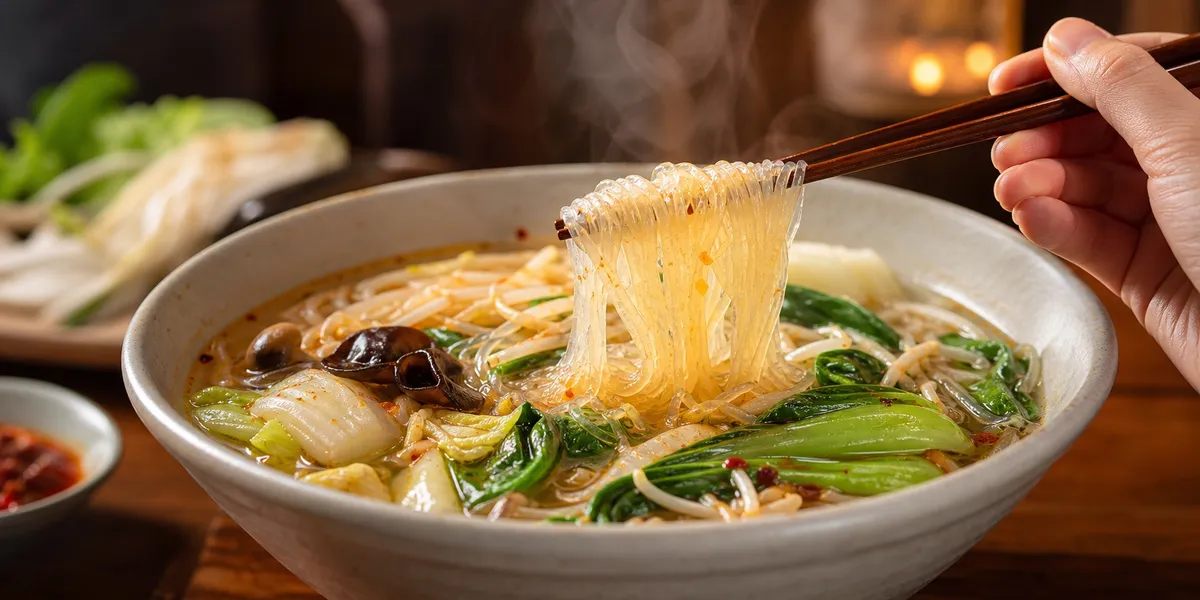
"Does a glass noodle diet actually work?" "I've heard glass noodles won't make you gain weight, but aren't they high in carbs?" — Many people turn to malatang for exactly these reasons. The short answer: glass noodles are not a magic weight-loss food. But eaten the right way, they become one of the best low-calorie staple carbs out there. In this article, we draw on primary data from Japan's Ministry of Education food composition database and the University of Sydney GI database to cut through the myths — covering the truth about glass noodle diets, how to eat them without gaining weight, and how to pick the best toppings, all from a malatang specialist's perspective.
目次
- Does a Glass Noodle Diet Actually Work?
- How Many Calories and Nutrients Do Glass Noodles Have?
- Are Glass Noodles High in Carbs? Are They Unsuitable for Low-Carb Diets?
- How Can You Eat Glass Noodles Without Gaining Weight?
- Are Glass Noodles Easy or Hard to Digest?
- Is Malatang Glass Noodles Really the Best for Dieting?
- Top 10 Diet-Friendly Malatang Toppings
- 3 Common Mistakes with Glass Noodle Diets
- Frequently Asked Questions About Glass Noodle Diets
- Wrap-Up — 3 Key Points for a Successful Glass Noodle Diet
Does a Glass Noodle Diet Actually Work?
The answer is "yes, with conditions." Glass noodles are low in calories and fat, but since carbohydrates are their main component, eating them the wrong way can backfire.
First, the numbers. According to Japan's Ministry of Education food composition database, cooked glass noodles contain only 76–80 kcal per 100g — less than half of an equal serving of cooked white rice (about 168 kcal), with virtually zero fat.
There are three main reasons why glass noodles are associated with weight loss.
- Low calorie and low fat: easier to keep total energy intake down compared to other staple carbs
- They absorb water and expand: after rehydration, they weigh 3–4 times their dry weight, so a small amount can feel filling
- Slippery texture encourages more chewing: paired with hot soup, meals take longer, giving the satiety center time to kick in
On the flip side, the pattern of "people who actually gain weight" is just as clear.
- Glass noodle salads loaded with oil and sugar end up high in calories anyway
- Eating 300g or more of rehydrated noodles means more carbs than a full bowl of rice
- Eating only glass noodles leads to protein deficiency → muscle loss → rebound weight gain
In short, glass noodles are a "light staple carb when eaten correctly" — and just a "carb bomb" when eaten wrong. We'll dig into the specific numbers in the next section. If you're curious about the total calorie picture for a bowl of malatang, check out our malatang calorie breakdown.
How Many Calories and Nutrients Do Glass Noodles Have?
To talk accurately about glass noodle calories, you need to think separately about dry vs. cooked state. Dry noodles are calorie-dense before absorbing water; once rehydrated, the weight increases and the calorie density per 100g drops significantly.
Dry vs. Cooked Calorie Reference Table (Ministry of Education, 8th Edition 2023)
Food | State | Energy | Carbohydrates | Protein | Fat | Dietary Fiber |
|---|---|---|---|---|---|---|
Mung bean glass noodles | Dry | 344 kcal | 87.5 g | 0.2 g | 0.4 g | 4.1 g |
Mung bean glass noodles | Cooked | 78 kcal | 20.6 g | trace | 0.1 g | 1.5 g |
Standard glass noodles (potato/sweet potato starch) | Dry | 346 kcal | 86.6 g | 0 g | 0.2 g | 1.2 g |
Standard glass noodles | Cooked | 76 kcal | 19.9 g | 0 g | trace | 0.8 g |
So 10g dry comes to about 34 kcal. If you use 25g dry (roughly 80–100g rehydrated) as a single serving, you're looking at around 86 kcal — just a bit over one-third of a standard bowl of white rice (150g, about 234 kcal).
Comparison with Major Staple Carbs (cooked/steamed, per 100g)
Food | Energy | Carbohydrates | Protein | Fat |
|---|---|---|---|---|
Mung bean glass noodles (cooked) | approx. 78 kcal | 20.6 g | trace | 0.1 g |
Standard glass noodles (cooked) | approx. 76 kcal | 19.9 g | 0 g | trace |
Udon (cooked) | approx. 95–105 kcal | 21.6 g | 2.6 g | 0.4 g |
Chinese noodles (cooked) | approx. 133 kcal | 29.2 g | 4.9 g | 0.6 g |
White rice (cooked) | approx. 156–168 kcal | 37.1 g | 2.5 g | 0.3 g |
Gram for gram, glass noodles have less than half the calories of rice and about 60% less than Chinese noodles. Their strength as a lightweight staple carb is clear. ※ Calorie figures for udon and rice vary slightly across different editions of the food composition tables, so ranges are given.
The Major Weakness: PFC Balance
The catch is that glass noodles are essentially pure carbohydrates. Protein is virtually zero, and vitamins and minerals are negligible. Eating them on their own is a guaranteed path to nutritional deficiency and muscle loss.
That's why the success of a glass noodle diet depends 90% on what you pair with it — specifically, protein and vegetables. Dishes like malatang, where you can freely choose your toppings, are perfectly designed to address this weakness.
Are Glass Noodles High in Carbs? Are They Unsuitable for Low-Carb Diets?
Glass noodles fall in the "mid-range" for carb content and "low to medium" for GI. Understanding both separately is key.
The Reality of Carb Content
100g of cooked glass noodles contains about 20g of net carbs (total carbohydrates minus dietary fiber). Since that's the rehydrated weight, a single serving of 25g dry comes to just about 5g net carbs — well within the low-carb (locabo) guideline of 20–40g carbs per meal.
On the other hand, eating 300g of rehydrated noodles (from 75g dry) means about 60g of carbs — more than a full bowl of rice (55g) — so people actively restricting carbs should be mindful of portions.
GI Varies by Ingredient
Here are the GI values for glass noodles as recorded in the University of Sydney GI database.
Type | GI Value | Classification | Notes |
|---|---|---|---|
Mung bean glass noodles | 20–45 (representative value: 39) | Low GI | Varies by product and cooking time |
Korean glass noodles (sweet potato starch) | 60.0 | Medium GI | Measured in Korean research |
Standard glass noodles (potato/sweet potato starch) | No official data | Estimated medium GI | Likely higher than mung bean based on ingredients |
If blood sugar is a concern, choosing mung bean glass noodles is the way to go. At the supermarket, when you see options like mung bean noodles, Malony-chan, or Korean glass noodles (dangmyeon), check the ingredient label and choose the one that says "mung bean starch."
※ The nutritional and GI differences by ingredient type are explained in detail in our glass noodle ingredient and nutrition guide (including comparisons of mung bean, standard, and Korean varieties, as well as Malony-chan).
How Can You Eat Glass Noodles Without Gaining Weight?
Here are 5 rules for turning glass noodles into the ultimate diet staple. Miss even one and the effect drops — so keep all of them in mind.
Rule 1: Aim for 80–100g Rehydrated
That's about 25g dry — roughly just under a bowlful. This gives you about 20g carbs and 80 kcal. A reasonable portion as the starch component of a meal. Going over 300g tips it into carb bomb territory.
Rule 2: Always Include Protein
Since glass noodles are almost entirely carbs, you need to get at least 20g of protein from other sources per meal. Rough targets: 80g chicken breast, 100g shrimp, 150g tofu, or 2 eggs. Protein works on both appetite regulation and muscle preservation.
Rule 3: 200g+ of Vegetables
Use vegetables to cover the glass noodle's weaknesses in vitamins, minerals, and fiber. Leafy greens (bok choy, komatsuna, cabbage) and mushrooms are extremely low in calories — even 200g of them is only about 30–50 kcal. You get volume and fullness without the caloric cost.
Rule 4: Eat Them Hot, in a Soup
Japan's Ministry of Health, Labour and Welfare (e-HealthNet) has noted a link between eating too fast and obesity. Cold glass noodle salads are quick to finish, but putting glass noodles in a hot soup naturally increases chewing and extends meal time, giving your satiety center a chance to activate.
Rule 5: Avoid Heavy Seasoning
A typical glass noodle salad dressing (sesame oil, sugar, soy sauce) can add 150–200 extra kcal per serving. That wipes out the benefit of choosing a low-calorie ingredient in the first place. Stick to salt, vinegar, and spice-based light seasoning — or better yet, choose a dish format like malatang where the soup itself does the flavoring. See our guide to the healthiest malatang toppings for more.
Are Glass Noodles Easy or Hard to Digest?
Bottom line: they're relatively easy to digest. Near-zero fat and low dietary fiber (0.8–1.5g per 100g cooked) means minimal strain on the digestive system. They're suitable for people with sensitive stomachs, those recovering from illness, or postpartum situations where digestion is a priority.
That said, a few cautions.
- Cold glass noodle salad with oil: the combination of cold temperature and fat can slow digestion
- Eating too much: even easily digestible food causes discomfort if you eat 300g of starch in one sitting
- Undercooked, hard glass noodles: difficult to chew through and harder on the stomach
When digestion is a priority, the hot soup format is best. In a málà (numbing-spicy) broth, the capsaicin in the chilies may also boost blood flow to the stomach lining — a bonus for those accustomed to the heat.
Is Malatang Glass Noodles Really the Best for Dieting?
Here's the heart of it. As a malatang specialist, we'll say it plainly: glass noodles in malatang are one of the best diet staple carbs you can choose. Five reasons why.
① The Hot Soup Naturally Slows You Down
Malatang is served piping hot, so you can't wolf it down like a salad or cold noodle dish. It's normal for a bowl to take 15–20 minutes. That alone puts you past the window (about 15–20 minutes from the first bite) when the satiety center kicks in, helping prevent overeating.
② 5–10 Topping Choices Let You Fully Control PFC
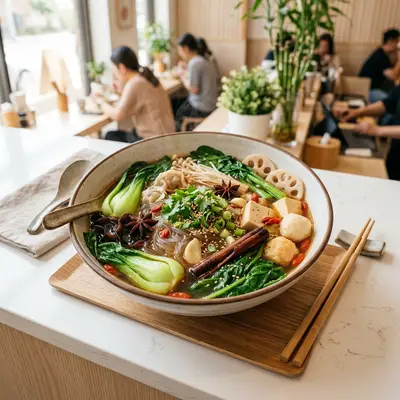
The biggest strength of malatang is that it's fully customizable. Build a bowl with glass noodles + chicken breast + tofu + leafy greens + mushrooms and you've got 20g+ protein, under 10g fat, and 5g+ fiber all in one bowl.
③ Capsaicin as a Metabolic Boost (With Caveats)
A systematic review by the NIH (National Institutes of Health) found that capsaicinoids may increase energy expenditure by roughly 50 kcal/day. That alone won't make you lose weight, but combined with a low-fat diet and exercise, it provides a small but real nudge.
④ Far Less Fat Than Abura Soba or Tsukemen
A bowl of abura soba typically runs 800–1,000 kcal with over 40g of fat. A glass noodle-based malatang, by contrast, comes in at 500–700 kcal with 10–15g of fat. A BMJ meta-analysis found that low-fat interventions were associated with an average weight loss of 1.57 kg — so satisfying your noodle cravings with a low-fat option is a genuinely practical strategy.
⑤ One Bowl Covers 500–700 kcal and You're Done
Protein, vegetables, and starch are all in one bowl — no side dishes needed. That matters more than you might think. Compared to "ramen + gyoza" or "set meal + extra rice," the psychological win of committing to "just this one bowl" is malatang's biggest practical advantage.
If you want to dig deeper into topping selection, check out our malatang topping selection guide.
Top 10 Diet-Friendly Malatang Toppings
To answer "so what should I actually pick?", we ranked all 52 toppings registered in the Mala Tabetai topping encyclopedia by their nutritional profile for dieting.
Lowest Calorie Toppings — TOP 10 (per 100g)
Rank | Topping | Calories | Category |
|---|---|---|---|
1 | Bok choy | 9 kcal | Vegetable |
2 | Tatsoi | 11 kcal | Vegetable |
3 | Bean sprouts | 12 kcal | Vegetable |
4 | Napa cabbage | 13 kcal | Vegetable |
5 | Komatsuna (Japanese mustard spinach) | 14 kcal | Vegetable |
6 | Black wood ear mushroom | 14 kcal | Mushroom |
7 | White wood ear mushroom | 15 kcal | Mushroom |
8 | Romaine lettuce | 16 kcal | Vegetable |
9 | Water spinach (ong choy) | 17 kcal | Vegetable |
10 | Cilantro | 18 kcal | Vegetable |
Think of leafy greens and mushrooms as "basically calorie-free no matter how much you add." Even 200g of them caps out at around 30–40 kcal.
Highest Dietary Fiber — TOP 5 (per 100g)
Rank | Topping | Dietary Fiber |
|---|---|---|
1 | White wood ear mushroom | 6.4 g |
2 | Burdock root (gobo) | 6.1 g |
3 | Black wood ear mushroom | 5.2 g |
4 | Cilantro | 4.2 g |
5 | Chinese chives (nira) | 4.3 g |
Dietary fiber is key to lasting fullness. Combining white wood ear + black wood ear + burdock root gets you around 10g of fiber in a single bowl.
Highest Protein — TOP 5 (per 100g)
Rank | Topping | Protein | Notes |
|---|---|---|---|
1 | Yuba (tofu skin) | 50.4 g | Also high in fat (32g) and calories (485 kcal) |
2 | Chicken | 23.3 g | Under 2g fat — top choice for dieting |
3 | Shrimp | 19.6 g | 0.6g fat, low calorie |
4 | Squid | 18.6 g | 0.6g fat, low calorie |
5 | Beef | 17.9 g | 17g fat — watch portions |
The go-to proteins for dieting are chicken, shrimp, and squid. Yuba and tofu are excellent plant-based protein sources, but their fat content is higher, so adjust portions accordingly.
High-Calorie Toppings to Watch — TOP 5
- Huajiao oil (Sichuan pepper oil): 900 kcal/100g (fine in small amounts, don't overdo it)
- Yuba (tofu skin): 485 kcal
- Aburage (fried tofu): 377 kcal
- Huajiao (Sichuan pepper): 375 kcal
- Shiro-dare (white sesame sauce): 250 kcal
Fried tofu and sesame sauce are easy to add casually, but calorie-wise they pack the same punch as a full bowl of rice. Go easy on these when dieting.
Sample Diet-Friendly Bowl Combinations (3 Patterns)
Pattern | Topping Lineup | Estimated Calories |
|---|---|---|
Serious cut mode | Glass noodles 80g + chicken breast 100g + bok choy + bean sprouts + black wood ear + clear broth | approx. 460 kcal |
Balanced standard | Glass noodles 80g + shrimp + tofu + napa cabbage + shimeji mushrooms + chives + málà broth | approx. 580 kcal |
Satisfaction-focused | Glass noodles 100g + beef + gyoza + komatsuna + white wood ear + málà broth | approx. 690 kcal |
3 Common Mistakes with Glass Noodle Diets
Mistake 1: Too Much Oil and Sugar in Glass Noodle Salad
Chinese-style glass noodle salads often come in at 150–260 kcal per serving (and up to 280–350 kcal when loaded with oil and sugar). Sesame oil, sugar, and mayonnaise are the culprits. "I chose glass noodles so I'll lose weight" is a total misconception — the toppings and dressing are everything. For a diet-friendly recipe and preparation method, check out our complete guide to Chinese glass noodle salad.
Mistake 2: Eating Too Much
300g of rehydrated glass noodles has more carbs than a full bowl of rice. "I can eat as much glass noodle as I want" is a dangerous assumption. Stick to 80–100g rehydrated, 25g dry.
Mistake 3: Eating Only Glass Noodles and Losing Muscle
Glass noodles have virtually no protein. Relying on them alone means your basal metabolic rate will drop and rebound weight gain is almost guaranteed. Make sure to get at least 20g of protein from other sources per meal.
Frequently Asked Questions About Glass Noodle Diets
Q. How much glass noodle can I eat per day?
A. A good target is 150–200g rehydrated (40–50g dry) per day. That's about 40g of carbs and 150 kcal. If you're fully replacing staple carbs with glass noodles, make sure to get adequate protein from other sources.
Q. Will eating glass noodles at night make me gain weight?
A. Not if you watch portions. They're nearly fat-free, low in calories, and digest relatively quickly — not a bad late-night staple carb option. The key is eating them alongside a protein source (tofu, egg, chicken breast).
Q. Is there a difference between Korean, mung bean, and standard glass noodles?
A. Yes. Mung bean glass noodles have a GI of 20–45, meaning they cause less of a blood sugar spike — their standout feature. Korean glass noodles (sweet potato starch) have a GI of 60, putting them in the medium GI range. Standard glass noodles lack official GI data, but are estimated to be medium GI based on their ingredients. If blood sugar is a priority, mung bean noodles are the clear choice. For a dish that uses Korean glass noodles, check out our complete chapchae guide.
Q. How much weight can I lose in a month on a glass noodle diet?
A. Glass noodles alone won't produce dramatic results. The real mechanism is this: replacing your staple carb with glass noodles can cut 100–150 kcal per meal. Replacing two meals a day, a realistic target is about 1–2 kg per month. Add protein and exercise to accelerate results.
Q. Are glass noodles safe for pregnant women or the elderly?
A. Yes, generally fine. Low in fat and gentle on digestion, they work well as a staple carb when appetite is reduced. Just be sure to supplement protein, iron, and calcium from other foods.
Q. Can Malony-chan be used in a glass noodle diet?
A. Yes, it works. Strictly speaking, Malony-chan is made from potato starch and cornstarch, so it's not technically a glass noodle, and no official GI measurement is available. Calorie and carb content are essentially the same as glass noodles, so it makes a valid substitute as long as you watch portions.
Wrap-Up — 3 Key Points for a Successful Glass Noodle Diet
It's been a long read, but there are really only three things to remember.
- Quantity: 80–100g rehydrated (25g dry). Over 300g is a carb bomb.
- Pairing: Always combine with 20g+ protein and 200g+ vegetables
- Format: Eat them in a hot soup. Malatang in particular is the best vehicle for this.
Glass noodles aren't a magic food that makes you lose weight just by eating them. They're a versatile, low-fat staple carb. Build around them with solid protein and vegetables and you've got a satisfying, nutritionally balanced meal in the 500–700 kcal range. Malatang is a dish that achieves the ideal glass noodle diet setup in a single bowl. Take advantage of the freedom to customize your toppings and build your own diet malatang.
For further reading: use our malatang calorie breakdown to calculate total calories per bowl, try our authentic homemade malatang recipe to start making it yourself, and check the topping encyclopedia for nutrition data on all 52 toppings.

Find malatang near you
Search authentic malatang spots by area or nearest station →
Related articles
What Are Glass Noodles Made From? Mung Bean, Potato, and Sweet Potato — Differences and Nutrition Explained
Malatang Calories: Average Per Bowl and a Quick-Reference Guide by Topping
Is Malatang Actually Good for You? A Guide to Healthy Ingredients and the Best Toppings to Choose