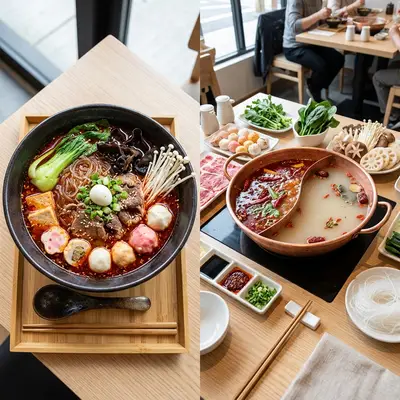
What Are Glass Noodles Made From? Mung Bean, Potato, and Sweet Potato — Differences and Nutrition Explained
"Are glass noodles made from potato? Mung bean? And what's the difference from Maronnie?" — it's easy to get confused standing in the glass noodle aisle at a supermarket. In fact, glass noodles come in three different types of starch, and they differ quite a bit in glycemic index, texture, calorie count, and best uses. This article draws on Japan's MEXT FoodDB, the Ministry of Agriculture, Forestry and Fisheries, and major manufacturer data to give you a thorough breakdown of glass noodle ingredients, nutrition, history, and how to choose — from the perspective of a malatang media outlet.
目次
- What Are Glass Noodles, Exactly?
- How Many Types of Glass Noodles Are There?
- Nutritional Breakdown of Each Type
- Are Mung Bean Noodles Really Low-GI? A Numbers Comparison
- Is Maronnie the Same as Glass Noodles? What's the Difference?
- How to Choose Glass Noodles at the Supermarket
- What's the Difference Between Korean Dangmyeon and Standard Glass Noodles?
- Tips for Choosing Glass Noodles in Malatang
- History of Glass Noodles and Their Spread in Japan
- Frequently Asked Questions About Glass Noodle Ingredients and Nutrition
- Summary — Three Takeaways for Choosing Glass Noodles
What Are Glass Noodles, Exactly?
Glass noodles are dried noodles made from starch. In Chinese they are called "粉絲 (fěnsī)" or "粉条 (fěntiáo)," and they appear in a wide variety of dishes across Asia.
The name "harusame" (spring rain) in Japanese is explained in the Ministry of Agriculture's "Nippon Traditional Foods Encyclopedia" as referring to the way the noodles "become clear and thin like threads when cooked, evoking the image of spring rain." Commercial production in Japan is said to have begun in the early Showa era when technicians were invited from China, and glass noodle cultures subsequently developed independently in Korea and Southeast Asia as well.
Glass noodles are sold dried and rehydrated in water or hot water before use. Once rehydrated, they expand to 3 to 4 times their dry weight. They work beautifully in a wide range of dishes — malatang, japchae, glass noodle salad, vinegared dishes, soups, and hot pots. Among the "noodle" choices in malatang, glass noodles are the most popular option. See also How Many Types of Noodles Does Malatang Have? for more detail.
How Many Types of Glass Noodles Are There?
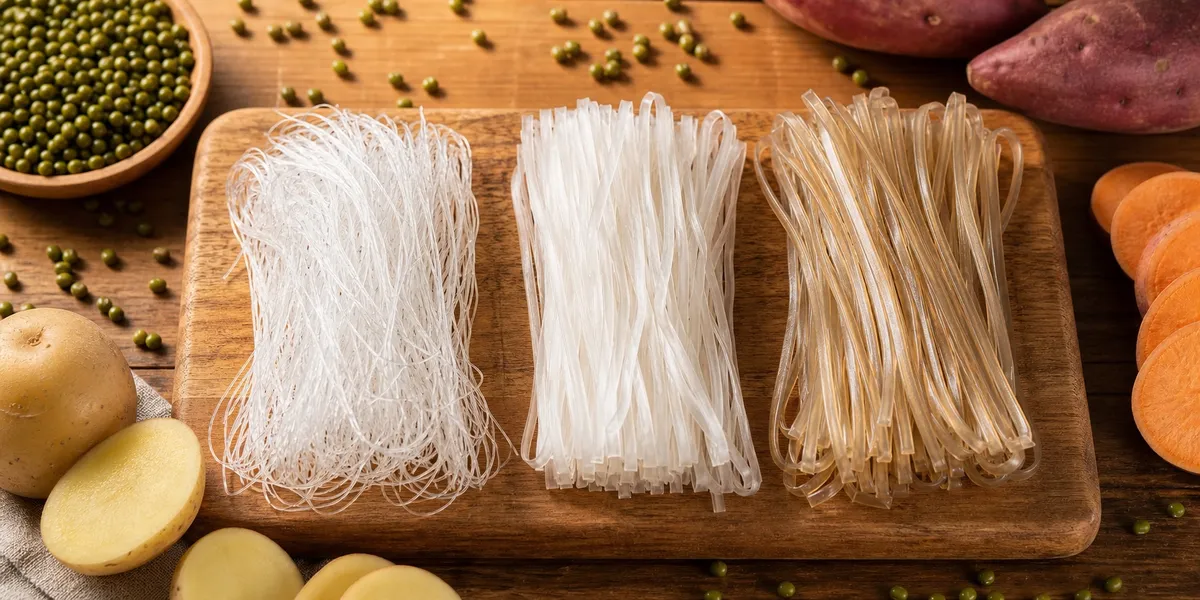
Glass noodles fall into three main categories based on their starch. Here is a breakdown based on Japan's MEXT FoodDB and official manufacturer information.
① Mung Bean Glass Noodles (mung bean starch)
The dominant type in Chinese cuisine. Many products are 100% mung bean starch, yielding thin, highly transparent noodles. The MEXT FoodDB English name is "made from mung bean starch." Longkou Vermicelli from Shandong Province is a well-known traditional mung bean glass noodle with geographic indication status.
The glass noodles served at malatang specialty restaurants are most often this mung bean variety. They don't overpower the soup, slide down easily, and — as discussed below — have a low glycemic index, making them popular among health-conscious diners.
② Standard Glass Noodles (potato + sweet potato starch)
The mainstream type sold in Japanese supermarkets. The MEXT FoodDB English name is "made from potato and sweet potato starches." Japan's Standard Tables of Food Composition (8th edition) lists "ordinary glass noodles" as being made from a blend of potato starch and sweet potato starch.
Slightly thicker and more opaque than mung bean noodles. Domestic products such as Muso's "Domestically Grown Glass Noodles" use organic potato starch and sweet potato starch processed via a "pressure-extrusion method," and the noodles are briefly frozen to create fine pores that allow them to absorb flavor more readily.
③ Korean Glass Noodles / Dangmyeon (sweet potato starch)
Called "dangmyeon (당면)" in Korean, written as "唐麺" in Chinese characters. According to Moranbong's official information, mung bean starch was once common, but sweet potato starch is now the mainstream. Dangmyeon is notably thicker and chewier than typical Chinese or Japanese glass noodles.
Although strongly associated with japchae (잡채), dangmyeon has recently been used in malatang and hot pots as well. Convenience store products like 7-Eleven's "Tsurumochi Futo-men Harusame Malatang" featuring thick glass noodles in a dangmyeon style have attracted attention.
Comparison Table: The Three Types
Type | Starch Source | Thickness / Color | Texture | Common Uses |
|---|---|---|---|---|
Mung Bean | Mung bean starch | Thin · transparent | Smooth · delicate | Malatang (clear broth), Chinese soups, salads |
Standard | Potato + sweet potato starch | Medium · white | Smooth & chewy | Malatang (spicy broth), vinegared dishes, home cooking |
Korean (Dangmyeon) | Sweet potato starch | Thick · semi-transparent brown | Very chewy · springy | Japchae, malatang (thick noodle preference), hot pots |
Nutritional Breakdown of Each Type
Here is a full comparison of mung bean and standard glass noodles using primary data from Japan's Standard Tables of Food Composition (8th edition, 2023 supplement) published by the Ministry of Education, Culture, Sports, Science and Technology.
Item | State | Energy | Carbohydrates | Protein | Fat | Dietary Fiber |
|---|---|---|---|---|---|---|
Mung Bean Noodles | Dry | 344 kcal | 87.5 g | 0.2 g | 0.4 g | 4.1 g |
Mung Bean Noodles | Boiled | approx. 78 kcal | 20.6 g | nearly 0 g | 0.1 g | 1.5 g |
Standard Noodles | Dry | 346 kcal | 86.6 g | 0 g | 0.2 g | 1.2 g |
Standard Noodles | Boiled | approx. 76 kcal | 19.9 g | 0 g | nearly 0 g | 0.8 g |
Calorie and macronutrient levels are nearly identical between mung bean and standard noodles, but mung bean noodles are clearly superior in dietary fiber (4.1 g vs. 1.2 g per 100 g dry). This is because mung beans themselves are a fiber-rich legume. When satiety and gut health are priorities, mung bean noodles have the edge.
For a full picture of how to use glass noodles for weight management — including portion sizes and what to pair them with — see the Complete Glass Noodle Diet Guide.
Are Mung Bean Noodles Really Low-GI? A Numbers Comparison
Data from the University of Sydney's GI database clearly shows the differences between starch sources.
Type | GI Value | Classification | Notes |
|---|---|---|---|
Mung bean noodles | 20–45 | Low GI | Representative value: 39. Varies by product and cooking time. |
Korean noodles (sweet potato starch) | 60 | Medium GI | Measured in Korean research |
Standard noodles (potato / sweet potato) | No official data | Estimated medium GI | Likely higher than mung bean based on starch composition |
Under the University of Sydney's scale, GI 55 or below is low-GI, 56–69 is medium-GI, and 70 or above is high-GI. Mung bean noodles clearly fall in the low-GI category. Korean glass noodles made from sweet potato starch, on the other hand, are medium-GI — so assuming they are healthy simply because they are "Korean" is worth reconsidering.
If you are managing carbohydrate intake or watching blood sugar spikes, the golden rule is to look for packaging that explicitly states "100% mung bean starch."
Is Maronnie the Same as Glass Noodles? What's the Difference?
Strictly speaking, Maronnie is not a glass noodle.
According to official information from Maronnie Co. and House Foods, Maronnie is made from Hokkaido potato starch and corn starch. Glass noodles, by contrast, are primarily made from mung bean, potato, or sweet potato starch. House Foods' FAQ explicitly describes the two as separate categories with different ingredients and manufacturing methods.
Item | Glass Noodles | Maronnie |
|---|---|---|
Ingredients | Mung bean / potato / sweet potato starch | Potato starch + corn starch |
Common uses | Malatang, salads, soups, japchae | Shabu-shabu, hot pots, sukiyaki |
Texture | Smooth (mung bean) / chewy (sweet potato) | Smooth with bite; holds up well in broth |
GI value | Mung bean 20–45; sweet potato 60 | No official measurement |
Manufacturer | Many (Chinese and domestic) | House Foods (Maronnie Co.) |
That said, there is significant overlap in culinary application, and in malatang or soups the two are essentially interchangeable. "Maronnie" and "Maronnie-chan" are registered trademarks, so when a recipe site says "make glass noodle salad with Maronnie," it technically means "a glass noodle-style salad made with Maronnie."
How to Choose Glass Noodles at the Supermarket
The ingredient label on the package tells you exactly what you need to know. Here are the key things to check.
- "Mung bean starch" listed → mung bean glass noodles (low GI; recommended)
- "Potato starch, sweet potato starch" → standard glass noodles
- "Sweet potato starch" as the primary ingredient → Korean-style dangmyeon
- Just "starch" with no further detail → source unspecified; common in budget private-label products
Ingredient Labels for Major Products
Brand / Product | Starch Type | Approximate Price |
|---|---|---|
Topvalu "Firm, Broth-Resistant Mung Bean Glass Noodles 120g" | Mung bean starch (China) | ¥192 |
Muso "Domestically Grown Glass Noodles 100g" | Organic potato starch + sweet potato starch | ¥454 |
Muso "Mung Bean Glass Noodles 100g" | Mung bean starch (manufactured in China) | ¥378 |
Kato Sangyo "Nameraka Mung Bean Glass Noodles" | Mung bean starch 50% + potato starch 50% | Varies by store |
Gyomu Super "Mung Bean Glass Noodles 100g" | Mung bean starch-based (China) | Varies by store |
Gyomu Super "Sweet Potato Glass Noodles 500g" | Sweet potato starch | Varies by store |
Moranbong "Han no Shokusai Japchae L Pack" | Mung bean starch + potato starch | Varies by store |
Daesang Japan "Minsok Harusame" | Sweet potato starch | Varies by store |
IGM "Sweet Potato Glass Noodles" | 100% sweet potato starch | Varies by store |
Maronnie-chan 100 | Potato starch + corn starch (glass noodle substitute) | Varies by store |
Many products such as Seven Premium's "Glass Noodle Soup" or "Glass Noodle Noodles" series, and Gyomu Super's instant glass noodles, only list "glass noodles (starch, brewed vinegar)" on the label, with no breakdown of whether the starch comes from mung bean, potato, or sweet potato. If the starch source matters to you, choose products that spell it out explicitly.
There is sometimes concern about the safety of Chinese-made glass noodles, but the products carried by the major brands and large supermarket private labels listed above are generally subject to quality controls, so as long as you read the ingredient label, you can choose with confidence.
What's the Difference Between Korean Dangmyeon and Standard Glass Noodles?
Korean glass noodles are defined by being "thick, chewy, and resistant to dissolving in broth." Even within the glass noodle category, the shift to sweet potato starch makes for a noticeably different eating experience.
Dangmyeon: Characteristics and History
According to Moranbong's official history, commercial dangmyeon production in Korea began with factories opening in Sariwon, Pyongyang, and Incheon in the 1910s–1920s. The Japan Udon Academic Society journal also includes a note that "Japanese producers who learned the technique from China began mass production in Pyongyang in 1912." It is interesting to note that both Japanese glass noodles and Korean dangmyeon have historically linked origins involving Japanese technicians around the same period.
Notable Dangmyeon Products
- Moranbong "Han no Shokusai Harusame Bulgogi": includes sweet potato starch glass noodles
- Gyomu Super "Sweet Potato Glass Noodles 500g": large volume, excellent value
- Ongane "Tsurumochi Harusame": sweet potato starch, marketed for its chewy texture
- Daesang Japan "Minsok Harusame": major Korean brand, authentic style
- IGM "Sweet Potato Glass Noodles": 100% sweet potato starch
7-Eleven's "Tsurumochi Futo-men Harusame Malatang" also uses thick glass noodles, but the official product page does not specify the starch type in detail, so it cannot be definitively called dangmyeon. That said, in terms of texture it is a representative example of a convenience store product aiming for the chewy, Korean-style glass noodle experience.
※ For an authentic recipe for japchae — the signature dish using Korean glass noodles — and guidance on selecting dangmyeon, see the Complete Japchae Guide. For a Chinese-style twist, check out the Complete Chinese Glass Noodle Salad Guide as well.
Tips for Choosing Glass Noodles in Malatang
As a malatang media outlet, we can't skip the question of how glass noodles are used in specialty restaurants. Even within the single word "glass noodles," the starch source varies from shop to shop.
Specialty Shops Mostly Use Mung Bean
Major chain restaurants such as Qibao Malatang (七宝麻辣湯) and Yang Guofu Malatang (楊国福マーラータン) tend to use mung bean glass noodles as their base. These don't overpower the bold malatang broth, and they absorb the umami while maintaining a clean, translucent finish.
Soup × Glass Noodle Pairing Matrix
Soup | Mung Bean | Standard | Korean (Dangmyeon) |
|---|---|---|---|
Málà spicy broth | ◎ | ○ | ◎ |
Clear broth | ◎ | ○ | △ |
Tomato broth | ○ | ◎ | ○ |
Dandan broth | ○ | ○ | ◎ |
For rich, intensely flavored broths like málà, the chewier standard or Korean glass noodles pair especially well — they absorb the broth and create a more cohesive dish. For clear (light) broths, the more delicate mung bean noodles are the better match, allowing the broth's subtle flavors to come through.
For a full overview of noodle varieties in malatang, see How Many Types of Noodles Does Malatang Have?
History of Glass Noodles and Their Spread in Japan
Glass noodles originated in China. The Chinese "粉絲 (fěnsī)" is the prototype, and the noodle spread across Asia — to the Korean Peninsula, Japan, Vietnam, Thailand, and Indonesia (per Moranbong's official information).
According to the Ministry of Agriculture's "Nippon Traditional Foods Encyclopedia," commercial glass noodle production in Japan began in earnest in the early Showa era when technicians were invited from China. An article from Setagaya Natural Foods also mentions the theory that "the company that manufactured Japan's first domestic glass noodles gave them the name 'harusame.'"
In Japan, glass noodles have spread well beyond Chinese cuisine and are now common in Japanese dishes (mapo harusame, vinegared preparations, clear soups). From the Heisei era onward, the rise of Korean food culture brought japchae into wider awareness, and the malatang boom of the Reiwa era has given glass noodles renewed prominence.
※ The claim that "glass noodles originated in China's Song dynasty" appears online, but since it could not be confirmed from primary sources — manufacturer documentation, the MAFF, or academic journals — it is not addressed further here.
Frequently Asked Questions About Glass Noodle Ingredients and Nutrition
Q. Which is better — mung bean or standard glass noodles?
A. If blood sugar management or weight loss is your goal, go with mung bean. They are higher in dietary fiber (4.1 g per 100 g dry) and fall clearly in the low-GI range at 20–45. Standard noodles are cheaper and more widely available, but contain roughly one-third to one-quarter as much dietary fiber. For everyday use, choose based on cost and intended dish.
Q. Do glass noodles contain gluten?
A. No. Glass noodles are made from mung bean, potato, or sweet potato starch — none of which contain wheat-derived gluten. They are a valuable gluten-free alternative to staple carbohydrates for those following a gluten-free diet.
Q. How long do glass noodles keep?
A. For dried glass noodles sold on their own — such as Muso's "Domestically Grown Glass Noodles" — an unopened shelf life of 2 years is typical. Instant cup-type glass noodle products like those from Acecook are shorter, generally 6 months from the date of manufacture. The basic storage rule for dried noodles is to keep them at room temperature, away from direct sunlight and humidity.
Q. Can glass noodles be frozen?
A. No need to freeze them in their dry state. Since dried noodles keep for 2 years at room temperature, freezing offers no real benefit. For rehydrated or cooked noodles, no major manufacturer provides clear freezing guidelines, and texture tends to degrade significantly, so freezing is not recommended. The standard practice is to cook and eat them fresh each time.
Q. What is the difference between glass noodles and soy milk glass noodles?
A. "Soy milk glass noodles" refers to a dish of glass noodles served in a soy milk-based broth — not a type of noodle made from soy milk. The noodles themselves are not made from soy milk. A classic example is Kenmei Foods' "Malatang Soy Milk Harusame," which pairs mung bean or pea-based glass noodles with unsweetened soy milk.
Q. Which makes you gain more weight — Korean or Japanese glass noodles?
A. The calorie counts are nearly identical (roughly 76–80 kcal per 100 g boiled), but Korean noodles have a GI of 60 (medium), while mung bean noodles have a GI of 20–45 (low), so in terms of blood sugar response, mung bean noodles are the less weight-promoting choice. That said, if you keep portions reasonable (80–100 g rehydrated), either type works well as part of a calorie-conscious meal.
Summary — Three Takeaways for Choosing Glass Noodles
It has been a long article, but once you understand the starch sources and their uses, the choice becomes straightforward.
- Prioritizing blood sugar or weight management → mung bean glass noodles (high in fiber, low-GI)
- Prioritizing texture and chewiness → Korean glass noodles (dangmyeon) (sweet potato starch for a springy bite)
- Prioritizing value and versatility → standard glass noodles (potato + sweet potato starch; budget private-label options available)
When eating them in malatang: delicate mung bean noodles for clear broth, thicker standard or Korean dangmyeon for the málà spicy broth — that is the basic pairing. A quick glance at the ingredient label is all it takes to find the right glass noodle for your needs.
For how to use glass noodles as part of a weight-loss plan — portions, pairings, and eating strategies — see the Complete Glass Noodle Diet Guide. For a full breakdown of malatang noodle varieties, see How Many Types of Noodles Does Malatang Have?, and for individual topping data on glass noodles in malatang, visit the Medium-Thick Glass Noodles (Topping Encyclopedia) page as well.
Chain guides

Chipao Malatang
Everything you need to know about Chipao Malatang: spice levels, toppings, noodle swaps, calorie counts, and recommended combos. Includes a breakdown of ordering systems and store-exclusive menus.

Yang Guofu Malatang
Everything you need to know about Yang Guofu Malatang in Japan: how the by-weight ordering system works, spice levels, soup options (malatang, beef bone, tomato), noodle and topping choices, and recommended combos for different tastes and dietary goals.
Find malatang near you
Search authentic malatang spots by area or nearest station →
Related articles
Does a Glass Noodle Diet Really Help You Lose Weight? A Complete Guide to Calories, Carbs, and How to Eat Smart
Malatang Calories: Average Per Bowl and a Quick-Reference Guide by Topping
Is Malatang Actually Good for You? A Guide to Healthy Ingredients and the Best Toppings to Choose