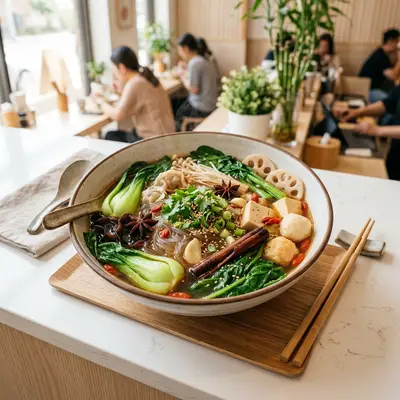
The Complete Guide to Chinese Glass Noodle Salad | Diet-Friendly Ratios, Meal Prep, and Calorie Breakdown
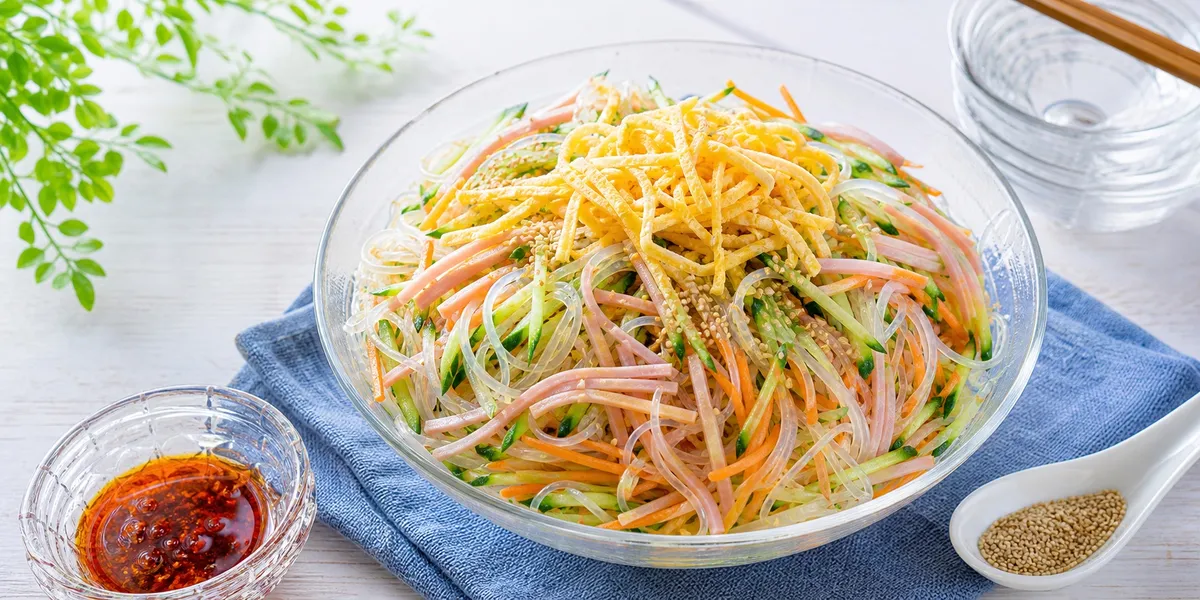
"My Chinese glass noodle salad comes out different every time." "It seems healthy, but somehow I still gain weight." "It turns mushy when I prep it ahead." — This article solves all of those problems. We cross-referenced cookbooks, major manufacturer recipes, Japan's Ministry of Agriculture, Forestry and Fisheries, and school lunch recipes to find the golden-ratio dressing, present 5 dressing variations, break down the calories, and share texture-preserving make-ahead techniques. We also cover a tip unique to a malatang media outlet: how to repurpose malatang ingredients in this salad.
目次
- What Is Chinese Glass Noodle Salad?
- The Base Recipe (Golden-Ratio Dressing)
- 5 Dressing Variations
- Calories and Nutrition in Chinese Glass Noodle Salad
- How to Make a Diet-Friendly Chinese Glass Noodle Salad
- Can You Make It Ahead? Storage Tips
- Complete Ingredient Variations Catalog
- Chinese Glass Noodle Salad ↔ Malatang: Can You Share the Ingredients?
- Frequently Asked Questions About Chinese Glass Noodle Salad
- Summary — 3 Keys to Mastering Chinese Glass Noodle Salad
What Is Chinese Glass Noodle Salad?
Chinese glass noodle salad is a side dish born from adapting Chinese cold dishes — "凉拌粉絲" (liángbàn fěnsī) and "拌三絲" (bàn sānsī) — into a sweet-and-sour sesame oil style that took root in Japan's school lunch and prepared-food culture.
"凉拌粉絲" is a Chinese cold dish of rehydrated mung bean noodles tossed with vegetables, aromatics, vinegar, soy sauce, chili oil, and sesame oil. "拌三絲" means "a dish of three kinds of shredded ingredients," and according to Kenmin Foods, it has become a staple at department store delis, supermarket prepared-food sections, and school cafeterias in its Chinese-style glass noodle salad form.
According to Japan's Ministry of Agriculture, Forestry and Fisheries' "Nippon Traditional Food Encyclopedia," domestic glass noodle production began in the early Showa era when technicians were invited from China, and as glass noodles spread through domestic distribution, the sweet-and-sour sesame oil version became a fixture in school lunches and deli counters. School lunch recipes from Miki City and Tama City also use the same basic combination of glass noodles, cucumber, vinegar, sugar, soy sauce, and sesame oil, confirming its status as a widely loved home-cooking side dish.
Differences in glass noodle ingredients (mung bean / potato / sweet potato) and production details are covered in detail in Glass Noodle Ingredients and Nutrition Overview.
The Base Recipe (Golden-Ratio Dressing)
Start with a foolproof base recipe. After surveying multiple major recipe sites, we adopted the soy sauce : vinegar : sugar : sesame oil = 2:2:1:1 ratio used by Yamasa. It strikes a classic balance — not too sweet, not too oily.
Ingredients (serves 2–3)
- Mung bean glass noodles, 60 g (dry)
- Cucumber, 1
- Carrot, 1/3
- Ham, 4 slices
- Eggs, 2 (made into thin omelette strips)
- White sesame seeds, 1 tsp
Dressing
- Soy sauce, 2 tbsp
- Vinegar, 2 tbsp
- Sugar, 1 tbsp
- Sesame oil, 1 tbsp
- Chili oil, to taste (about 1/2 tsp or more)
Instructions (20 min active + 30 min chilling)
- Boil the glass noodles for 30 seconds less than the package directions, rinse under cold water, and squeeze out the moisture thoroughly
- Julienne the cucumber and carrot. Toss the cucumber with a pinch of salt, let sit for 5 minutes, then squeeze out the liquid
- Cut the ham into thin strips; make thin omelettes with the eggs, let cool, then cut into strips
- Mix the dressing ingredients in a bowl
- Add the glass noodles and other ingredients to the dressing and toss (add sesame oil last)
- Refrigerate for 30 minutes to let the flavors meld, then top with white sesame seeds and serve
If you want to eat right away, use a tip from Yamasa's official recipe: toss the glass noodles while still warm with just the liquid seasonings (soy sauce, vinegar, and sugar) so they absorb flavor faster. Always add sesame oil last to keep its aroma at its best.
5 Dressing Variations
Five options to match different occasions and preferences, compiled from cross-referencing actual ratios across major recipe sites.
Variation | Ratio (soy sauce : vinegar : sugar : sesame oil) | Additions | Best for |
|---|---|---|---|
Classic Chinese | 2:2:1:1 | White sesame | Family meals, bento boxes, deli-style |
Light and Tangy | 2:3:1:0.5 | — | Hot days, pairing with rich main dishes |
Spicy Málà | 2:2:1:1 | Chili oil + Sichuan pepper oil, a dash each | Malatang fans, drinking snacks |
Healthy Low-Sodium | 1:2:0.5:0.5 | Dashi soy sauce + small amount of chicken stock | Weight management, sodium restriction |
Korean Gochujang | 1:2:1:1 | Gochujang, 1 tbsp | Pairing with Korean glass noodles, a fun twist |
The classic is based on the Yamasa ratio; the tangy version reflects patterns from Shirogohan.com, Kadoya, and Tsukuoki; the low-sodium version is drawn from Tokyo Metropolitan Hospital salt-reduction recipes; and the Korean-style is used by DELISH KITCHEN, Nadia, and Kenko Mayonnaise foodservice.
For malatang fans, the Spicy Málà version is strongly recommended. The numbing tingle of Sichuan pepper oil combined with the brightness of vinegar is a cold-dish experience you simply can't get from malatang itself.
Calories and Nutrition in Chinese Glass Noodle Salad
After surveying 10 major recipe sites, we found that a single serving of Chinese glass noodle salad ranges from 50–100 kcal for lighter recipes, 150–220 kcal for a typical home-style side dish, and 220–260 kcal when oil, eggs, and ham are used more generously.
Source | kcal per serving | Protein | Fat | Noodle amount |
|---|---|---|---|---|
DELISH KITCHEN | 242 kcal | 5.2 g | 14.6 g | 30 g / 2 servings |
Yamasa | 246 kcal | — | — | 50 g / 4 servings |
Soumi Foods | 256 kcal | — | — | 30 g / 2 servings |
Otafuku | 190 kcal | 5.0 g | 11.0 g | 50 g / 4 servings |
Kadoya | 165 kcal | — | — | 40 g / 2 servings |
Mizkan | 154 kcal | — | — | 30 g / 2 servings |
Kenmin Foods | 170 kcal | — | — | Uses their product |
Kewpie | 106 kcal | 6.2 g | 3.2 g | 20 g / 2 servings |
Tokyo Metropolitan Hospital Salt-Reduction Recipe | 58 kcal | 0.6 g | — | 10 g / 1 serving |
The real culprit for calories is not the glass noodles — it's the sesame oil and sugar. One tablespoon of sesame oil is about 110 kcal; one tablespoon of sugar is about 35 kcal. In a classic recipe that uses both generously, that alone adds 145 kcal.
Glass noodles themselves (100 g rehydrated) are a low-calorie 76–80 kcal with almost zero fat. For a full picture of glass noodle dieting — portions, combinations, and rules — see The Complete Glass Noodle Diet Guide.
How to Make a Diet-Friendly Chinese Glass Noodle Salad
Don't blame the glass noodles. By adjusting just three things — oil, sugar, and portion size — you can cut the calories by more than half.
① Cut the dressing sugar in half
1 tbsp → 1½ tsp (sugar is about 35 kcal per tablespoon). If it tastes a bit flat, boost the depth with a small amount of mirin or dashi soy sauce.
② Use sesame oil only for fragrance
1 tbsp → ½ tsp is enough. Add it at the very end so the aroma blooms even with less quantity — you won't miss it. This alone saves about 90 kcal.
③ Swap ham for chicken breast or steamed chicken
4 slices of ham are about 100 kcal with 8 g of fat. 50 g of pre-cooked chicken breast is about 60 kcal with under 1 g of fat — and you get more protein, too. A double win.
④ Choose mung bean glass noodles
Mung bean glass noodles have a low GI of 20–45, which helps avoid blood sugar spikes, and they contain 4.1 g of dietary fiber per 100 g — more than three times that of regular glass noodles. Look for packages that clearly state "mung bean starch".
⑤ Stick to the right noodle portion
About 80 g of rehydrated glass noodles (roughly 25 g dry) is the right single-serving amount. Recipes listing "60 g glass noodles (2–3 servings)" are fine, but watch out for recipes listing "100 g glass noodles (2 servings)" — those may be too heavy per serving.
⑥ Add fiber to boost satiety
Toss in wood ear mushrooms, bean sprouts, or shredded cabbage to nearly double the volume with a minimal calorie increase. Wood ear mushrooms offer an excellent 5.2 g (black) or 6.4 g (white) of dietary fiber per 100 g.
Combining all of these, a classic recipe at around 240 kcal can be compressed to 120–150 kcal per serving — with more protein and fiber than before.
Can You Make It Ahead? Storage Tips
The short answer: 2–3 days in the refrigerator is the guideline. With careful moisture removal, you can stretch it to 3–4 days (per Shirogohan.com and Tsukuoki). That said, while the flavor deepens over time, the texture is best on day one.
Why the Texture Degrades
Glass noodles are a starch-based noodle that continues absorbing moisture and seasoning liquid even after cooking. According to Japan's Ministry of Agriculture, the production process involves freezing the noodles once to create air pockets inside, which is why they absorb flavor so readily. In a salad, this means flavors soak in well — but over time, the liquid reduces, the noodles clump together, and they soften.
3 Tips for Preserving Texture
- Boil the glass noodles 30 seconds less than the package says — starting firm means they'll still have chew the next day
- Squeeze out the moisture thoroughly (from both the noodles and the vegetables) — advice consistent across Shirogohan.com and Kewpie's 3-Minute Cooking
- Add a small amount of sesame oil and the sesame seeds just before serving — this revives the aroma and makes it feel freshly made
Two Schools of Thought: Flavor vs. Texture
Approach | Method | Best for |
|---|---|---|
Flavor-First | Refrigerate for at least 1 day after making | Next-day bento boxes, evening snacks with drinks |
Texture-First | Toss with dressing right before eating | Eating the same day, serving to guests |
Complete Ingredient Variations Catalog
We sorted the 52 ingredients listed in the Malatabe Topping Encyclopedia into "works in salad" and "doesn't work in salad."
Classics (always work)
- Vegetables: cucumber, carrot, bean sprouts, cabbage, shredded cabbage
- Mushrooms: black wood ear mushrooms, white wood ear mushrooms
- Protein: ham, egg (thin omelette strips), pre-cooked chicken breast, chicken breast
Recommended for something different
- Vegetables: bell pepper (great color), mizuna, garland chrysanthemum, cilantro, romaine lettuce
- Protein: shrimp, squid, steamed chicken, canned tuna, fish cake
- Chinese-style additions: dried shrimp, Zha Cai (pickled mustard stems), rehydrated dried shiitake, century egg
Not suited for salad
- Soft leafy greens (bok choy, komatsuna, spinach) — great in malatang, but not ideal cold
- Tofu, yuba (tofu skin) — release water and make the salad soggy
- Dumplings, sausages — meant to be served hot
Chinese Glass Noodle Salad ↔ Malatang: Can You Share the Ingredients?
A perspective unique to a malatang media outlet. The answer: about 90% of the ingredients can be shared. You can create a "glass noodle lifecycle" where leftover vegetables from a malatang meal get remade into salad the next day.
Ingredient | Malatang | Chinese Glass Noodle Salad | Notes |
|---|---|---|---|
Glass noodles | ◎ | ◎ | The star. Use the same mung bean glass noodles in both |
Wood ear mushrooms (white & black) | ◎ | ◎ | Texture hero in both dishes |
Bean sprouts | ◎ | ◎ | The best way to bulk up the dish |
Cilantro | ◎ | ○ | Use as a topping in the salad |
Chicken breast / shrimp | ◎ | ◎ | The go-to protein in both |
Cucumber | — | ◎ | Salad only |
Ham / thin omelette strips | — | ◎ | Salad only |
Bok choy / komatsuna | ◎ | — | Leafy greens are better cooked |
Tofu / dumplings | ◎ | — | Need moisture control or heat |
A concrete remake process:
- When rehydrating 60 g (dry) of glass noodles for malatang, put 30 g in the soup and chill the remaining 30 g in cold water for tomorrow
- The next day, toss the refrigerated glass noodles with cucumber, omelette strips, and ham in a Chinese dressing
- Mix in leftover white wood ear mushrooms or bean sprouts from the malatang for extra nutrition
For the basics of choosing malatang ingredients, see The Malatang Ingredient Selection Guide. For diet-focused combinations, see The Complete Glass Noodle Diet Guide.
Frequently Asked Questions About Chinese Glass Noodle Salad
Q. Can I toss dry glass noodles directly with the dressing?
A. No. Dry glass noodles won't absorb seasoning evenly and will stay crunchy in places. Always boil them (or soak in hot water), then squeeze out the moisture before tossing.
Q. Mung bean or regular glass noodles — which is better for salad?
A. Mung bean glass noodles. Their translucent look and smooth, springy texture suit salads well, and they have a lower GI and more dietary fiber — an advantage if you're watching your diet. Look for packages that say "mung bean starch" at the supermarket.
Q. How do I make it mild enough for kids?
A. Simply leave out the chili oil from the classic ratio (2:2:1:1). Adding a little extra sugar (about 1.2 tbsp) also makes it more kid-friendly. For the spicy málà version, keep it separate and add the Sichuan pepper oil at the table so the whole family can enjoy it.
Q. How much should I make for a dinner party?
A. About 20–25 g of dry glass noodles per person. For 10 people, that's 250 g dry (about 1 kg rehydrated) in one large bowl, or split into two. As a side dish, you can be slightly conservative and still have plenty.
Q. Can you use frozen glass noodles?
A. Dry glass noodles are meant to be stored at room temperature, so freezing is unnecessary (shelf life is about 2 years). Freezing rehydrated or cooked glass noodles significantly degrades their texture, making them unsuitable for salad.
Q. Is glass noodle salad good for dieting?
A. Yes, it can be. That said, don't let "glass noodles" lull you into piling on oil and sugar — that backfires. Follow the 6 tips in the section above and you can get a serving down to 120–150 kcal, with solid protein and dietary fiber in the mix.
Q. Does glass noodle salad taste weaker or stronger after sitting overnight?
A. Stronger. The glass noodles keep absorbing the dressing, so the flavor concentrates over time. If making ahead, season a bit lighter than you think you need. If it tastes too mild when you made it, just add a little more dressing to taste.
Summary — 3 Keys to Mastering Chinese Glass Noodle Salad
After all that, there are really just three things to remember.
- Use mung bean glass noodles, cooked slightly firm (30 seconds less than the package, low GI, better texture)
- Cut the dressing sugar in half and use less sesame oil (calories drop by more than half)
- Always add a protein (pre-cooked chicken breast makes it a complete meal)
Most recipe sites stop at "the standard recipe," but by combining the 5 dressing variations, calorie breakdown, make-ahead science, and malatang ingredient cross-use in this article, a humble side dish becomes a signature dish you've made your own.
To go deeper on glass noodles, check out The Complete Glass Noodle Diet Guide for portions and combinations, Glass Noodle Ingredients and Nutrition Overview for ingredients and GI values, and the Topping Encyclopedia for nutrition data on all 52 ingredients.
Find malatang near you
Search authentic malatang spots by area or nearest station →
Related articles
The Complete Guide to Japchae: Authentic Korean Recipe, Choosing Dangmyeon, and a Dieter's Perspective
Authentic Homemade Malatang Recipe | Recreate the Restaurant Flavor in 15 Minutes
Malatang Spelling Guide: "麻辣湯" or "麻辣担"? Plus How It Differs from Hot Pot