How to Order Malatang in Japan: Phrases to Show Staff
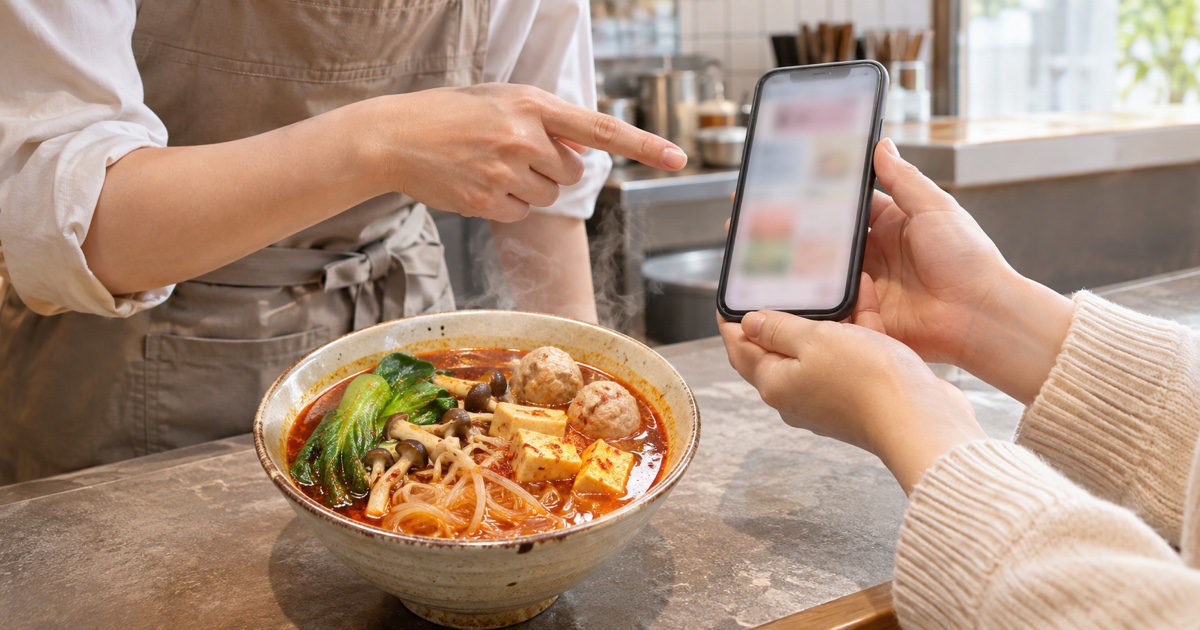
Many malatang shops in Japan let you pick your own ingredients and pay by weight, and you tell the staff the spice level, soup, noodles, and payment method out loud. You do not need to speak Japanese: the tables in this article put Japanese, a reading, and the meaning side by side (as of November 2026). Open this page on your phone and show the Japanese column to the staff.
This article covers how ordering works, a table of Japanese phrases to show staff, how spice levels are named at each chain, and how to check the payment methods.
Contents
- How do you order at a malatang shop in Japan?
- Which Japanese phrases should you show the staff?
- What should you say if you are vegetarian or have dietary restrictions?
- Are spice levels named differently at each chain?
- How do you check which payment methods a shop accepts?
- Where should you try it first?
- Frequently asked questions about ordering malatang (FAQ)
- Summary
- Related articles
How do you order at a malatang shop in Japan?
The way you order depends on the shop. There are three main types.
Type | How ordering works | Examples |
|---|---|---|
By weight | Put ingredients in a bowl, have them weighed at the register, and tell the staff the spice level, soup, and noodles there | Qibao Malatang (except the Shibuya and Iidabashi shops), Yang Guofu Malatang, Li Xiaoqi Malatang, Lahongbang Malatang |
Choose at your seat or on a touch panel | Choose the soup, spice level, and toppings at your seat or on a touch panel. Qibao Malatang Shibuya uses a set of 3 toppings in small bags | Haomeiwei Malatang, Yummy Duck Malatang, Qibao Malatang Shibuya |
Mobile order | Order on your phone, following the instructions in the shop | Qibao Malatang Iidabashi, Xingxing Club Shibuya |
At by-weight shops, the steps go like this. The order can differ slightly from shop to shop.
Step | What you do |
|---|---|
1. Pick up a bowl | Take a bowl and tongs |
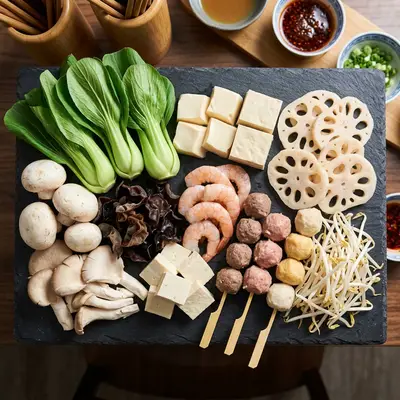
2. Pick ingredients | Put the ingredients you like into the bowl from the display case. If you do not want an ingredient, simply do not take it |
3. Have it weighed | Hand the bowl to the register or a staff member to have it weighed |
4. Tell the staff | Tell them the spice level, soup, and noodles. This is where you show the Japanese in the table below |
5. Pay and wait | At by-weight shops you normally pay at the register. Some shops give you a number tag after payment, and how they call you differs by shop |
The order of weighing, paying, and stating your spice level differs by shop. If you are not sure, show the first phrase in the table below, "It's my first time. Could you tell me how to order?", and the staff will guide you. How the bill is calculated is explained in our article on malatang prices.
Which Japanese phrases should you show the staff?
Show the Japanese column to the staff. The reading (romaji) is a guide for saying it out loud.
To start
Japanese (show this) | Reading | Meaning |
|---|---|---|
はじめてです。注文のしかたを教えてください。 | Hajimete desu. Chumon no shikata o oshiete kudasai. | It's my first time. Could you tell me how to order? |
これをお願いします。 | Kore o onegai shimasu. | This one, please. (Point at an ingredient or a menu item.) |
お水をください。 | Omizu o kudasai. | Water, please. |
フォークをください。 | Foku o kudasai. | A fork, please. |
Spice, soup, and noodles
Japanese (show this) | Reading | Meaning |
|---|---|---|
辛さは何段階ありますか。 | Karasa wa nan-dankai arimasu ka. | How many spice levels are there? |
辛くないスープでお願いします。 | Karakunai supu de onegai shimasu. | A non-spicy soup, please. |
辛さ1でお願いします。 | Karasa ichi de onegai shimasu. | Spice level 1, please. |
辛さ2でお願いします。 | Karasa ni de onegai shimasu. | Spice level 2, please. |
しびれ(花椒)は少なめにできますか。 | Shibire (kasho) wa sukuname ni dekimasu ka. | Could you go light on the numbing spice (Sichuan pepper)? |
スープはトマトでお願いします。 | Supu wa tomato de onegai shimasu. | Tomato soup, please. |
スープは牛骨でお願いします。 | Supu wa gyukotsu de onegai shimasu. | Beef-bone soup, please. |
汁なしでお願いします。 | Shiru nashi de onegai shimasu. | No soup (dry, tossed style), please. |
麺は春雨でお願いします。 | Men wa harusame de onegai shimasu. | Glass noodles, please. |
麺はコーン麺にできますか。 | Men wa kon-men ni dekimasu ka. | Can I have corn noodles? |
春雨抜きでお願いします。 | Harusame nuki de onegai shimasu. | No glass noodles, please. |
Whether the numbing spice or the soup's heat can be changed depends on the shop and the chain, so these phrases are asked as questions.
Ingredients and sauce
Japanese (show this) | Reading | Meaning |
|---|---|---|
パクチーは入れないでください。 | Pakuchi wa irenai de kudasai. | No cilantro, please. |
ネギは入れないでください。 | Negi wa irenai de kudasai. | No green onions, please. |
ごまだれはいりません。 | Goma-dare wa irimasen. | No sesame sauce, please. |
At by-weight shops you pick the ingredients yourself, so cilantro and green onions stay out if you do not take them. Use "no cilantro" and "no green onions" when the staff add garnish afterward.
Eating in or out
Japanese (show this) | Reading | Meaning |
|---|---|---|
持ち帰りでお願いします。 | Mochikaeri de onegai shimasu. | Takeout, please. |
店内で食べます。 | Tennai de tabemasu. | I'll eat here. |
Payment
Japanese (show this) | Reading | Meaning |
|---|---|---|
カードは使えますか。 | Kado wa tsukaemasu ka. | Can I pay by card? |
電子マネーは使えますか。 | Denshi manee wa tsukaemasu ka. | Can I pay with electronic money (such as a transit IC card)? |
QRコード決済(PayPayなど)は使えますか。 | Kyuaru koodo kessai (PayPay nado) wa tsukaemasu ka. | Can I pay with a QR code (such as PayPay)? |
アリペイ(支付宝)やウィーチャットペイ(微信支付)は使えますか。 | Aripei ya Uichatto pei wa tsukaemasu ka. | Can I pay with Alipay or WeChat Pay? |
現金で払います。 | Genkin de haraimasu. | I'll pay in cash. |
Allergies
Japanese (show this) | Reading | Meaning |
|---|---|---|
アレルギーがあります。えびが食べられません。 | Arerugii ga arimasu. Ebi ga taberaremasen. | I have an allergy. I can't eat shrimp. |
ピーナッツ(落花生)は入っていますか。 | Pinattsu (rakkasei) wa haitte imasu ka. | Does it contain peanuts? |
ごまは入っていますか。 | Goma wa haitte imasu ka. | Does it contain sesame? |
For allergies, check the ingredients with the shop. Some shops do not publish an official allergen table.
What should you say if you are vegetarian or have dietary restrictions?
If you do not eat meat or fish, check the soup with the staff as well as the ingredients you pick. Some malatang shops make the soup with animal stock such as chicken, pork bone, beef bone, or seafood. Even if you choose only vegetables, the soup may contain that stock. Toppings such as fish cakes, sausages, and meatballs also contain meat or fish. What is in the soup and toppings differs by shop and chain, so asking at the shop is the reliable way to find out.
Japanese (show this) | Reading | Meaning |
|---|---|---|
肉と魚は食べられません。 | Niku to sakana wa taberaremasen. | I can't eat meat or fish. |
卵は大丈夫です。 | Tamago wa daijobu desu. | Eggs are fine. |
このスープに、肉や魚のだし(鶏ガラ・豚骨・牛骨・魚介)は入っていますか。 | Kono supu ni, niku ya sakana no dashi (torigara, tonkotsu, gyukotsu, gyokai) wa haitte imasu ka. | Does this soup contain meat or fish stock (chicken, pork bone, beef bone, seafood)? |
肉や魚のだしが入っていないスープはありますか。 | Niku ya sakana no dashi ga haitte inai supu wa arimasu ka. | Do you have a soup without meat or fish stock? |
この具に、肉や魚は入っていますか。 | Kono gu ni, niku ya sakana wa haitte imasu ka. | Does this ingredient contain meat or fish? (Point at it.) |
肉の入っていない具だけ選びます。 | Niku no haitte inai gu dake erabimasu. | I'll choose only ingredients without meat. |
If the staff answer that they do not know, you have not been able to confirm what is in the soup at that shop. What people avoid differs from person to person, so say it specifically, such as "meat and fish". As with allergies, for dietary restrictions the basic step is to check the ingredients with the shop.
Which chains state their soup stock on the official site?
As of November 16, 2026, we found no malatang chain in Japan whose official site states vegetarian, vegan, or halal support. Some shops make the soup with stock from chicken, pork, or beef bones and meat. The following seven chains state their soup stock on their official site or in an official announcement.
Chain | Soup stock stated officially |
|---|---|
A soup simmered from chicken and pork, combined with medicinal-herb spices. | |
The spicy beef-bone soup is made with beef-bone stock. The official site does not describe the stock of its other soups. | |
The mala soup is a mala paste simmered in Wagyu fat plus a white broth. The paitan soup is a chicken and pork bone soup blended with medicinal herbs and other ingredients. | |
A soup rich in beef-bone flavor, combined with the chain's original mala paste. | |
The official soup descriptions mention beef tallow (Sichuan-style mala soup), a Japanese-style consomme soup with matsutake-type mushrooms (mushroom soup), and ripe tomato (tomato soup). Whether meat or fish stock is used is not stated. | |
Based on the soup of Chuukabou Malatang, with the flavor of beef bone and roast chicken added. | |
The standard malatang is based on a chicken paitan soup simmered every day. The tomato malatang is that soup with tomato added. |
When nothing is stated, that does not mean the soup has no meat or fish. The soup can differ by shop and by menu item, so before you order, show the staff the phrase "Does this soup contain meat or fish stock?" from the table above. Also ask the staff what is in sauces such as sesame sauce and chili oil, and in toppings such as fish cakes and sausages.
Are spice levels named differently at each chain?
Spice levels and the words for them differ by chain. "Spice level 1" is understood at many shops, but some chains use terms like 小辣 (mild) and 普通 (regular) (as of November 2026; levels and names can change by shop and time). For choosing a mild bowl, see our guide to malatang for people who do not like spicy food.
Chain | How spice levels are named | When you want no heat |
|---|---|---|
Told by number: 0 (plain broth), 1 (mild), 2 (medium), 3 (hot). There is no upper limit, and levels from 4 cost extra | "Karasa zero de onegai shimasu" (level 0, please) | |
4 levels: 小辣 (mild), 普通 (regular), 大辣 (hot), 激辣 (very hot). The no-spice options are the tomato soup and the beef-bone soup | "Supu wa tomato de onegai shimasu" (tomato soup) or "Supu wa gyukotsu de onegai shimasu" (beef-bone soup) | |
0 (no spice) to 4. The number of levels is not on the official site and comes from visit reports | "Karasa zero de onegai shimasu" (level 0, please) | |
0 (plain broth) to 4 | "Karasa zero de onegai shimasu" (level 0, please) | |
0 (sweet), 0.5 (mild), 1 to 4 | "Karasa zero de onegai shimasu" (level 0, please) | |
The official site lists no spice levels common to the chain | Ask "Karasa wa nan-dankai arimasu ka" (how many spice levels are there?) |
How do you check which payment methods a shop accepts?
Payment methods differ from shop to shop. Some take only cash, some take PayPay and similar apps, and others take cards and QR payments widely, so the chain name alone does not tell you. It is safest to check these three things before you order.
What to check | How to check |
|---|---|
Credit cards and electronic money | Look at the signs at the register or the entrance. If you cannot find any, ask "Can I pay by card?" or "Can I pay with electronic money?" |
QR code payment | Look for PayPay and similar signs. If you are visiting from China, ask "Can I pay with Alipay or WeChat Pay?" |
When you pay | At by-weight shops you pay at the register after your bowl is weighed. At shops where you order at your seat or on your phone, follow the shop's instructions |
Carrying some cash helps if the payment method you hoped to use is not accepted.
Where should you try it first?
Ordering differs by shop, so a by-weight shop is the easiest place to start.
- Search for shops: find malatang shops near you by area and conditions
- Chain list: see each chain's ordering style, spice levels, and soups on the chain's page
Frequently asked questions about ordering malatang (FAQ)
Q. Can you order without speaking Japanese?
At a by-weight shop you pick the ingredients yourself, so you only need to speak when stating the spice level, soup, noodles, and payment. Show the Japanese column of this article at those moments. At touch-panel and mobile-order shops, you can choose on the screen.
Q. What should you say if you do not know which spice level to pick?
"Karakunai supu de onegai shimasu" (a non-spicy soup) or "Karasa ichi de onegai shimasu" (spice level 1) is easy to get across. Spice names and levels differ by chain, so you can also ask "Karasa wa nan-dankai arimasu ka" (how many spice levels are there?).
Q. Can you get malatang to go?
Qibao Malatang's official site says its malatang can be taken out. Li Xiaoqi Malatang differs by shop. At any shop, ask first, then say "Mochikaeri de onegai shimasu" (takeout, please).
Q. Can you pay by card?
It depends on the shop. Some take cash only, so before you order ask "Kado wa tsukaemasu ka" (can I pay by card?) or "Denshi manee wa tsukaemasu ka" (can I pay with electronic money?). For QR payments, ask "QR koodo kessai (PayPay nado) wa tsukaemasu ka".
Summary
- At a by-weight shop you pick ingredients, have them weighed at the register, then state the spice level, soup, and noodles and pay
- Show the table to the staff for spice, soup, noodles, payment, and allergies
- Spice terms differ by chain; if unsure, ask "Karasa wa nan-dankai arimasu ka" (how many spice levels are there?)
- Payment methods differ by shop, so check before you order
Related articles
Find malatang near you
Search authentic malatang spots by area or nearest station
Related articles

Convenience Store Malatang Showdown: A Complete Comparison of 7-Eleven, FamilyMart, and Lawson Products [2026 Edition]
How Many Noodle Types Does Malatang Have? A Complete Guide to Glass Noodles, Dao Xiao Mian, Rice Vermicelli, and More
Easy Homemade Malatang: A Complete Recipe Guide + How to Use the Chiipao Home Kit